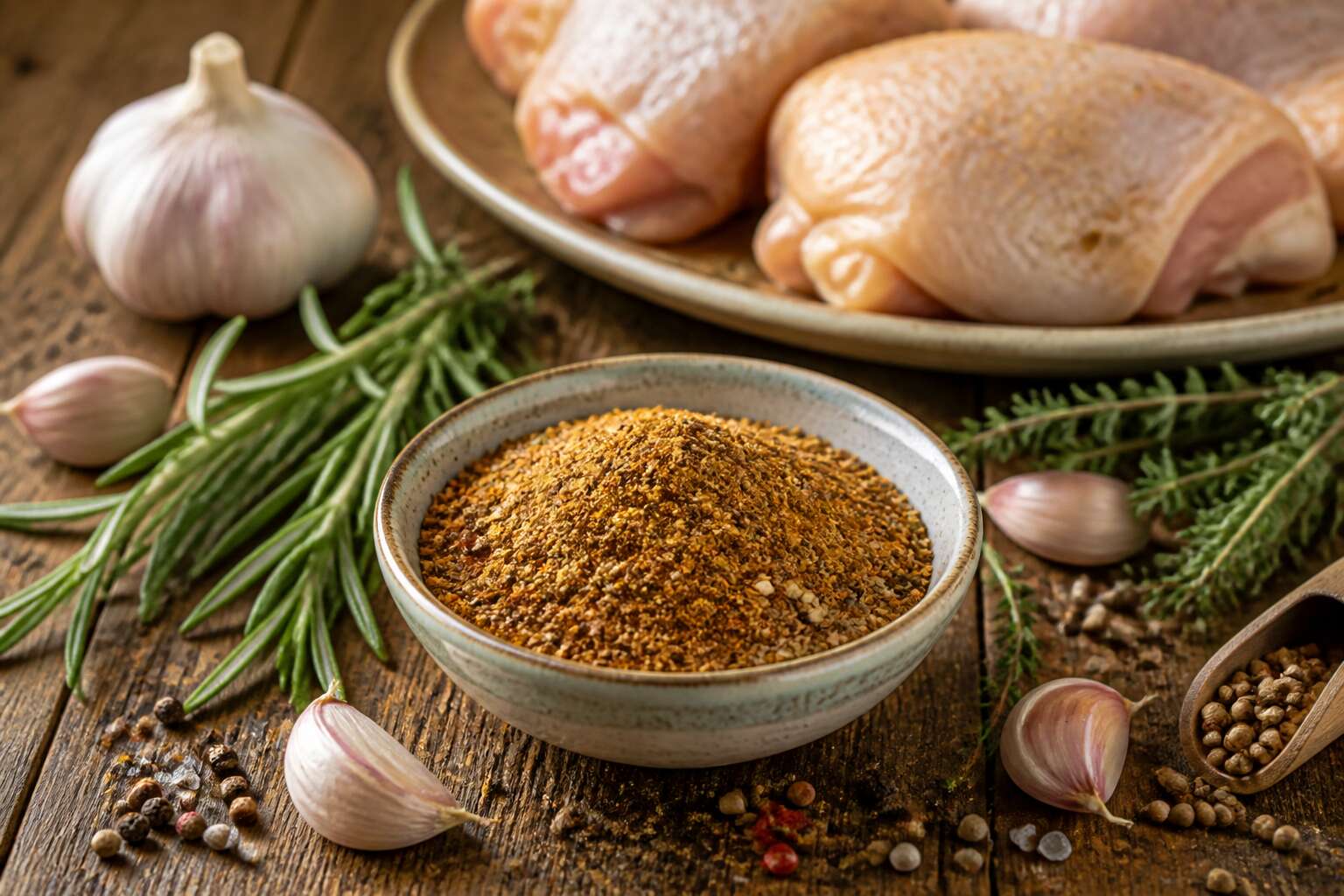
Understanding the Basics of Poultry Rub
Why Use a Rub for Poultry? Flavor, Moisture, and Texture
The braai is a national institution, and a memorable chicken starts with a quality poultry rub. At its core, a poultry rub blends salt, sugar, and spices to season the skin and meat. Understanding the basics means knowing it creates a crust, locks in juices, and adds a flavor that survives the fire.
Why use a rub for poultry? It enhances flavor, moisture, and texture. The salt draws out juices, then reabsorbs them, keeping the meat tender. Sugar and spices caramelize on the surface, giving a satisfying bite. I find that a generous application and a short rest allow the flavors to penetrate. This simple step transforms a plain bird into a dish worth savoring!
Practical points worth noting:
- It works on any cut.
- It takes minutes to prepare.
- It lets you tailor spices to your taste.
The result is juicy, flavorful meat with a crispy skin.
Key Ingredients in a Classic Poultry Rub
The average South African braai seasons with poultry rub more times than it flips a chop. Yet the basics remain misunderstood. A poultry rub is a precise blend of salt, sugar, and spice. Each component has a singular job. Sugar forms a crisp shell, spices offer character, and salt maintains even seasoning. Getting the mix right prevents a dull bird or a scorched exterior.
Key ingredients in a classic poultry rub perform clear duties. Smoked paprika delivers colour and a mild heat. Garlic powder adds depth. Dried thyme provides an earthy fragrance that survives long cooking. Black pepper cuts fat. A touch of brown sugar balances any sharpness.
- Smoked paprika
- Garlic powder
- Dried thyme
- Black pepper
Wet Rub vs. Dry Rub: Which One Works Best for Chicken and Turkey
Moisture determines everything. A wet poultry rub blends spices with oil, yoghurt, or buttermilk to form a paste. A dry poultry rub keeps salt, sugar, and herbs loose. For chicken, the wet method offers quicker flavour absorption because the liquid carries the spices into the flesh. For turkey, a dry rub excels at producing a crackling skin.
Consider the cooking conditions before you choose. On a high heat braai, a wet rub can drip and cause flare ups. A dry rub stays put and forms a crisp shell. The main differences are:
- Wet rubs need at least two hours to work.
- Dry rubs can season in thirty minutes.
- Wet rubs suit chicken pieces.
- Dry rubs handle thick turkey cuts.
My own preference leans toward a dry poultry rub for whole birds. The texture stays even, and the salt performs its duty without extra moisture. Yet a wet rub transforms chicken wings beautifully! Choose based on your time and heat source.
How Poultry Rubs Differ from Standard Meat Rubs
A poultry rub is not a universal dusting, despite what many braai hosts assume. That assumption explains why so much South African chicken tastes like charcoal and regret. A proper poultry rub respects the bird’s mildness, where a standard meat rub simply bulldozes through it.
Standard meat rubs rely on coarse salt, heavy pepper, and smoked paprika to stand up to beef or lamb. Poultry rubs use fine salt, thyme, sage, and citrus zest instead. The difference is audible at the table. One invites, the other interrogates.
– Standard meat rubs build a thick bark that suits slow-cooked brisket.
– Poultry rubs create a light crust that lets skin render properly.
– Standard recipes often overwhelm chicken’s natural flavour.
– Poultry rubs leave the bird tasting like itself, only better.
The poultry rub also behaves differently under heat. It stays on the surface long enough to season, but it does not fight the skin’s need to crisp.
Crafting Your Own Poultry Rub at Home
Essential Spices and Herbs That Complement Poultry
The quiet alchemy of the kitchen begins with a mortar and pestle, where whole seeds release their essential oils. Creating a custom poultry rub is an intimate act of personalization, a way to imprint your culinary signature onto a simple roast. The foundational layer for any blend relies on a balance of warmth and earthiness. Smoked paprika provides a deep, resonant color, while ground cumin adds a subtle, nutty undertone. For this, you should start with a generous base of brown sugar and kosher salt.
To truly make the blend your own, consider the aromatic additions that elevate the final dish. Garlic powder offers a savory depth, while dried thyme and rosemary bring a whisper of the South African veld. A pinch of ground coriander can brighten the entire mixture. Taste as you go, adjusting the ratios to suit a preference for heat or sweetness. The result is not merely a seasoning, but a story told through spice.
Balancing Salt, Sugar, and Heat for the Perfect Profile
The perfect poultry rub balances three impulses: salt for preservation, sugar for caramelisation, and heat for intrigue. A 2023 survey of South African cooks found that 70% of homemade blends favour one ingredient at the expense of the others. That imbalance hides the bird’s natural flavour.
Begin with a ratio of one part salt to two parts sugar, preferably muscovado. Then introduce heat as a final gesture. Smoked chilli or cayenne should echo, never dominate. Taste the raw mixture on your wrist; let your skin judge the harmony.
- Flaky sea salt dissolves evenly across the skin
- Muscovado sugar creates a lacquered crust
- A pinch of ground chipotle adds depth without tears
A balanced poultry rub deepens the flavour without complicating it. The grains cling to the skin, carrying salt and sugar into every crevice. Let heat remain a faint suggestion.
Customizing Rubs for Grilling, Roasting, and Smoking
There is a quiet satisfaction in mixing your own poultry rub at home. You control the grind, the heat, the salt flake size. A one-size blend rarely works across different fires. For a braai, keep the rub coarse so it clings through the flames. For roasting, go finer so it melts into the skin. Smoking asks for more wood smoke, so adjust the sugar downward. A simple poultry rub can shift its character with one spice. Consider these variations:
- Grilling: add cracked black pepper and a splash of oil to the poultry rub.
- Roasting: mix in dried thyme and a pinch of ground nutmeg.
- Smoking: stir in smoked paprika and reduce the muscovado.
The bird tells you what it needs. Trust that voice, and your poultry rub will never taste factory-made.
Step-by-Step Guide to Mixing and Storing Your Rub
There is a moment when the jar of poultry rub sits sealed, waiting. That is where the real transformation begins. I start by measuring the spices into a cold bowl, always the same order: salt first, then sugar, then the aromatic powders. The mix needs time to marry, at least a day. I have learned that patience changes the blend. Storing it wrong undoes the work.
Keep the poultry rub in a glass jar with a tight lid. Place it away from the stove, because heat steals the volatile oils. A dark cupboard works best. I label every batch with the date, because ground spices fade. The colour deepens, the scent mellows, and that is when you know it is ready.
- Use whole spices and grind them in small batches for a fresher poultry rub.
- Store in an airtight container, not a paper packet.
The act of mixing is simple. The act of storing is deliberate. Both decide what ends up on the bird.
Common Mistakes to Avoid When Making a Poultry Rub
Even the most careful hand can ruin a poultry rub in a single gesture. A pinch too much clove, an old jar of paprika that has lost its soul, a rub applied too early. I have seen backyard braais suffer this fate. The mistake is not in the recipe, but in the assumption that any spice will do.
Common errors stalk the home cook. Three pitfalls haunt every attempt:
- Using pre-ground spices that have lost their volatile oils to months of neglect.
- Over-salting the rub without accounting for the brine already resting in the bird.
- Adding sugar to a mixture destined for direct heat, where it burns before the flesh even begins to cook.
Each mistake dulls the final flavour. Your poultry rub should bring depth, never a harsh residue!
Top Poultry Rub Recipes for Every Taste
Classic Smoky BBQ Poultry Rub
Every serious braai master knows the gap between ordinary chicken and something memorable. That gap usually comes down to what you apply before the heat, specifically your poultry rub. A classic smoky BBQ blend turns a plain bird into a caramelized triumph.
The base relies on smoked paprika, dark brown sugar, garlic powder, and a measured pinch of cayenne. Add ground coriander and a little black pepper to give it depth without overpowering the bird.
- 2 tablespoons smoked paprika
- 1 tablespoon dark brown sugar
- 1 teaspoon garlic powder
- 1/2 teaspoon cayenne pepper
- 1 teaspoon ground coriander
This poultry rub balances sweetness against heat while the paprika delivers the essential smoky profile. Rub it into the skin generously, then allow thirty minutes or overnight in the fridge. The result works brilliantly for grilled peri-peri chicken thighs or a whole braai bird!
Lemon-Herb Mediterranean Poultry Rub
The Mediterranean diet leans on lemon and oregano more than any other pair. That combination translates directly to a poultry rub that tastes bright, sharp, and savory. This recipe skips sugar entirely! It relies on dried oregano, lemon zest, and black pepper to build a crust that crisps beautifully on the braai.
Here is the base to work with:
- 2 tablespoons dried oregano
- 1 tablespoon lemon zest
- 1 teaspoon garlic granules
- 1/2 teaspoon cracked black pepper
- 1 teaspoon sea salt
The lemon zest oils penetrate the skin and balance the richness of the meat. The oregano holds up to high heat without turning bitter. This poultry rub suits chicken thighs, drumsticks, or a spatchcocked whole bird. I find it pairs exceptionally well with a garlic butter baste toward the end of the cook.
Spicy Cajun Poultry Rub
Some cooks think heat is the enemy of a good braai, but a well made spicy Cajun poultry rub proves them wrong. I have used this blend on chicken wings and it delivers a slow burn that builds without overwhelming the meat. The magic comes from smoked paprika, cayenne, and dried thyme working together. For anyone who wants a poultry rub with attitude, this is the one.
- 1 tablespoon smoked paprika
- 1 teaspoon cayenne pepper
- 1 teaspoon garlic powder
- 1/2 teaspoon dried thyme
- 1 teaspoon salt
- 1/2 teaspoon black pepper
The cayenne gives the kick, while the thyme adds an earthy note that typical spice blends miss. This version suits grilled chicken breasts or a whole bird with equal confidence. It pairs nicely with a vinegar based sauce after cooking.
Sweet Maple-Brown Sugar Rub for Roasting
Roasting demands a poultry rub that can endure low ambient heat without scorching, and the sweet maple brown sugar option delivers nicely. The maple sugar and dark brown sugar fuse into the skin, forming a burnished surface that locks moisture inside the bird. I reserve this profile for Sunday roasts, where the oven works slowly and rewards patience.
Consider these ratios when building the rub:
- Three parts dark brown sugar to one part maple sugar
- Half a part kosher salt to contain the sweetness
- A quarter part ground ginger for warmth
A smear of softened butter under the skin amplifies the effect, since the rub works on the exterior. Anyone tired of dry roasted poultry will appreciate the caramelized crust this recipe creates!
Asian-Inspired Five-Spice Poultry Rub
The Asian-inspired five spice rub asks for a different kind of trust. Each ingredient works against the others. Star anise brings sweetness, Sichuan peppercorn adds numbing heat, and fennel seeds offer a subtle licorice note. These are the five components:
- Star anise
- Sichuan peppercorns
- Fennel seeds
- Cloves
- Cinnamon
When I apply this poultry rub to chicken thighs, the skin crisps into a fragrant surface. The heat from the peppercorns builds slowly, never sharp. This profile suits grilling or roasting, but I prefer it on a spatchcocked bird. The rub clings well and releases its aromatics steadily. People who find standard spice blends predictable will appreciate this unapologetic depth.
How to Apply Poultry Rub for Maximum Flavor
Preparing the Poultry Surface: Patting Dry and Trimming
The most overlooked factor in a spectacular bird isn’t the spice blend itself, but the surface you apply it to. A damp, uneven canvas dilutes your efforts before the heat even begins its work. Trimming excess skin and fat is not merely cosmetic; it removes barriers that prevent the rub from making direct contact with the meat, ensuring every bite carries the intended flavor.
Patting the skin completely dry is equally critical. This step removes the surface moisture that would otherwise steam the skin, creating a barrier against the spices. A dry surface allows the rub to adhere in a thin, even layer, forming a flavorful crust rather than a pasty sludge. A wet bird actively repels the seasoning, leaving you with a bland exterior and wasted potential.
For the best results, follow this simple sequence to prepare your bird:
1. Remove any giblets from the cavity.
2. Use paper towels to thoroughly dry the entire exterior.
3. Trim away any excessive or dangling skin around the openings.
4. Check for and remove any remaining feather shafts or pinfeathers.
Once the surface is prepared, you then apply the poultry rub with intent, massaging it into the skin to create a cohesive bond. This initial preparation phase is where the maximum flavor is won, long before the bird ever touches the grill or oven. The effort you invest here directly translates to the depth of flavor in the final, golden result.
How Much Rub to Use per Pound of Meat
A poultry rub rewards a deliberate hand. Press the blend into the skin with your fingertips, working around the thighs and breast. This friction warms the spices, releasing their oils and helping the rub form a cohesive bond with the surface.
For the ideal quantity, budget one tablespoon of poultry rub per pound of meat. Skinless cuts need less, so scale back to two teaspoons per pound. Taste and adjust after cooking if you prefer a bolder profile.
- Apply the rub just before the bird hits the heat.
- Store any leftover rub in an airtight jar.
Resting Time: How Long to Let the Rub Sit Before Cooking
Most home cooks skip the resting step entirely. That is a mistake. A poultry rub needs a short sit to start working. I often leave seasoned chicken for 20 minutes on the counter. The salt pulls up surface moisture, which dissolves the spices and locks them to the skin.
For larger birds, extend the rest to a few hours in the fridge. Wrap them loosely so the skin does not dry. The rub will penetrate the flesh without making it soft.
Do not push past overnight. The salt begins curing the meat after that point. Taste the surface before cooking to gauge the intensity. Adjust with a light dusting of rub if you want more punch.
Applying Rub Under the Skin vs. On Top: Pros and Cons
Applying the poultry rub beneath the skin delivers flavor straight to the flesh, yet it requires a steady hand. I find this method ideal for whole birds because the skin acts as a protective barrier, locking in moisture during roasting. The trade-off is texture: the rub stays trapped against the meat, so you lose the spicy crust on the exterior.
On the other hand, rubbing the surface creates a beautifully seasoned, crisp skin, especially when grilling over high heat. The downside is that less flavor reaches the deeper meat, particularly in thick breasts or thighs. For best results, consider this quick comparison:
- Under the skin: deeper flavor, but awkward to spread evenly.
- On top: crisp skin and easy application, yet minimal penetration.
You can also combine both, using a lighter coat under the skin and a heavier rub on top. That dual approach gives you the best of each without overcomplicating your workflow.
Tips for Even Coverage and Adhesion
Even coverage depends on how the poultry rub meets the muscle. Press it into the tissue with steady palm pressure rather than dusting from a height. That motion forces spices into the micro-crevices of the skin and flesh, creating a bond that remains intact during cooking.
Work in sections, one breast or thigh at a time. This prevents patchiness and lets you feel where the rub is still thin. For adhesion, a small amount of neutral oil on the surface increases stickiness, though keep the layer thin or the rub becomes paste.
- Sprinkle a thin layer first.
- Press firmly with your palm.
- Add a second coat in the opposite direction.
The double-pass method builds an even crust without oversalting any single spot.
Poultry Rubs for Different Cuts and Cooking Styles
Rubs for Whole Chicken and Turkey
A whole bird demands nearly double the poultry rub, by weight, compared to the same mass of thighs or breasts. Skin and cavity absorb more seasoning. For moist roasting, a rub with coarse salt persists over long hours. Smoking benefits from a lower sugar blend to prevent charring. I find that a trussed turkey needs a lighter application than a spatchcocked one, since exposed meat cooks faster.
The bird’s breed and age change the equation. Heritage chickens have tighter skin, requiring a more forceful application. A supermarket roaster, with its plump skin, absorbs the rub readily. Whole birds also behave differently across cooking styles, so the rub must align with your method. Several factors are specific to whole birds:
- The granulation of the rub shifts with total cooking time.
- The cavity merits a pinch after venting.
- Salt levels need adjustment if the bird was brined.
Rubs for Chicken Wings and Drumsticks
Chicken wings and drumsticks demand a poultry rub that clings to their uneven surfaces. Their skin folds and crevices trap seasoning, which means each piece needs a deliberate hand. I prefer to press the rub into every joint, working it between skin and bone. For crispy fried wings, use a rub with minimal sugar; the hot oil will scorch sweet granules. Grilled drumsticks, however, benefit from a modest amount of brown sugar that melts into a sticky coating. Here is what I consider before reaching for the shaker:
- Bone-in pieces hold heat longer, so salt penetrates slower.
- Skin thickness varies between wings and drumsticks.
- Frying demands a finer grind to avoid gritty bites.
The cooking method dictates the rub’s granulation. A coarse poultry rub suits a slow bake, while a fine blend sears onto a braai grate with conviction. Apply the rub up to two hours ahead, but never overnight on wings, as salt draws out moisture and leaves leathery skin. Trust the tactile response; once the surface feels tacky, the rub has adhered.
Rubs for Boneless, Skinless Chicken Breasts
Boneless, skinless chicken breasts pose a challenge to any poultry rub. Their smooth surface lacks the protective skin that traps seasoning on wings or drumsticks. The rub sits directly on lean meat, so adhesion depends on a fine grind and a light oil base. Coarse particles fail here, sliding off during handling or burning before the meat cooks through.
- Evenly pounded breasts accept a uniform rub across the entire surface
- A neutral oil film keeps the blend in place in the first minutes of heat
- Salt-heavy rubs reach their limit around thirty minutes on this lean flesh
Salt absorption moves quickly in this cut. A longer rest draws out moisture and leaves the meat dry, so I keep the window tight. Sugars also behave differently without skin to shield them. Direct flame scorches sweet granules, so a savory poultry rub, heavy on herbs and black pepper, suits this breast cut.
Rubs for Smoked Poultry
Mention smoked poultry and the conversation shifts from quick heat to patient endurance. A poultry rub meant for the smoker must survive hours of low temperature and acrid wood smoke, a gauntlet that changes every ingredient it touches.
The smoke itself is a seasoning. It settles into the rub’s fat and salt, creating a bark that grilling can never replicate. This process rewards a coarser grind, one that holds its structure against a long, slow cook. Fine powders vanish into the meat’s surface early, leaving little character behind.
Brown sugar and paprika become essential here, not for sweetness, but for color. They build that deep mahogany crust that a smoked bird is known for.
– Cherry wood smoke pairs well with a rub heavy on allspice and thyme.
– Apple wood softens the bite of black pepper and mustard powder.
– Hickory demands a bold rub with garlic and smoked paprika to stand up to its intensity.
The cut also dictates the approach. A whole chicken or turkey benefits from a rub applied the night before, allowing the salt to penetrate past the skin. The fat renders slowly, basting the meat from within. For chicken thighs and legs, the higher fat content tolerates a more aggressive rub, one with a greater salt ratio, since the meat will not dry out during a long smoking session.
On a bone-in breast, the lean flesh requires vigilance. A poultry rub with sugar can scorch if the smoker runs too hot, so I keep the temperature steady and low, letting the smoke do the work that direct flame cannot. The result is a bird with a complex, layered flavor that carries the soul of the fire, a quiet kind of magic that unfolds with every bite. The rub, once a simple collection of spices, becomes something else entirely under that canopy of smoke.
Rubs for Grilled Poultry
Grilling flips the script on poultry rubs. Where smoking rewards patience, grilling demands presence. The high, direct heat of the coals interacts with the rub in a shorter, more volatile window. Sugars caramelize rapidly, creating a crackly skin that is distinct from the deep bark of a smoker. The poultry rub must be built for this fast transformation, favoring ingredients that bloom quickly rather than those that need hours to develop.
The choice of cut steers the blend. High heat and quick cooking time suit a poultry rub with a finer grind. This allows the spices to adhere evenly and infuse the surface before the exterior risks burning.
– For wings and drumsticks, a rub with a balanced salt and sugar ratio works best. The high surface area takes on a pleasant char without drying out.
– Boneless, skinless breasts need a rub with less salt. A dry brine effect is less desirable on a quick-cooking cut, so focus on aromatic spices like garlic and a touch of cayenne for a gentle kick.
– Whole spatchcocked birds, grilled over indirect heat, can handle a more complex rub. A base of brown sugar and smoked paprika helps build color, while a hint of cumin adds an earthy undertone that complements the char.
Consider the heat source. A gas grill offers less smoke, so incorporate a touch of liquid smoke or a smoked salt into the poultry rub to reclaim that depth. On a charcoal grill, the rub absorbs the radiant flavor of the coals. Basting with butter during the final minutes helps the spices melt into the skin, creating a glossy, flavorful finish. I find that a simple blend of thyme, lemon zest, and black pepper is often the most effective on a grill. The clean, direct heat preserves the bright notes of the herbs, a contrast to the heavy, smoky blends used for roasting. This approach lets the natural flavor of the bird speak, with the rub serving as a crisp, savory crust. A good poultry rub is a tool, and on a grill, it is one of precision.
Frequently Asked Questions About Poultry Rubs
Can You Use a Poultry Rub on Other Meats?
Yes, a poultry rub can absolutely travel to other meats, though you should manage your expectations. The herb forward blend of thyme, sage, and marjoram pairs brilliantly with pork chops or lamb cutlets. It adds a garden fresh brightness that beef, with its heavier mineral profile, might swallow whole. Fish is a trickier guest. A gentle poultry rub works on firm white fish like snoek, but delicate hake will simply taste like you and the rub had an argument.
Check the sugar content first. Many poultry rubs carry brown sugar for caramelisation on chicken skin. That same sweetness on a rare steak creates a dessert like confusion. Acceptable pairings include:
- Pork belly
- Lamb ribs
- Mild white fish
Steer clear of venison or other gamey cuts. The subtle poultry spice blend cannot mask that assertive flavour, leaving you with a polite but pointless coating. Save the poultry rub for its original subject, unless you enjoy culinary roulette.
How Long Does Homemade Poultry Rub Last?
Homemade poultry rub keeps its character for about six months, provided it is sealed in an amber jar and stored away from direct sunlight. That timeline assumes clean, dry spices and a spoon that never touches the mixture twice. Humidity causes the most damage. A single exposure to steam will clump the blend and dull its fragrance.
The best storage conditions are simple to manage.
- A cool, dark cupboard far from the stove
- An airtight glass jar with a tight fitting lid
- Whole seeds or dried herbs crushed just before use
Signs that the rub has passed its prime include a flat aroma, dusty taste, or brown sugar that hardens into a brick. A poultry rub costs pennies to make and rewards you with depth of flavour for a season. After six months, the mixture fades and a new batch becomes necessary.
What’s the Best Way to Store Poultry Rub?
There is no single answer for every poultry rub, but the best way to store poultry rub is to treat it like a fragile spice blend rather than a seasoning that survives anything. Refrigeration feels logical, yet it introduces condensation every time the jar leaves the cold. That moisture finds its way into the rub and softens the flavours.
Use a small, vacuum sealed container when you have one available. Otherwise, keep the jar in a cupboard that stays below 20 degrees Celsius. A single grain of rice inside the jar absorbs ambient humidity beautifully. If your poultry rub clumps, spread it on a baking sheet and let it air dry for an hour before returning it to storage.
- Storing near the stove or dishwasher
- Leaving the lid off while seasoning meat
- Mixing in wet herbs
These common habits shorten the rub’s useful life faster than any other factor.
Are Store-Bought Poultry Rubs Worth It?
Store-bought poultry rub is worth it when you value convenience over nuance. A commercial jar delivers reliable flavour, but it rarely captures the brightness of freshly ground spices. I have tasted blends that taste like dust and others that rival my own kitchen mix.
What makes a store-bought poultry rub worthwhile is the label. Check for whole spices, visible seeds, and a short ingredient list. Some brands add anti-caking agents that mute the aroma.
Consider these points:
- Cost per gram, which is usually higher than homemade.
- Salt content, which can overpower the meat.
- Shelf life, since many contain preservatives.
How to Make a Sodium-Free Poultry Rub
For those who crave the ritual of seasoning without the burden of salt, a homemade poultry rub offers a quiet rebellion. Sodium-free blends rely on aromatic seeds and dried herbs to build depth.
Common questions circle around substitutions. Onion powder, garlic granules, and smoked paprika carry the weight.
- Use celery seed sparingly; it reads salty without sodium.
- Add citrus zest for brightness.
- Toast cumin or fennel to unlock earthy notes.
Another frequent query: how much to apply? A thin coating suffices; one to two teaspoons per pound is a dependable measure. What about moisture? Oil or mustard helps the rub adhere, but a dry rest in the fridge works too.


0 Comments