The Federal Agencies Behind Meat and Poultry Oversight
USDA Food Safety and Inspection Service (FSIS): The Primary Regulator
Every day, millions of kilograms of meat cross South African dinner tables, yet the journey from farm to fork is a tightly controlled odyssey. The primary sentinel in this process is the United States Department of Agriculture’s Food Safety and Inspection Service, or FSIS. This agency holds the statutory authority for ensuring that commercial supplies of meat, poultry, and egg products are safe, wholesome, and correctly labeled. Understanding who regulates meat and poultry often starts with this powerful entity, as its jurisdiction covers all domestic products sold in interstate commerce.
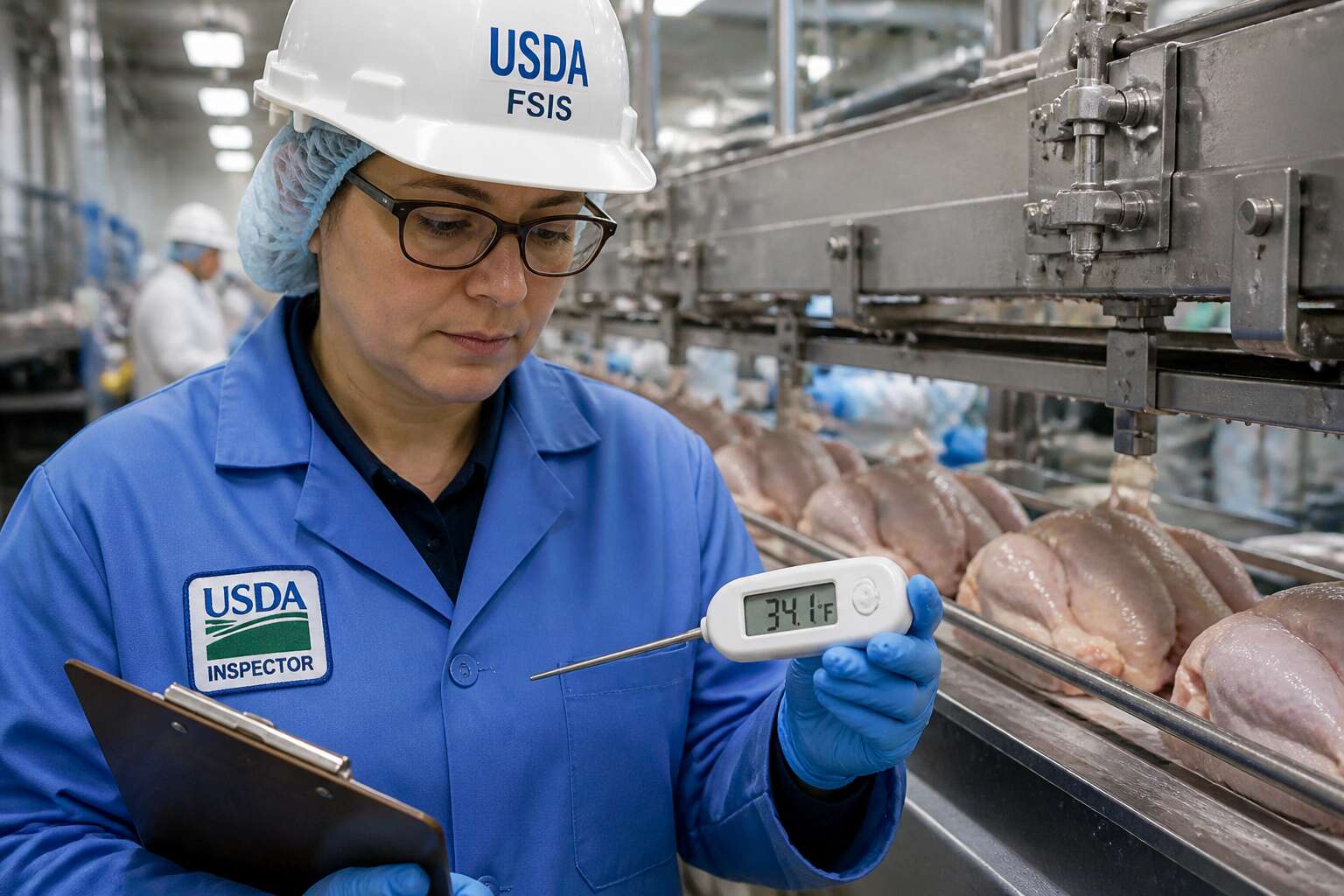
The FSIS operates with a science-based framework. Instead of simply inspecting final products, they mandate that facilities implement rigorous preventive controls. Inspectors are stationed inside processing plants to monitor slaughter and processing procedures continuously. Their duties are specific and non-negotiable:
– Verifying compliance with sanitation standard operating procedures.
– Testing for harmful pathogens like Salmonella and E. coli.
– Enforcing proper cooking and cooling temperatures.
– Reviewing labeling for accuracy and safety claims.
These actions ensure that the oversight extends beyond the plant’s walls and into the distribution chain. The agency’s authority is rooted in the Federal Meat Inspection Act and the Poultry Products Inspection Act. This legal backing gives them the power to halt production, detain products, and even withdraw federal inspectors from a facility, which effectively shuts the plant down. For consumers, this means that the shield of protection is legally binding, not voluntary. The role of FSIS is, therefore, not merely advisory; it is the definitive answer for those wondering who regulates meat and poultry in the commercial sphere.
The Food and Drug Administration (FDA) and Its Limited Role
The Federal Agencies Behind Meat and Poultry Oversight
Nearly 80 percent of the food we eat falls under the watchful eye of the Food and Drug Administration, yet its authority over meat and poultry remains a peculiar carve out. Those who ask who regulates meat and poultry often assume a single governmental monolith handles all protein. The truth is far more nuanced. The FDA does not inspect slaughterhouses, nor does it have jurisdiction over processed chicken breasts or ground beef. This oversight belongs to the USDA. The FDA, however, reigns supreme over a surprising roster of comestibles.
Consider the humble quail or the exotic venison steak. The FDA holds sway over these creatures because they are classified as “non amenable” species. This bureaucratic distinction creates a patchwork of regulation where the species of the animal, not necessarily the safety risk, determines the enforcer. The FDA also supervises the feed given to livestock before they ever reach the FSIS inspection line. This includes the medicated feed that prevents disease, a responsibility that carries significant weight in the chain of safety.
For the everyday consumer, it helps to know the practical difference. If you purchase a pre cooked meal containing beef, the meat component falls under USDA rules. The flour in the crust or the vegetables in the sauce answer to the FDA. This dual system can baffle even industry veterans. The defining line, which determines who regulates meat and poultry, is drawn at the 3 percent threshold. If a soup contains more than 3 percent raw meat, it falls to the USDA. Below that percentage, the FDA takes the lead.
- Overseeing the safety of animal feed and medication.
- Regulating game meats like bison, rabbit, and venison.
- Inspecting imported exotic meats that do not fall under USDA jurisdiction.
- Enforcing standards for the transport and handling of livestock pre slaughter.
This split oversight surfaces in a curious scenario at the grocery store. A frozen lasagna with a thick layer of ground beef is a USDA product. The identical lasagna with a thinner layer of meat becomes an FDA regulated product. The label on the package changes, but the consumer barely notices. This jurisdiction puzzle remains a constant source of confusion for those probing who regulates meat and poultry, especially when products cross state lines. The FDA does offer a safety net, but it is not the primary shield for your Sunday braai. That honour belongs firmly to the FSIS inspector on the plant floor. The FDA works behind the scenes, managing the inputs, while the USDA manages the process. Understanding this partnership clarifies the entire regulatory landscape, allowing you to trust the system rather than question its logic.
How FSIS Inspectors Monitor Slaughter and Processing Plants
Inside a slaughterhouse, the presence of an FSIS inspector is a constant, unblinking reality. These veterinarians and food safety specialists do not simply observe from a distance. They stand at the line where carcasses move, checking lymph nodes, organs, and tissue for signs of disease or contamination. Their authority extends beyond visual checks. They can halt production instantly if they spot a violation, and they often do, which is why the answer to who regulates meat and poultry is never a passive one.
The processing side demands equal vigilance. Inspectors verify that pathogen reduction protocols, such as HACCP systems, are actually implemented. They sample meat for residues and bacteria, and they audit the plant’s own testing records. This work is repetitive and precise, but it is the backbone of consumer trust. For South African readers, understanding this floor level scrutiny clarifies the entire chain.
Consider what an inspector tracks during a typical shift:
1. Temperature control during carcass chilling and storage.
2. Sanitation of equipment and cutting surfaces between batches.
3. Proper labelling of cuts and byproducts.
4. Worker hygiene, including glove changes and handwashing compliance.
Each of these checks answers a critical question. The system functions because these professionals treat every carcass as a potential hazard. Their daily grind, not just the regulatory framework, defines who regulates meat and poultry in practical terms. Without their boots on the floor, the entire oversight structure would be paper only.
Key Differences Between FSIS-Inspected Products and FDA-Regulated Foods
The question of who regulates meat and poultry starts with a simple distinction. FSIS covers meat, poultry, and processed eggs. The FDA handles seafood, produce, and packaged foods. Two agencies, two enforcement philosophies.
Think about a roast chicken versus a bag of salad. The chicken carries the USDA mark, proof that an inspector stood on the slaughterhouse floor. The salad answers to the FDA, which relies on facility registration and periodic checks. I find that contrast striking!
The practical gaps become obvious when stacked side by side:
- FSIS inspectors are stationed in plants during all operating hours.
- FDA inspections follow a risk-based schedule, sometimes years apart.
- FSIS can halt a production line on the spot.
- FDA usually pursues recalls after a problem surfaces.
That split defines who regulates meat and poultry in everyday terms. The poultry aisle feels more tightly governed, because it is.
Why Some Meat Products Fall Outside FSIS Jurisdiction
The federal agencies behind meat and poultry oversight split duties along species and preparation lines. Who regulates meat and poultry depends on the species and the recipe. FSIS regulates domestic livestock and poultry. But the regulatory map has gaps. Some meat products fall outside FSIS jurisdiction.
Game meat offers a clear example. Venison, bison, and rabbit are not FSIS territory. The FDA handles those species. Exotic birds like emu and ostrich also evade FSIS oversight. Processed items with small meat content follow FDA rules too.
- Game animals like deer, elk, and rabbit
- Exotic birds such as emu and ostrich
- Meat in dishes where meat is not the primary ingredient
For South African consumers, this matters. When you see imported game meat, the question of who regulates meat and poultry changes. The USDA mark is not universal. The agency on the package determines the safety standards.
The Legal Framework and Core Regulations
The Federal Meat Inspection Act (FMIA) and Its Requirements
The Federal Meat Inspection Act of 1906 arrived after Upton Sinclair exposed filthy stockyard conditions. That public anger produced the first clear answer to who regulates meat and poultry in America, though its rules have shifted over time.
Under the FMIA, the USDA Food Safety and Inspection Service holds authority. The law requires continuous inspection for all meat sold across state lines. This covers slaughter, processing, and packaging. It is a daily presence, not a periodic check.
Core requirements include:
- Mandatory inspection of cattle, sheep, swine, and goats
- Sanitation standards for all facility operations
- Accurate labeling without false claims
Each requirement demands clear records, and violations bring fines or closure. The FMIA still defines who regulates meat and poultry at the federal level, making it the primary foundation of food safety law.
The Poultry Products Inspection Act (PPIA): Scope and Coverage
When President Johnson signed the Poultry Products Inspection Act in 1957, poultry finally received federal oversight. While meat had inspectors since 1906, chickens and turkeys did not. Today, the PPIA gives the USDA Food Safety and Inspection Service authority over domesticated birds such as chickens, turkeys, ducks, geese, and guineas. This law clarifies who regulates meat and poultry for consumers and producers alike!
The act mandates continuous inspection, and it covers more than whole carcasses. Processed items fall under its scope too:
- Ground poultry and patties
- Frozen dinners containing poultry
- Soups and broths made with poultry
- Luncheon meats and sausages
The PPIA also enforces sanitation rules and accurate labeling. It does not apply to wild game or exotic birds, so those products remain outside federal inspection. That distinction matters for anyone tracing food safety oversight.
The Humane Methods of Slaughter Act and Enforcement
The Humane Methods of Slaughter Act stands as a separate legal pillar. It requires that cattle, sheep, swine, and goats are rendered insensible to pain before slaughter. Poultry remains outside this law. The PPIA governs those birds instead. This separation shapes who regulates meat and poultry on the slaughter floor.
Enforcement rests with FSIS inspectors. They observe handling and stunning procedures during every operating day. Violations are documented. The response escalates in clear steps:
- Noncompliance records for isolated issues
- Notices of intended enforcement for repeat problems
- Suspension of inspection services, which halts production entirely
No plant can sell meat without inspection, so suspension is the ultimate sanction! I have watched inspectors halt a line mid-shift when stunning failed. That direct intervention is rare but powerful. This is the real meaning of who regulates meat and poultry.
HACCP Systems: How Modern Inspection Embraces Preventive Controls
HACCP, or Hazard Analysis and Critical Control Points, transforms the regulatory focus from detection to prevention. Under this system, every slaughterhouse and processing plant must map its own perils, then install checkpoints where danger can be neutralized. This is a daily discipline, not a theoretical exercise.
- Conduct a hazard analysis
- Determine critical control points
- Establish corrective actions
FSIS audits these plans continuously. When a plant fails to uphold its own safeguards, inspectors issue citations. The legal framework gives who regulates meat and poultry a clear mandate: stop hazards before they become illnesses. That mandate rests on federal oversight and private accountability, with HACCP as the operational core.
State and Local Government Involvement in Meat and Poultry Safety
State-Inspected Plants and “Equal-To” Status Under FSIS
While the federal arm of oversight often dominates the conversation, a quieter, yet vital, layer of protection exists at the state level. These local agencies are the first line of defense for many smaller operations, handling the daily rhythm of inspections for plants that do not ship their products across state lines. This system creates a patchwork of oversight that is both practical and deeply connected to regional foodways, ensuring that local butchers and processors can thrive without the full weight of federal bureaucracy.
For a state to run its own program, it must meet a specific threshold known as “Equal To” status under FSIS. This designation is not a rubber stamp. It requires the state’s inspection standards to be, at minimum, as stringent as the federal ones. This includes everything from sanitation protocols to the frequency of checks. Achieving this status is a rigorous process, demanding a demonstration of competence and resources that mirrors the federal commitment to safety.
Once granted, the state inspectors operate with a clear mandate. They perform the same types of ante-mortem and post-mortem examinations as their federal counterparts. These state programs are subject to periodic federal audits to ensure they are still holding the line. The system relies on a delicate balance of trust and verification. For consumers, this means a product from a state-inspected plant carries the same assurance of safety as a federally inspected one, a crucial fact for those who ask who regulates meat and poultry at the local butcher shop.
The requirements for a state to achieve this status generally include:
– A state inspection workforce with training equivalent to federal inspectors.
– Laws and regulations that align with the FMIA and PPIA.
– A system for controlling and evaluating the performance of its own inspectors.
– Ongoing oversight and reporting to the FSIS to maintain the program’s integrity.
This cooperative framework prevents a fragmented approach to food safety. It allows for local economic vitality while ensuring that public health standards are uniform across the country. The federal agency provides the overarching framework, but the states act as the boots on the ground. This partnership is essential for maintaining a robust food supply, where a small farm’s poultry can be trusted just as much as a national brand. The answer to who regulates meat and poultry is, therefore, a shared responsibility, a federal and state alliance that protects the dinner table.
The Cooperative Interstate Shipment Program for Small Processors
According to a 2023 USDA report, only a small fraction of state inspected facilities pursue the Cooperative Interstate Shipment (CIS) program, yet this pathway is crucial for niche producers. This federal mandate acknowledges that the question of who regulates meat and poultry includes a provision for growth. The CIS program allows small plants with a state “Equal To” status to ship their products beyond state borders, effectively granting them access to a national market.
This process is not automatic. The state must apply to the FSIS for a formal grant of inspection for the facility. A plant then operates under its state inspection but follows federal marking and labeling requirements. An FSIS veterinarian conducts an annual audit to verify compliance with all food safety protocols.
The oversight framework for these plants involves a specific division of duties.
1. The state inspector performs the daily, routine checks for sanitation and animal health.
2. The FSIS provides the overarching regulatory and legal authority.
3. The plant itself is responsible for its HACCP plan and record keeping.
4. The consumer benefits from a product that meets federal standards.
For a small farm or butcher, this program is a practical alternative to the full federal inspection burden. It answers the call for local economic vitality while maintaining a strict safety net. This system means the definitive answer to who regulates meat and poultry includes state authorities operating with federal oversight to support smaller operations.
Local Health Departments and Retail Food Service Oversight
Each year, municipal health services across South Africa conduct tens of thousands of inspections on retail food premises, yet most shoppers never pause to consider the layer of protection that exists after the meat leaves the abattoir! For restaurants, delis, and butcheries, the regulatory mantle shifts decisively to local authorities.
While national agencies oversee the slaughter and processing, municipal environmental health practitioners enforce hygiene standards at the point of sale. They check cold storage temperatures, verify product labeling for allergens, and monitor the cleanliness of prep areas. I have stood in cramped kitchens with these inspectors, watching them check the temperature of a single patty. These officers have the legal authority to close a business immediately if they find critical contraventions.
- They audit staff hygiene practices and food handler training certificates.
- They sample products for microbiological contamination.
- They ensure proper segregation of raw and cooked goods to prevent cross-contamination.
This daily oversight by local health departments is essential to the broader answer of who regulates meat and poultry, bridging the gap between federal mandates and the community’s weekly grocery run.
Other Agencies, International Oversight, and Enforcement Actions
The FDA’s Food Safety Modernization Act (FSMA) and Plant-Based Alternatives
When exploring who regulates meat and poultry, the oversight network extends far beyond familiar borders. International bodies such as the World Organisation for Animal Health shape guidelines that South African importers and exporters must respect. Domestically, agencies like the South African Health Products Regulatory Authority sometimes intersect with food safety in unexpected ways.
The FDA’s Food Safety Modernization Act, while American, sends ripples across global supply chains. It pushes foreign facilities toward preventive controls rather than reactive fixes. Enforcement actions from the FSIS and FDA can include recalls, monetary penalties, or even facility shutdowns.
- Plant-based alternatives fall under FDA jurisdiction, not FSIS
- These products carry different labelling requirements
- Consumers frequently assume one agency holds all authority
This layered arrangement means the question of who regulates meat and poultry rarely yields a straightforward answer.
Environmental and Workplace Regulators: EPA and OSHA in Processing Plants
Steam and stainless steel define the modern processing plant, but so do the quiet inspectors from agencies that rarely make headlines. The Occupational Safety and Health Administration (OSHA) and the Environmental Protection Agency (EPA) hold significant sway over daily operations. OSHA scrutinizes line speeds, knife handling, and repetitive motion injuries. The EPA monitors water discharge, waste rendering, and air quality permits. For many facility managers, these inspections carry as much weight as any FSIS audit.
International oversight adds another layer of complexity. The World Organisation for Animal Health (WOAH) sets terrestrial code standards that South African exporters must meet to access lucrative markets. These guidelines influence biosecurity protocols and veterinary certification long before a single carcass reaches a port. Global trade agreements also shape who regulates meat and poultry across borders, creating a web of mutual recognition and bilateral equivalence agreements.
– OSHA can issue citations for ergonomic hazards without prior warning.
– The EPA enforces Clean Water Act permits tied to slaughterhouse effluent.
– WOAH standards dictate vaccination and disease surveillance records.
Enforcement actions from these bodies rarely resemble the dramatic recalls of the FSIS. Instead, they manifest as administrative fines, corrective action plans, and, in stubborn cases, criminal referrals. An EPA wetland violation can halt a facility expansion. An OSHA willful citation can trigger criminal prosecution. Understanding who regulates meat and poultry means accepting that the answer spans labor, environmental, and international law.
The USDA Agricultural Marketing Service (AMS) and Product Grading
Beyond the environmental and labor watchdogs, the USDA Agricultural Marketing Service (AMS) shapes who regulates meat and poultry through voluntary grading. Processors pay for these evaluations to earn quality stamps like Prime or Choice. Grading does not verify food safety. It verifies marbling, tenderness, and yield, giving buyers a shorthand for value.
- Beef quality grades such as Prime and Choice
- Poultry yield grades for carcass composition
- Grain-fed and organic certification programs
International oversight complicates the regulatory map. South African exporters must satisfy importing countries’ veterinary requirements, often stricter than local rules. The World Organisation for Animal Health provides baseline standards, but bilateral trade agreements layer on additional audits and equivalence checks. Enforcement from these bodies looks different from FSIS recalls. Expect administrative fines, corrective action plans, and, in stubborn cases, criminal referrals. Losing a grading contract or an export certificate can hurt more than any fine.
How FSIS Conducts Recalls and Public Health Alerts
Recalls grab headlines, but they represent only the most visible edge of a vast oversight machinery. When a shipment of contaminated biltong or improperly chilled chicken reaches South African shelves, the question of who regulates meat and poultry shifts from routine inspection to urgent intervention. The FSIS coordinates recall efforts by classifying the health risk, from Class I for deadly pathogens like Listeria to Class III for technical violations. Each classification triggers a distinct response protocol, yet the agency rarely acts alone.
International trade introduces additional enforcers. South African producers exporting to the European Union face audits from the Directorate-General for Health and Food Safety, which maintains its own rapid alert system for food and feed hazards. Likewise, exports to the United States require FSIS equivalence determinations, meaning local plants must mirror American sanitation standards or lose market access entirely. These foreign regulators hold power over trade certificates, and revocation can halt a facility’s operations faster than any domestic fine.
The USDA’s Foreign Agricultural Service also conducts on-site verification visits abroad, checking that imported meat meets the same safety benchmarks required of domestic products. When violations surface, the FSIS issues public health alerts rather than formal recalls, particularly when products have already left the retail chain and cannot be retrieved. These alerts warn consumers directly, advising them to check labels and return or discard suspect items.
Enforcement actions follow a deliberate ladder of escalation:
- Voluntary corrective actions submitted by the plant within 24 hours of a violation
- Administrative detention of product suspected of causing illness
- Withdrawal of inspection services, effectively closing the facility
- Criminal prosecution for patterns of deliberate noncompliance
This layered approach means that who regulates meat and poultry is never a single entity, but a constellation of domestic inspectors, international auditors, and trade officials whose decisions ripple through the entire supply chain. Each layer reinforces the others, ensuring that oversight persists even when a physical product crosses borders or changes hands.
International Equivalence: Oversight of Imported Meat and Poultry
The Karoo abattoir shipping biltong to London answers to multiple regulatory regimes, each with its own audit schedule. The question of who regulates meat and poultry expands with every border crossed.
The Codex Alimentarius Commission sets international hygiene benchmarks, but equivalence under the WTO’s Sanitary and Phytosanitary Agreement lets importing countries impose their own standards. The United States requires FSIS equivalence determinations, meaning foreign plants must replicate American sanitation procedures exactly.
Enforcement follows a measured progression:
- Cancellation of export certificates after foreign audit findings
- Suspension from a market’s eligible supplier list
- Refusal of entry at the destination port
A container exported with full approvals can be rejected at arrival. In my experience, a port rejection is final, with no appeal process for the product itself. The regulator, in the end, is every authority whose signature the documentation carries.
Coordination Among Agencies and the Future of Regulatory Oversight
Behind every export certificate sits a chain of regulators no single authority fully controls. The question of who regulates meat and poultry shifts as product crosses each border, with customs authorities, international auditing bodies, and port health officers holding veto power over a shipment.
Enforcement actions rarely follow a linear path. A foreign audit finding can cancel export status in one market while another accepts the same facility without question. Documentation must anticipate the strictest standard applied next.
- Port authorities refuse entry without appeal
- Consumer protection agencies coordinate traceability actions
- Future oversight depends on shared digital records
The future of regulatory oversight points toward data integration. Agencies that once operated in isolation now share inspection results and recall triggers. Every regulatory signature carries power to stop a product, and no single letterhead decides the outcome alone.


0 Comments