Rethinking the Traditional Protein Plate
Why Consumers Are Exploring Meat-Free Options
On a recent trip to a Johannesburg supermarket, I watched shoppers pause at the protein aisle, reading labels of plant-based options with a mix of curiosity and skepticism. That moment captures the broader shift underway in South Africa! Consumers are rethinking the traditional protein plate.
Rising poultry prices push households toward alternatives. Concerns about intensive farming practices and personal health also drive the search. Many people want variety without losing nutritional value. Poultry alternatives now appear in township spaza shops and upscale Cape Town delis. They include tofu, tempeh, and textured vegetable protein.
- Cost volatility of chicken and other meats
- Interest in legume-based dishes from local cuisines
- Growing awareness of sustainable food systems
These products offer similar protein density and cooking flexibility. For retailers and producers, responding to this demand means stocking smarter with a wider range of options. Poultry alternatives are no longer a niche curiosity.
The Rise of Flexitarian and Plant-Forward Diets
South Africa’s dinner plate is undergoing a reinvention, and the chicken is losing its monopoly. Flexitarians, a group that has made the phrase ‘mostly vegetarian’ socially acceptable, are driving this shift. They are the drivers of the protein aisle.
Plant-forward diets no longer carry the stigma of fringe activism; they now signal practical cost management and culinary curiosity. The movement has consequences for producers of poultry alternatives. Demand no longer comes from vegans or environmental activists. It comes from households seeking variety and nutritional balance. Consider what drives a flexitarian’s weekly shop:
- Rotating proteins
- Choosing legumes
- Reading labels
This behavioral shift means poultry alternatives must match the expected serving size and cooking time of chicken. Success now depends on how a plant-based piece fits into a stew or a stir-fry.
Myths and Misconceptions About Plant-Based Proteins
A common myth insists plant-based proteins are ultra-processed imposters. I’ve heard it at braais across the country! In reality, many poultry alternatives start with soya, peas, or chickpeas and deliver comparable protein per serving. Another misconception: they taste like cardboard. Modern seasoning and texture techniques changed that entirely.
The truth is simpler than the marketing suggests. Some products are heavily processed, yes, but so are boerewors and biltong. The difference lies in reading the label. Here’s what to look for:
- Protein content per 100g
- Sodium levels
- Ingredient list length
Choosing a plant-based option isn’t about swapping a whole food for a factory creation. It’s about knowing what you’re buying.
Key Factors Driving the Demand for Sustainable Protein
The ecological cost of a chicken leg extends beyond the retail price. Every kilogram of conventional poultry demands more than 4,000 litres of water and feed grown on arable land. In a country where low dam levels make headlines every summer, that accounting is reshaping the traditional protein plate.
Several key factors drive the appetite for sustainable protein. Electricity costs climb with every tariff increase, load shedding disrupts cold chains, and feed prices respond to global grain markets. Each pressure lands on the final bill, making poultry alternatives attractive on price alone.
The converging forces include:
- Water scarcity and restrictions
- Escalating costs for conventional meat
- Supply chain fragility during outages
- Awareness of embodied resources in meals
I have watched the cost of a weekend braai climb, and the maths no longer favours tradition alone. These pressures nudge shoppers toward poultry alternatives as a durable answer where conventional production grows pricier each season.
Exploring the Spectrum of Meat-Free Protein Options
Tofu and Tempeh: Fermented Soy Staples
In South Africa, a 2023 survey found that 43% of shoppers are trimming meat portions, yet the craving for a proper chicken bite remains. Tofu and tempeh, both fermented soy staples, step in as practical poultry alternatives. Tofu’s high water content helps it adopt a meaty chew when pressed and seared. Tempeh, fermented and dense, offers a nutty character that holds up to aggressive seasoning and slow braising.
Cooking with these blocks asks for patience. Freeze tofu to make its structure porous, then marinate it deeply. Steam tempeh to mellow its assertiveness. A simple procedure yields dinner:
1. Press tofu, cut into strips.
2. Soak in a mixture of soy sauce, ginger, and honey.
3. Roast at 200°C until edges crisp.
These poultry alternatives provide protein and fibre, fitting neatly into Cape Malay curries or busy street-food wraps. The satisfaction comes from texture and flavour, not imitation.
Seitan: The Wheat-Based Protein Powerhouse
Wheat can become a convincing stand-in for chicken, if you know how to treat it! Seitan, made from washed dough and vital wheat gluten, delivers a dense, fibrous bite that many cooks find closer to meat than soy. For South Africans experimenting with poultry alternatives, it offers a distinct route beyond fermented blocks.
The key is its neutral base. Seitan absorbs marinades readily, and its structure holds up to grilling or shredding. Use it in these ways:
- Sliced thin for stir-fries with chilli and garlic
- Pulled apart for smoky barbecue sandwiches
- Diced into stews that need slow simmering
You must season it aggressively, because gluten alone lacks flavour. In my experience, a dark soy and paprika rub works best.
Jackfruit and Mushroom Blends for Texture
Young jackfruit, simmered in a spiced broth, shreds into strands that echo pulled chicken. Its blandness demands assertive seasoning. Mushrooms contribute glutamates, yielding savoury depth. Together, they create a texture that neither soy nor wheat can replicate. For South African cooks, this pairing unlocks a flexible base for curries, pies, or braai side dishes!
I have found that chopping portobello caps into thick slices and layering them with jackfruit creates a pleasing contrast. The fruit softens, the mushrooms retain a firm bite. This duality keeps each mouthful interesting. Such blends are becoming a preferred route for poultry alternatives, especially when the goal is mouthfeel rather than protein density.
Pea and Soy Protein Isolates in Ready-Made Products
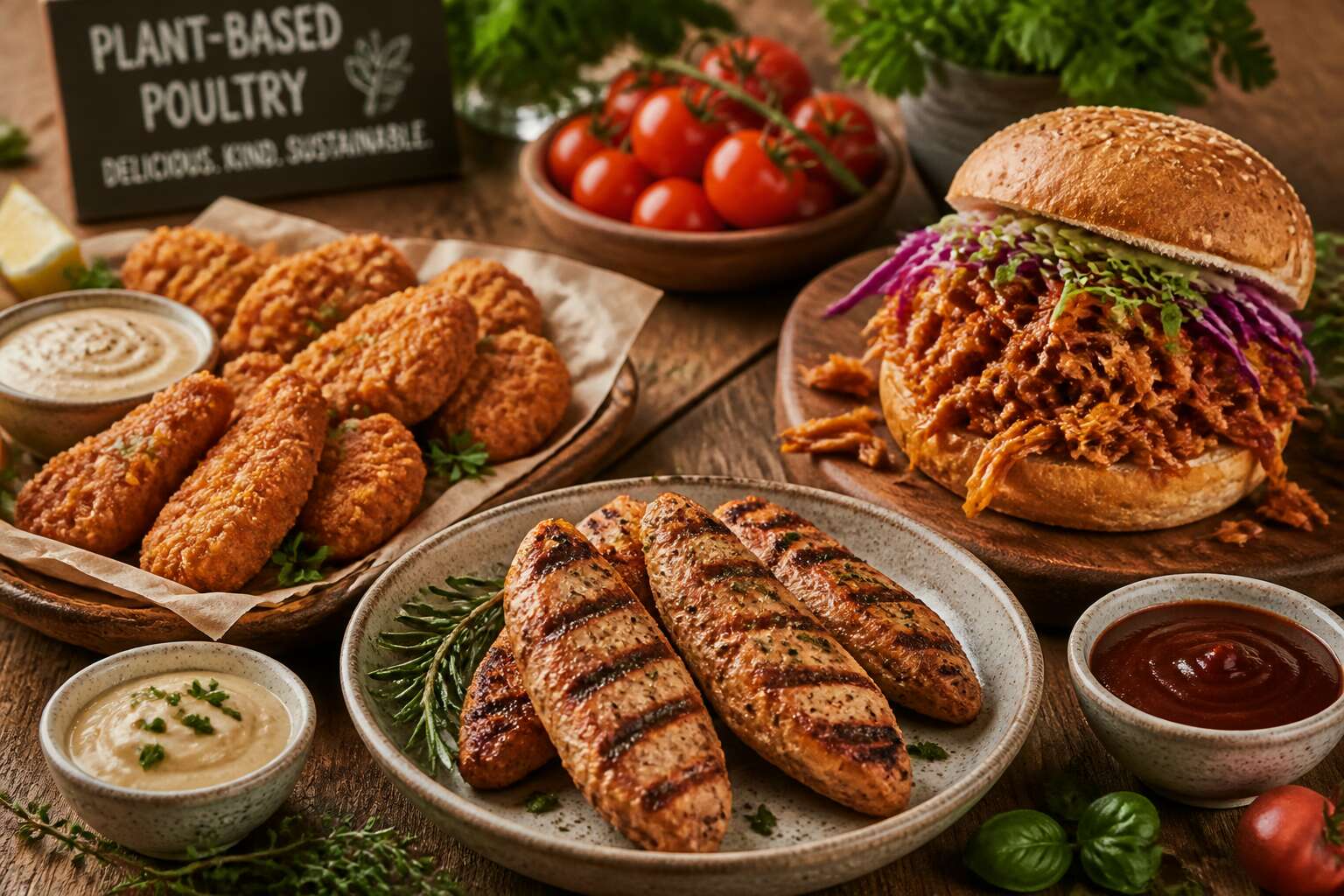
Pea and soy protein isolates are the primary protein sources in many ready-made poultry alternatives. They deliver a protein profile that rivals chicken, while their neutral taste absorbs marinades and spice rubs with ease. In South African supermarkets, these isolates appear in nuggets, fillets, and burger patties, offering convenience without the meat!
What sets them apart is their texture engineering. Soy isolates produce a fibrous bite, close to shredded poultry. Pea isolates bring a cleaner finish, with no allergen baggage. Many manufacturers blend both to balance cost and mouthfeel. I find this hybrid approach especially useful for braai culture, where a firm bite matters.
- Nuggets and strips for quick dinners
- Braai-ready skewers and kebabs
- Pie fillings and curry bases
These products fill a specific gap: they satisfy cravings for familiar meat-free meals without demanding cooking skills. For those transitioning away from meat, they offer a practical and satisfying option.
Emerging Options: Mycoprotein and Cultivated Proteins
Forget the pea patty for a moment! Mycoprotein, a fungus-derived protein, is fermenting its way into South African kitchens. This ingredient yields a fibrous chew that rivals chicken, making it a serious candidate for poultry alternatives.
Cultivated proteins take a bolder path. Real animal cells, grown in bioreactors, produce actual poultry flesh without slaughter. The technology is pricey, yet pilot runs in Johannesburg are drawing curious diners.
- Mycoprotein delivers fibre and a satisfying texture
- Cultivated proteins offer authentic taste with no ethical baggage
These emerging options stretch the spectrum far beyond plant isolates. For flexitarians, they supply novel choices that feel familiar and futuristic at once.
Comparing Nutritional Profiles: Beyond the Bird
Protein Content and Amino Acid Completeness
The protein score on a package is a promise, not proof. In South Africa, discerning eaters are learning that poultry alternatives must deliver more than a high gram count. The amino acid completeness of a protein determines how effectively the body can use it. I have compared several options, and the nuances are startling.
- Lysine appears abundantly in legume-based options.
- Methionine often falls short in many plant sources.
- Tryptophan shows balanced amounts across mycoprotein.
These patterns influence muscle synthesis and immune response. Digestibility further complicates the equation. A raw label cannot predict nitrogen retention. Thermal processing, fermentation, and strategic pairings all shift the final value. That is the actual nutrition, not the advertised sum.
Fat, Cholesterol, and Caloric Differences
A 100 gram serving of skinless roasted chicken holds 165 calories and 3.6 grams of fat. Many poultry alternatives on South African shelves land within the same range, yet their cholesterol count sits at zero. That difference alone keeps shifting dietary advice!
Calories only begin the comparison. Some options deliver nearly identical energy to roasted chicken, while water-heavy products generate less satiety than their serving size promises. Fat composition varies more than the totals imply:
- Mycoprotein contributes negligible saturated fat.
- Soy isolates can be formulated to keep fat under 3 grams per serving.
- Fermented blends often retain more unsaturated fats.
These variations influence post-meal energy and long-term metabolic adaptation. South African consumers comparing these products should examine fat quality, not just the calorie line.
Micronutrients: Iron, Zinc, and B-Vitamins
Most South Africans assume chicken is the only practical source of iron and B-vitamins. That assumption deserves scrutiny! A 100 gram portion of roasted chicken provides roughly 1 mg of iron and 2.5 mg of zinc. Several poultry alternatives match or exceed those numbers using fortified ingredients.
Fermented soy products retain bioavailable zinc, and mycoprotein delivers B12 that many plant foods lack. Consider what shifts nutritionally:
– Spinach-based blends offer non-heme iron, though absorption varies
– Nutritional yeast fortification supplies vitamin B12
– Legume bases contribute folate and thiamine
The real issue is bioavailability. Animal sources provide heme iron, which absorbs efficiently. Plant-derived iron needs vitamin C for proper uptake. South African shoppers should compare iron and zinc percentages on labels as closely as they compare protein counts.
Sodium and Additive Levels in Processed Alternatives
Scrutiny of sodium reveals a different hierarchy altogether. Processed poultry alternatives often depend on sodium for preservation and mouthfeel, with some brands exceeding 500 mg per serving. That same tofu or tempeh, unflavored, sits under 10 mg. The gap matters for South African consumers managing blood pressure.
Additives complicate the picture further. Methylcellulose, carrageenan, and maltodextrin appear routinely in plant-based strips and nuggets. These compounds serve structure and texture, yet their long-term effects remain under debate. Reading ingredient lists becomes an act of vigilance.
- Compare mg of sodium per 100 g, not per serving
- Check for potassium chloride as a salt substitute
- Notice phosphates, common in both chicken and soy analogs
I always weigh the tradeoff. Healthier poultry alternatives prioritize whole ingredients over engineering. The label tells the story before the first bite!
Digestibility and Gut Health Considerations
Protein digestibility varies sharply across poultry alternatives. Mycoprotein serves as a fermentable fibre source that feeds beneficial gut bacteria. Pea protein isolate digests quickly but triggers bloating in sensitive individuals. Fermented soy products like tempeh introduce probiotics that support intestinal integrity.
I notice seitan ranks lower because gluten proteins resist breakdown in many digestive systems. Mycoprotein delivers beta-glucans alongside protein. Tempeh fermentation boosts nutrient bioavailability while reducing flatulence compounds. Jackfruit supplies prebiotic fibre for regularity.
- Mycoprotein offers soluble fibre for microbiome diversity.
- Pea isolates may cause transient gas during initial consumption.
- Tempeh supports gut health through live cultures.
South African consumers often tolerate slow-fermented options best. The gut ecosystem adapts within weeks, and careful selection of poultry alternatives eases the transition.
Making Informed Choices Based on Dietary Needs
Choosing among poultry alternatives becomes a matter of matching nutritional profiles to personal requirements. I often tell clients that a marathon runner may prioritise lysine-rich pea isolates, while someone managing cholesterol might select tempeh for its plant sterols. Seitan offers a lean protein option but lacks the iron density found in jackfruit blends. Reading labels for fortification levels matters; some mycoprotein products add vitamin B12.
Consider these dietary needs:
- Iron deficiency: opt for fermented soy or mushroom blends.
- Muscle recovery: seek complete amino acid profiles in soy or quinoa-based options.
- Blood sugar control: choose higher-fibre alternatives like jackfruit.
South African shoppers overlook how processing alters mineral absorption. Comparing products side by side reveals that no single option among poultry alternatives fits every body.
Culinary Techniques for Seitan, Tofu, and Jackfruit
Marinating and Seasoning Strategies for Flavor Depth
Roasting a whole bird is straightforward. Cooking seitan, tofu, and jackfruit demands a bit more cunning, as I learned when my first seitan tasted like a damp eraser. Each protein needs a distinct approach. Seitan rewards a two-step process: poach it first to lock in moisture, then sear hard for a crust. Tofu benefits from a freeze-thaw cycle, which creates an ice crystal lattice that soaks up marinades. Jackfruit, meanwhile, prefers a long, slow braise to soften its dense core. For flavor, think beyond the bottle of soy sauce. Consider these pairings:
- Seitan with smoked paprika, Marmite, and a splash of apple cider vinegar.
- Tofu with miso, ginger, and a touch of sesame oil.
- Jackfruit with peri-peri spice, tomato paste, and a squeeze of lemon.
Acidity is your friend, but use it judiciously. Too much vinegar will turn tofu tough and make seitan rubbery. Balance umami with a hint of sweetness. These poultry alternatives need no apology when they carry a proper marinade.
Texture Hacks: Pressing, Freezing, and Tearing
Texture determines whether poultry alternatives feel convincing. Pressing tofu removes excess water, allowing it to absorb marinades rather than reject them. Freezing tofu overnight creates an ice crystal lattice that turns its silken interior into a sponge, then a satisfying chew. Tearing jackfruit along its natural seams yields long fibrous strands. Seitan benefits from a brief rest before cooking, which relaxes the gluten and prevents rubbery resilience.
- Press tofu for 15 minutes under a weighted plate.
- Freeze tofu, then thaw completely before squeezing.
- Tear jackfruit after braising for maximum surface area.
These texture hacks cost nothing but time, and they reward you with a mouthfeel that stands apart from bland cubes. The result is a plant-based dish that needs no apology!
Grilling, Roasting, and Sautéing Methods
Braaing seitan demands nerve. The gluten shrinks if you turn it too early; the grill marks need a moment to set. Roasting tofu transforms its exterior into a leathery shell while the interior stays tender. Sautéing jackfruit in a cast iron pan creates charred edges without drying the flesh. These techniques give poultry alternatives a complexity plain cubes lack.
A practical sequence for the home cook:
- Grill seitan over medium heat for four minutes per side.
- Roast tofu at 180°C for 25 minutes, flipping once.
- Sauté jackfruit until the edges brown and crisp.
Each method applies heat differently. Grilling promotes browning through dry radiant heat. Roasting circulates hot air for even texture. Sautéing uses quick contact cooking. All three produce poultry alternatives with distinct, convincing character.
Incorporating Alternatives into Soups, Stews, and Skillets
Soups and stews welcome poultry alternatives with a different gravity. Seitan, torn into ragged chunks, swells in the liquid, absorbing the surrounding dark until it turns yielding. Tofu, pressed and frozen, survives the simmer with a resilient bite, its interior silently releasing moisture. Jackfruit finds its calling in a skillet, where it mingles with onions and spices, its strands loosening into a meaty tangle.
- Add seitan last to stews, letting it heat through without boiling.
- Use frozen tofu in soups for a sponge-like texture that holds broth.
- Cook jackfruit in a skillet with high heat, then fold in tomatoes and herbs.
I find these poultry alternatives answer to time and temperature. A stew transforms them into carriers of flavor, while a skillet gives them char and gravity. Each effort yields a meal that satisfies without a single feather!
Binding and Breading for Crispy Coating
Binding and breading these poultry alternatives demands a delicate touch. Seitan needs a cornstarch dusting to build a crisp lattice. Tofu works best when pressed, then dipped in a chickpea flour slurry. Jackfruit requires aquafaba as an adhesive, otherwise the strands separate in the oil.
- Dip each piece into a seasoned batter.
- Roll in panko or crushed maize.
- Rest for ten minutes before frying.
That rest lets the coating cling. I prefer a shallow pan with a steady temperature. A heavy hand with oil ruins the crust. Crisp coating changes how you perceive plant protein. These poultry alternatives deliver a satisfying bite without a single feather.
Economic and Environmental Considerations for the Modern Consumer
Price Comparison: Plant-Based vs. Conventional Meats
Let’s face it, the price tag on plant-based proteins causes a double take! Comparing chicken breasts to tofu at my local Johannesburg grocery, the gap is narrowing but still exists. But that comparison misses a larger picture: conventional meat carries environmental burdens like water usage and land degradation. Those costs don’t appear on your receipt, but they affect everyone.
For the modern consumer, the calculation shifts with scale. Raw ingredients like chickpeas cost less per kilogram than most processed poultry alternatives. Frozen plant burgers undercut fresh meat during promotions. Conventional poultry prices fluctuate with feed costs and disease outbreaks, while alternatives remain stable.
Choosing poultry alternatives isn’t purely moral; it’s an economic hedge. Factoring in health savings from lower cholesterol and the environmental cost of methane emissions, the price differential becomes less stark. I’m not claiming it’s always cheaper, but the value proposition is more complex than a sticker price.
Avail recepción: Where to Buy and What to Look For
Modern consumers face a paradox: choosing poultry alternatives often feels like a privilege, yet the long term savings are real. In South Africa, the economic case extends beyond the shelf price. Water scarcity and load shedding affect conventional meat production, driving up costs that rarely appear on labels. Environmental considerations, such as reduced land use, make alternatives attractive.
Where to buy matters. Local health stores and online retailers offer bulk options that lower per meal costs. I look for poultry alternatives with transparent sourcing, since imported plant proteins carry a hidden carbon price. A simple check for local certifications helps. What a difference that makes! When I evaluate a brand, I weigh these factors:
- Water usage per kilogram of protein
- Packaging that can be recycled or composted
- Distance from farm to factory to shelf
Water and Land Usage: The Ecological Footprint
Producing one kilogram of broiler meat consumes over 4,000 litres of water once feed and processing are counted. In a water-scarce country, that figure is not abstract. Conventional poultry farming demands large volumes from strained reservoirs, and feed crops occupy vast tracts of arable land. The cost never appears on a shelf label, but it surfaces in municipal bills and agricultural subsidies.
Poultry alternatives change that calculation. Legume-based proteins require a fraction of the water and often grow on land too marginal for maize or soy monocultures. The economic case aligns with environmental sense. When I evaluate a brand, I ask how its supply chain treats local resources. The factors I weigh include:
- Litres of water needed per kilogram of protein
- Reliance on irrigation versus seasonal rainfall
- Land use intensity, measured per serving
Mycoprotein and fermented poultry alternatives sidestep farmland entirely through vertical production. For the South African consumer, this turns a grocery decision into a statement about water security and land stewardship.
Reducing Food Waste with Smart Storage
Roughly a third of South African food purchases end up in landfill, and for protein that is a direct hit to the wallet. Poultry alternatives offer a different trajectory when storage is handled correctly. The economic picture goes beyond the shelf price. A pack of mycoprotein or legume based patties that stays fresh for two weeks reduces the pressure to cook immediately. That matters for households where electricity outages disrupt meal planning. When I look at the cost per usable serving, waste becomes the hidden variable. Smart storage transforms a premium product into a frugal choice.
- Check moisture levels; excess humidity accelerates spoilage in textured proteins.
- Freeze portions at purchase to lock in texture and extend usage windows.
- Separate raw alternatives from ready meals to avoid cross contamination.
Environmental savings only materialise if the food is eaten. Throwing away a spoiled plant-based roast wastes the water, energy, and logistics that went into making it. For South African consumers, that connection is direct. A kilogram of poultry alternatives often carries a higher price than conventional meat, but with deliberate storage, the actual cost per plate drops. This reframes the decision from immediate expense to long term resource management.
The Future of Alternative Proteins in the Global Market
The global alternative protein sector is on track to capture a meaningful share of the meat market within a decade. For South African households, this forecast carries a direct economic message: poultry alternatives are approaching a price inflection point.
Fermentation derived proteins already undercut imported soy isolates in some categories. Cultivated meat, while still expensive, foreshadows a future where protein production decouples from feed costs and disease outbreaks. That shift rewrites the calculus for consumers who weigh affordability alongside environmental impact.
I find the global investment picture compelling. Capital flowing into this sector signals that production costs will keep falling. South African consumers who adopt these products early help shape a local market that will eventually supply the rest of the continent!
Balancing Budget and Sustainability Goals
South African shoppers watching both the till slip and their carbon footprint are finding common ground. Poultry alternatives already undercut imported soy isolates in several retail categories, and local fermentation facilities are trimming production overheads further each quarter. I have seen price tags shift noticeably in just two years.
The environmental arithmetic demands attention:
- Water consumption for plant-based chicken substitutes drops to roughly a fifth of conventional poultry operations
- Feed conversion ratios become irrelevant when protein is grown in tanks rather than pens
- Logistics emissions decrease as regional production hubs shorten distribution lines
These figures matter most to the flexitarian parent reconciling a R450 weekly protein budget with rising electricity tariffs! The overlap between financial prudence and ecological responsibility grows wider with every new processing plant that comes online.

0 Comments