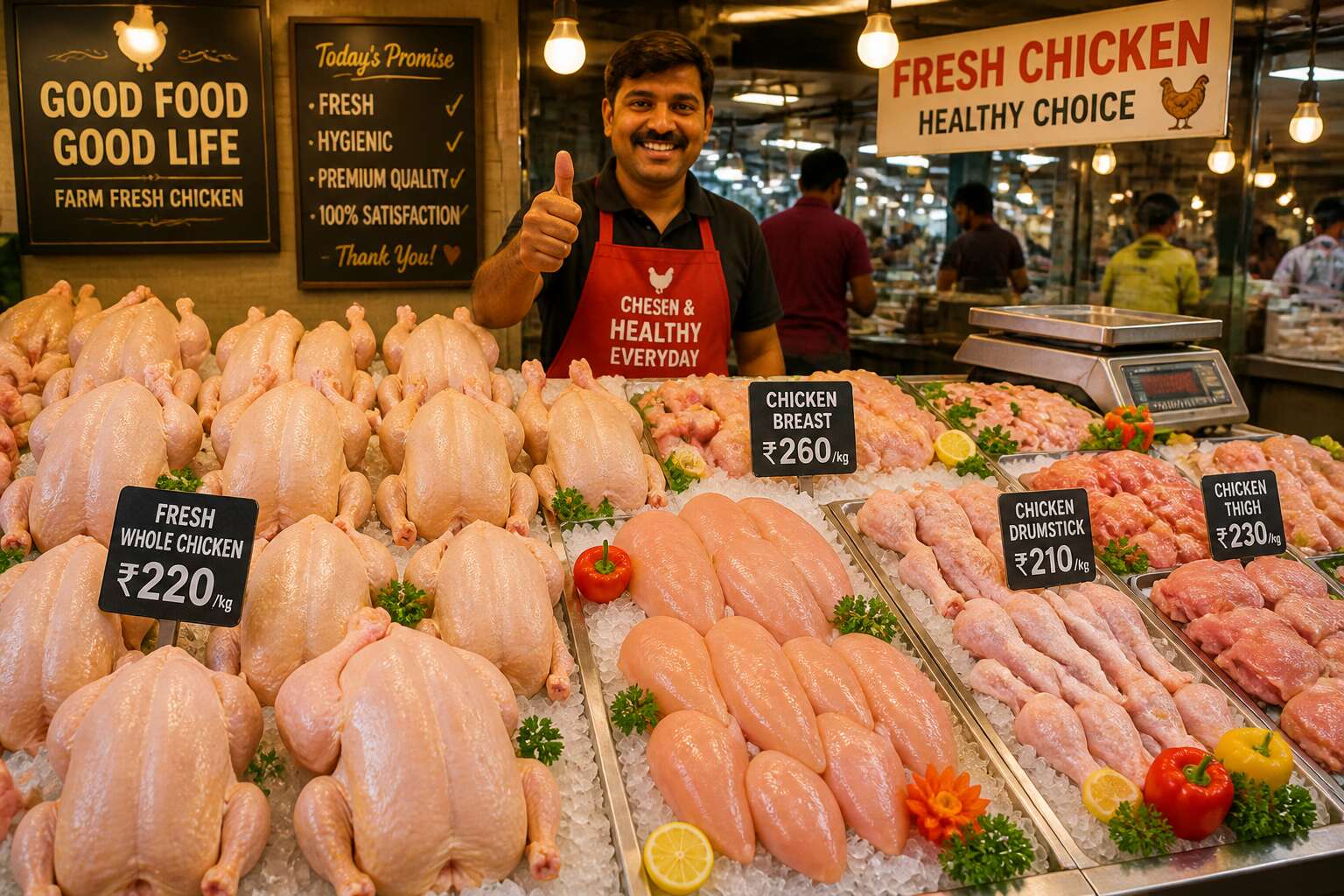
Industry Landscape and Growth Drivers
Global Production Volume Trends
Global poultry production surpassed 140 million tonnes in 2023, a figure that underscores the sector’s expansion. The poultry market now hinges on efficiency gains and shifting protein demand across emerging economies.
Growth drivers include feed cost stabilisation and genetic improvements in broiler breeds. Production volume trends show Asia and South America leading output, while Africa accelerates from a smaller base. I see South African producers leveraging these patterns to optimise their own cycles.
- Intensive farming systems raise yield per bird
- Vertical integration reduces supply chain volatility
- Disease control measures protect flock health
These factors reshape the sector’s trajectory, compelling stakeholders to adapt quickly.
Key Consumer Demographics and Preferences
The poultry market in South Africa is defined by structural shifts, not seasonal spikes. Feed costs remain the dominant variable, and producers who secure supply agreements gain an advantage. I see energy expenses pushing operations toward solar solutions, a welcome change for margins!
Consumer preferences are splitting along generational lines. Younger buyers in urban centres want marinated, pre-packaged cuts that reduce preparation time. Older demographics still value whole birds for family meals and cultural occasions. This divergence drives product innovation across the sector.
- Urban households buy smaller, frequent portions
- Rural consumers favour larger birds for sharing
- Quick-service restaurants anchor demand for dark meat
The poultry market must balance these competing demands while managing input costs.
Government Regulations and Trade Policies
South Africa’s poultry market operates within a regulatory environment that shapes every level of production. Import tariffs on frozen chicken portions and anti-dumping duties on specific trading partners have been the defining features, protecting local processors while raising input costs for smaller operations.
I find the industry landscape marked by consolidation among the top producers, who control feed mills and hatcheries. Growth drivers centre on rising protein demand from a growing middle class, yet load-shedding still forces investment in solar and battery storage at abattoirs. That shift gives me hope for long term resilience!
Government policy around biosecurity and avian influenza control adds another layer. Compliance costs push independent growers toward contract farming arrangements with larger integrators. The resulting structure, where regulation meets scale, determines who survives in this poultry market.
Impact of Feed Costs on Profitability
Feed accounts for roughly 70% of live bird production costs, so the poultry market often feels like a margin game played in reverse. Producers watch global grain indices with the same intensity that traders watch the rand. The industry landscape reflects this pressure, where every percentage shift in maize or soybean meal pricing alters the survival calculus for growers, from the largest integrators to independent free-range operations.
Growth drivers remain persistent, however. Urbanisation and a protein-hungry middle class continue to push demand for broiler meat forward. Yet expansion plans are tempered by the reality of feed volatility and electricity costs. The most visible trend is the quiet consolidation of feed milling capacity. Larger players mitigate risk through forward contracting and import substitution, while smaller operators absorb price shocks directly.
The impact of feed costs on profitability manifests in several segmented ways:
– Volatile maize and soya prices directly squeeze gross margins, often within a single quarter.
– Larger integrators hedge against price swings, whereas independents face the full brunt of market fluctuations.
– Rising utility tariffs at feed mills add another layer of cost, compounding the feed-to-meat price ratio.
This cost structure shapes herd management decisions, bird weights, and even slaughter schedules. In the current poultry market, those who control their feed conversion efficiency control their destiny. The margin for error is shrinking, and the survivors are those who treat every kilogram of feed as a strategic asset rather than a simple input cost.
Segmentation Analysis
By Product Type: Broilers, Layers, and Others
Broilers, layers, and others are not interchangeable categories. Segmentation by product type splits the poultry market into three distinct economic roles. Broilers dominate meat consumption, while layers support the egg trade, and others include niche birds like ostriches or guinea fowl.
Here is a quick breakdown of what drives each category:
- Broilers: fast growth cycles, high turnover, and heavy reliance on feed efficiency.
- Layers: longer production periods, with revenue tied to egg yield and shell quality.
- Others: specialty markets, often with higher margins but limited scale.
In South Africa, broiler farming is the backbone of this market, yet layers offer a steadier income stream for smaller operations. The interplay between these product types shapes pricing and supply across the country. I find that understanding this segmentation is essential for anyone tracking local demand.
By Distribution Channel: Retail vs. Foodservice
Eight out of ten South African households purchase fresh or frozen chicken portions weekly, a statistic that underscores the dominance of the retail channel. Supermarkets and neighborhood spaza shops anchor the consumer end of the poultry market, offering standardized cuts that cater to price-sensitive buyers. This channel prioritizes shelf stability and consistent packaging, which compels producers to optimize their cold chain logistics.
The foodservice channel operates on a different rhythm, driven by immediate demand from restaurants, fast-food franchises, and catering operations. Here, the accent falls on portion control and delivery frequency rather than long-term storage. While retail absorbs high volume, foodservice commands premium prices for specialized products. This duality forces poultry producers to maintain parallel supply strategies.
The chicken supply chain in South Africa bifurcates at the processing plant level. Key differences between the channels include:
– Inventory turnover, which is slower in retail due to shelf life requirements.
– Product specification, with foodservice demanding specific weights and cuts.
– Volume volatility, as restaurant orders fluctuate with tourism and public holidays.
Foodservice buyers often negotiate contracts directly with producers, bypassing distributors entirely. Retail partnerships, meanwhile, rely on private label agreements and promotional calendars. These divergent paths exert distinct pressures on the poultry supply chain. Producers must balance whole-bird sales against further processing demands, a calculation that defines profitability in this complex landscape. The retail arm offers predictable cash flow, while foodservice provides growth potential through menu innovation. Observing this interplay reveals the economic gravity of each channel within the broader poultry market.
By Region: North America, Europe, Asia-Pacific, and Beyond
It would be a mistake to view the poultry market as a single, monolithic beast. The truth is that a chicken’s journey to the dinner table is radically different depending on which corner of the globe it calls home.
In North America, the market is a testament to industrial efficiency. The focus is squarely on the boneless, skinless breast, a commodity that dictates pricing structures from farm to fork. Producers here have mastered vertical integration, meaning one company often controls everything from the hatchery to the processing plant.
Europe, on the other hand, is a different kettle of fish, or rather, a different crate of birds. Consumer sentiment there is heavily skewed towards welfare standards and organic certification. This creates a fragmented landscape where premium, free-range products command a significant share of the consumer wallet, while conventional offerings often fight for shelf space.
The primary competitive pressures differ significantly across these territories:
– North America prioritises production yield and feed conversion ratios.
– Europe competes on animal welfare credentials and supply chain traceability.
– Asia-Pacific’s competitive arena is defined by volume and price point responsiveness.
Meanwhile, the Asia-Pacific region operates on a scale that dwarfs other markets. It is the engine room of global growth, driven by an expanding middle class with an increasing appetite for protein. Here, the industry is less concerned with welfare premiums and more focused on sheer output to meet surging demand, particularly for dark meat and processed items. The logistical challenges are immense, but the payoffs are equally substantial.
Beyond these giants, the narrative shifts again. In parts of Latin America, the poultry market is a major export powerhouse, with economies of scale driving global prices. The Middle East and Africa present a contrasting picture, where production is often constrained by climate and infrastructure, yet import dependency creates a different set of commercial opportunities for global suppliers. Each region, in essence, writes its own distinctly local chapter in the global poultry story.
Competitive Dynamics and Key Players
Leading Producers and Processors
The South African poultry market remains defined by scale and efficiency. Astral Foods and RCL Foods dominate the processing tier, while Country Bird Holdings and Sovereign Foods secure regional positions. These producers control everything from day-old chicks to cold storage, giving them visible leverage over smaller rivals.
Consolidation shapes competitive dynamics. Larger processors absorb feed mills and hatcheries to cushion against input price swings. Mid-sized operators respond by focusing on niche retail contracts or export opportunities into neighbouring states. This creates a layered hierarchy where cost control decides survival.
Strategic moves include:
- Vertical integration into feed production.
- Investment in disease control protocols.
- Expansion into value added cuts like deboned thigh portions.
The poultry market rewards those who balance volume with flexibility. New entrants rarely challenge the top tier directly, instead targeting underserved regions or specialised products.
Mergers, Acquisitions, and Strategic Partnerships
Mergers and acquisitions are reshaping the South African poultry market at a pace that mirrors global consolidation. When Astral Foods absorbed a distressed feed mill last year, it wasn’t just a capacity play. It was a signal that in this arena, scale is the only reliable shield against volatility. The poultry market rewards those who control their inputs, especially when maize prices defy predictions.
Strategic partnerships often precede full acquisitions, as companies test the waters before committing capital. A notable trend involves processors forging alliances with logistics firms to secure cold chain integrity. These relationships reduce spoilage and extend shelf life, which directly impacts profit margins.
Key assets changing hands include:
– Feed mills and hatcheries, which anchor supply chain stability.
– Processing plants in export-oriented regions like Limpopo and the Western Cape.
– Distribution networks that service the informal retail sector.
Country Bird Holdings, for instance, has leveraged its partnership model to expand into Botswana and Lesotho without carrying the full burden of new construction. Meanwhile, mid-tier players are eyeing co-packaging arrangements with larger rivals. These agreements allow smaller names to maintain brand identity while utilising excess processing capacity. The result is a landscape where collaboration is less about sentiment and more about survival. As financial strain persists, expect more joint ventures and tactical buyouts, particularly in the broiler segment. The poultry market is not just growing. It is quietly restructuring.
Innovation in Breeding and Animal Health
Competitive pressure is now fought in the genetics lab as much as on the farm. In South Africa, the poultry market depends on breeders who select for heat tolerance and feed conversion. One major player recently introduced a broiler line that thrives at 30 degrees Celsius, reducing mortality in summer flocks. That is a decisive edge when load shedding disrupts ventilation systems.
Animal health innovation follows a similar rhythm. Producers are moving from reactive treatments to predictive monitoring. Sensor data detects respiratory distress hours before a vet would spot it. This reduces antibiotic use and keeps carcass quality high.
- Vaccines tailored to local Newcastle disease strains.
- Probiotic feed additives that replace growth promoters.
- Gene editing research focused on coccidiosis resistance.
These developments separate market leaders from followers. If you attend an industry expo, watch which companies showcase integrated health platforms. That tells you where the poultry market is heading.
Sustainability Initiatives and Brand Differentiation
Competitive dynamics in the South African poultry market hinge on operational resilience. Key players are vertically integrating cold chains and securing backup power for processing plants. That gives them the flexibility to absorb demand spikes from foodservice contracts without sacrificing margins.
Sustainability initiatives now separate genuine contenders from short term opportunists. A growing number of producers are closing water loops and installing solar arrays to reduce grid dependence. Others are piloting biogas systems that convert hatchery organic matter into energy.
- Regenerative feed sourcing that builds soil carbon while lowering feed costs.
- Reusable crate schemes that cut plastic waste across distribution networks.
- Quarterly water efficiency reports audited by third party inspectors.
These initiatives feed brand differentiation when they are verifiable. Retail shoppers in Johannesburg and Cape Town are beginning to recognize labels linked to tangible supply chain changes. The poultry market rewards producers who document their sustainability metrics rather than those who simply claim them.
Supply Chain Management and Cold Chain Logistics
South Africa’s poultry market is decided in transit, far from the grow-out houses. A single temperature excursion during a delivery run can wipe out a processor’s margin for the week. That is why leading integrators now treat cold chain logistics as an operational priority.
These companies are reworking their entire distribution architecture. They place blast freezers at urban edge hubs and deploy GPS monitored reefers with dual compressor backup. The goal is to shorten the last mile while holding product at precise temperatures. I have seen facilities that stagger loading schedules to align with Eskom’s load shedding windows, a workaround that reduces spoilage.
Key competitive factors in this layer include:
- Real time temperature telemetry on every outbound vehicle
- Cross docking facilities that bypass unnecessary storage
- Multitemperature trailers that split frozen and chilled lines
These investments separate the top tier from the rest. Smaller players can compete on price, but they struggle to match the consistency of a managed cold chain. The poultry market rewards those who deliver a uniform product every single day!
Emerging Trends and Consumer Preferences
Shift Toward Free-Range and Organic Products
A quiet shift is reshaping the South African poultry market, moving beyond price per kilogram. Shoppers are now inspecting labels with a new intensity, searching for terms like free-range and organic. This is not a fleeting trend but a fundamental change in purchasing behaviour, driven by growing concerns over animal welfare and the use of antibiotics.
Years ago, the poultry market revolved around volume and affordability. Today, a segment of consumers demands a different value proposition. They want assurance about the bird’s life and diet. This demand is altering supply chains and farm management practices, forcing producers to adapt or lose shelf space.
The shift presents several operational challenges for producers:
1. Label literacy: Consumers are becoming adept at identifying certifications.
2. Smaller flocks: Free-range systems naturally limit bird density.
3. Premium pricing: Organic feed costs remain significantly higher.
This evolution in consumer taste directly influences the poultry market profitability. Producers who can transparently verify their claims are capturing a loyal, high-value customer base. They are effectively selling trust and traceability, not just a protein source. The pressure to meet these welfare standards is now a primary driver of investment and innovation in the industry.
Plant-Based Alternatives and Their Impact
Plant-based alternatives now hold eye-level shelf space in South African supermarkets. Shoppers choose between soy-based nuggets, pea protein patties, and mushroom blends. For many households, these products serve as a midweek swap rather than a full replacement. The poultry market cannot ignore this flexible consumer.
Growth here comes from flexitarians, who still buy chicken but also buy plant-based options. That behaviour puts direct pressure on pricing and shelf space. Processors watch this segment closely, because plant-based mince competes with fresh portions.
Consumer research points to two patterns:
- Familiar chicken formats drive product trial.
- Price parity remains the biggest repeat purchase barrier.
This matters for the poultry market. These shoppers want variety and health benefits, not a complete shift. Producers who monitor these trends adjust portion sizes and packaging to stay relevant.
Automation and Smart Farming Technologies
Consumer preferences now reach deep into the farm itself. South African shoppers ask pointed questions about traceability, welfare, and production methods. Their buying choices reward producers who prove transparency.
Automation answers that demand. Smart sensors monitor flock health in real time. Climate systems adjust ventilation automatically. Feed trackers map consumption across thousands of birds. I have seen producers shift from reactive care to predictive management, and the difference shows in flock performance.
Processors are prioritising these capabilities:
- Data integration across the entire supply chain
- Real-time detection of early disease signals
- Automated sorting to meet retailer specifications
These technologies reshape the poultry market. Producers who adopt them gain measurable consumer trust.
E-Commerce and Direct-to-Consumer Models
Online grocery sales in South Africa grew by 40% in 2023, and poultry farmers are recalibrating their distribution. The direct to consumer channel is no longer a side experiment. Small scale producers in Gauteng and the Western Cape ship fresh cuts straight to suburban doorsteps. They bypass the cold chain intermediaries that once dictated terms.
This shift creates new obligations. Producers must manage digital storefronts, payment gateways, and last mile logistics. The poultry market rewards those who embrace this complexity. Some farms now run weekly subscription boxes. Others offer custom cuts through WhatsApp ordering.
- Weekly subscription boxes for braai packs
- WhatsApp ordering with same day delivery
- Custom cuts tailored to family portion sizes
These models build loyalty that retail shelves cannot match. When a customer knows the farmer’s name, they forgive the occasional delay. That relationship shapes the modern poultry market.
Challenges, Risks, and Future Outlook
Disease Outbreaks and Biosecurity Measures
The poultry market operates on a razor thin margin where biological vulnerability meets economic reality. A single virulent pathogen can halt production lines in days, forcing culling protocols that erase months of operational efficiency. Producers in South Africa face the persistent threat of Avian Influenza, which disrupts supply chains and erodes consumer confidence with alarming speed.
The financial ripple effects extend far beyond the farm gate. Processing plants idle, logistics networks reroute, and export agreements suspend when quarantine zones expand. Each outbreak forces stakeholders to reevaluate their entire risk framework, often exposing gaps between established contingency plans and on the ground execution.
Biosecurity measures now serve as the primary defense against catastrophic loss. Effective programs require constant vigilance across multiple access points:
– Controlled personnel movement and disinfection protocols
– Strict vehicle sanitization entering and exiting facilities
– Routine environmental surveillance for early pathogen detection
– Segregation of age groups to prevent cross contamination
The future outlook hinges on adaptive management strategies. Investment in rapid diagnostic tools and regional cooperation frameworks will determine which operations survive the next inevitable challenge. Resilience in the poultry market demands proactive investment rather than reactive crisis response. Producers who treat biosecurity as a continuous process, not a checklist, position themselves to navigate the volatile landscape ahead. The interplay between disease pressure and defensive infrastructure defines the next decade of production viability.
Price Volatility and Trade Barriers
The South African poultry market has learned that price volatility is not an exception. It is the standard condition. A sudden rand drop, a tariff ruling, or a surge in imported thigh meat flips the economics of a production cycle. Trade barriers, especially anti-dumping duties on chicken imports, create uncertain windows of protection. Producers never know if tomorrow’s policy shields them or exposes them to cheap product.
One week the price of a dressed bird moves with global grain futures, the next it reacts to a shipping delay at Durban port. Supermarket contract renegotiations add another layer of unpredictability. Agility matters more than volume.
- Monitoring trade tribunal rulings monthly
- Hedging feed inputs while keeping live bird pricing flexible
- Mapping import flows to anticipate oversupply windows
Volatility will intensify as international exporters target emerging markets. Future resilience in the poultry market requires financial instruments and lobbying, not just production efficiency.
Forecasts for the Next Five Years
Every poultry market participant in South Africa now watches the power grid as closely as the grain exchange. Rolling blackouts interrupt hatchery schedules, compromise ventilation in grow-out houses, and stall cold storage at the worst possible moment. Municipal water failures add another layer of vulnerability, forcing farms to rely on boreholes that are not always fit for production.
- Energy security remains the clearest determinant of profitability.
- Local government service collapse threatens every node of the supply chain.
- Workforce instability will complicate expansions in rural regions.
Over the next five years, the poultry market will likely consolidate around producers that control their own power and water. Those who depend on public infrastructure face shrinking margins and rising insurance costs. The outlook favors integrated operations with financial buffers, not single-discipline producers chasing volume.
Investment Opportunities in Emerging Markets
In emerging markets, the poultry market carries a double burden. Currency swings erase a month of profit overnight. Import parity pricing distorts local production costs. The informal sector moves millions of birds outside regulated channels, making forecasts unreliable. These risks demand an underwriting mindset, not blind optimism.
Opportunities still exist for patient capital. I have watched mid-sized producers in secondary cities outpace coastal rivals by serving regional supply chains directly! The future belongs to those who build distribution networks around municipal boundaries. Investment opportunities include:
- Mobile cold storage for last-mile delivery
- Data-driven feed procurement to hedge against grain volatility
- Partnerships with rural cooperatives to secure consistent supply
Treat the poultry market as a collection of local ecosystems. The investor who maps each one separately will find margins others miss.


0 Comments