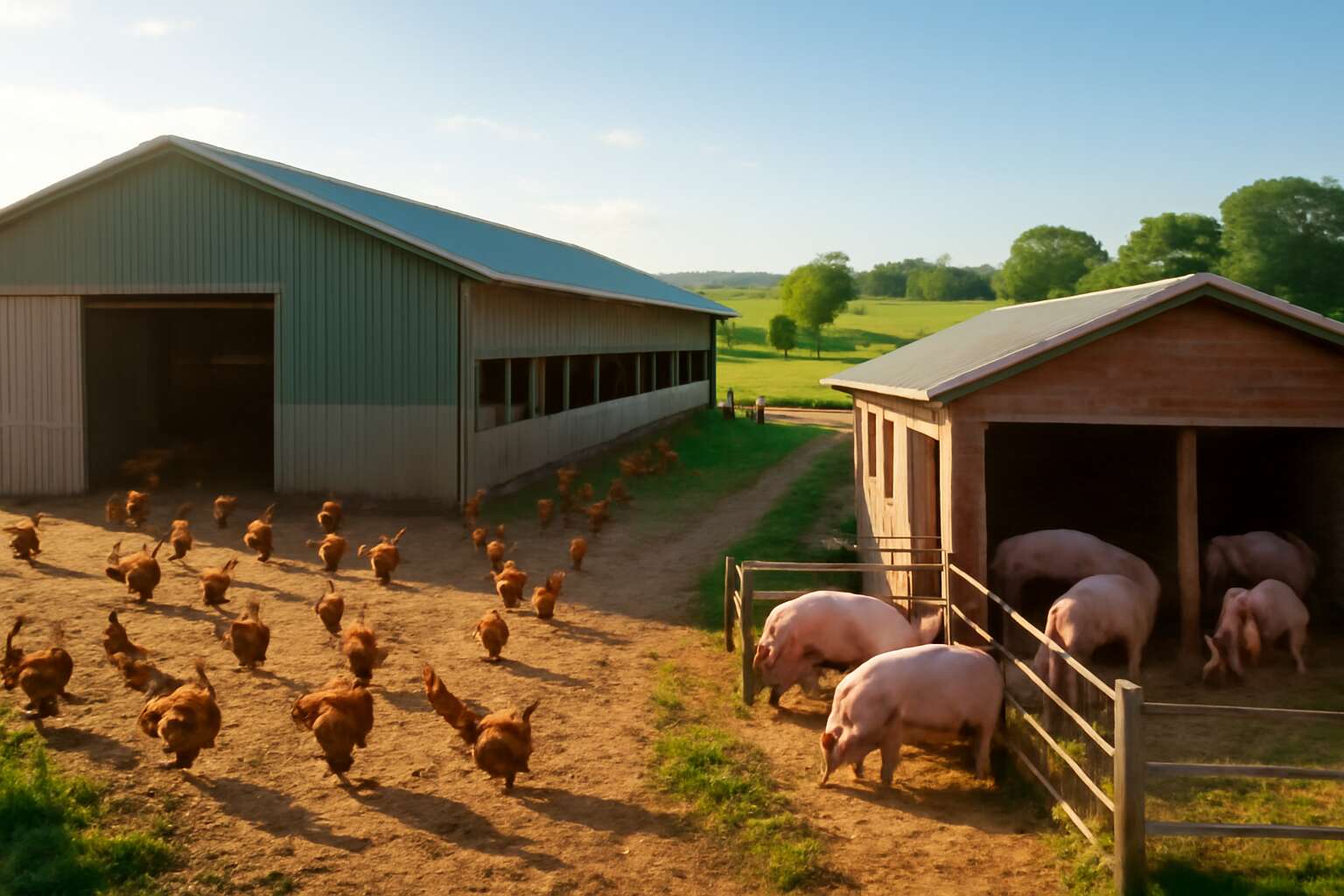
Diversified poultry and swine farming strategies
Practical integration and planning
On thriving South African farms, diversified poultry and piggery farming can cushion earnings from season to season. “Diversify or stall—the market rewards breadth,” a South African agribusiness adviser notes. Diversification blends birds, pigs, and by-products to keep revenue streams steady even when input costs spike.
Practical integration starts with design: co-located housing, shared biosecurity, and synchronized feeding cycles. Planning through the year reduces risk and improves capital use. The goal is a single site that operates as a resilient farming system. That’s the aim!
- Co-located facilities for poultry and swine
- Unified feed and water systems
- Waste-to-value options like compost or biogas
In planning, map market windows, seasonality, and cash flow. That clarity keeps margins intact and makes expansion a confident bet for South Africa’s farming sector.
Housing equipment and facility design
Diversification is the heartbeat of resilient farming, and on South African soil the strongest returns come from purposeful structure. A recent agribusiness briefing finds that 8 of 10 advisers say diversification stabilizes earnings, even when feed costs swing. In poultry and piggery farming, space and care set the course!
Smart housing design minimizes waste and labor. Think modular blocks, species-specific zones, and ventilated envelopes tied to day-night rhythms. Cleanable surfaces, secure entry, and water-efficient drinkers cut disease risk. Light, insulation, and raised floors improve comfort and simplify manure handling, channeling nutrients back into soil cycles or energy recovery.
- Modular housing blocks that scale with demand
- Shared biosecurity corridors to minimize cross-contamination
- Climate-responsive automation for heating, cooling, and lighting
Ultimately, facility design should feel humane, efficient, and adaptable, inviting farmers to see growth as a natural extension of stewardship.
Nutrition and feeding strategies
Across South Africa, a well-tuned diet can trim feed waste by up to 15%, turning cost into a spectator sport. In poultry and piggery farming, nutrition should be stage-aware, chasing growth curves with precision rather than guesswork.
Smart strategies follow the clock, not guesswork. Consider:
- Phase-aligned nutrition supports growth curves with minimal waste
- Local byproducts balance amino acids while trimming costs
- Water quality and feeder design influence intake and reduce spillage
Pairing nutrition with humane welfare and soil-minded waste handling keeps the enterprise resilient. Reputable mills and seasonal rhythms anchor practical nourishment for every flock and herd, a quiet oath to stewardship that underpins prosperous, planet-conscious farming in South Africa.
Health biosecurity welfare and sustainability
Diversified poultry and piggery farming isn’t glamorous, but it is stubbornly practical. As one veteran South African farmer likes to say: “Waste is revenue in disguise.” In health biosecurity, quarantine routines and controlled access keep diseases at bay while protecting flocks and herds—an ethos at the heart of poultry and piggery farming in this sunny climate.
Welfare and sustainability go hand in glove. Thoughtful enrichment, humane handling, and appropriate stocking densities reduce stress and improve gains, while waste-to-energy and soil-friendly litter practices temper ecological footprints across poultry and piggery farming.
- Biosecurity routines for poultry and piggery farming from entry to exit
- Welfare-focused housing and enrichment in poultry and piggery farming
- Waste-to-resource cycles feeding soil health in poultry and piggery farming
Strategic partnerships with mills and thoughtful seasonality anchor nourishment for every flock and herd in poultry and piggery farming.


0 Comments