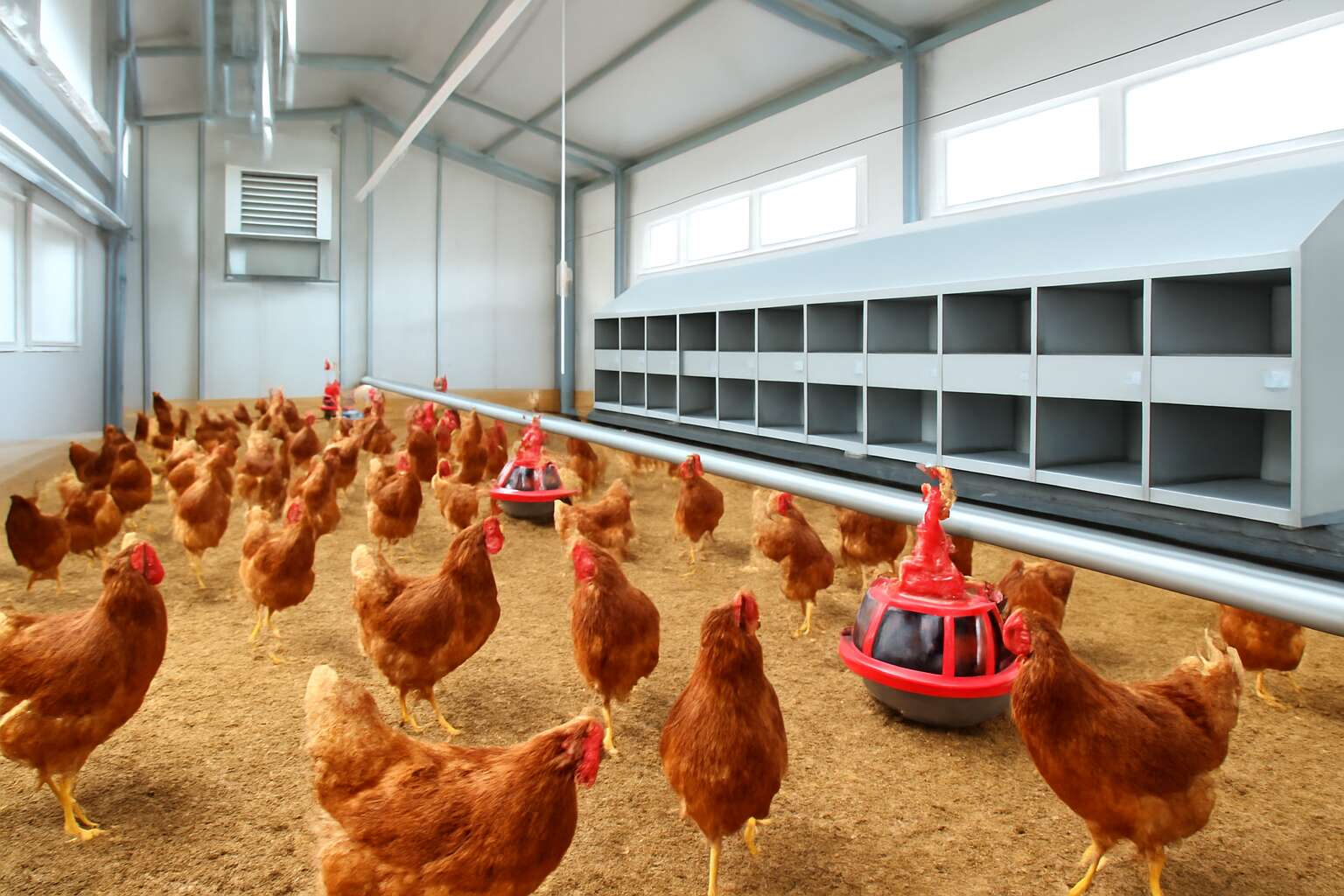
Housing and Environment for Laying Hens
Coop design and space requirements for optimized egg production
Space is productivity’s quiet accelerator. As the saying goes, “habitat first, eggs follow.” In layer poultry management, the right housing turns calm birds into steady layers—and in South Africa’s sunny climate, airflow and light are constants, not afterthoughts.
- Provide ample, well-ventilated housing to keep birds calm and healthy.
- Offer clean litter and comfortable nesting and roosting areas to support natural behaviors.
- Design lighting and ventilation to maintain steady laying cycles without flicker or stale air.
- Use sturdy, easy-to-clean materials suited to SA climate to withstand heat and humidity.
Ventilation and temperature control in layer housing
Air is the heartbeat of a healthy flock—and I’ve seen how, in South Africa’s heat, calm birds become steady layers when the shed breathes correctly. A well-ventilated environment isn’t a luxury; it is the quiet engine behind consistent egg production and resilient layer poultry management.
Ventilation and temperature control shape mood and metabolism. The right airflow mitigates heat stress, keeps stale air at bay, and preserves gentle nesting behavior. Think diffusion and shade; light and air travel together, guiding laying cycles without flicker.
- Natural materials and easy-clean surfaces that stand up to heat and humidity
- Open yet shaded zones that prevent drafts while promoting steady air exchange
- Balanced light distribution that supports natural rhythms
- Quiet, reliable fans or vents integrated with the structure
In the end, this work is as much about the air as about feed. The right combination fosters calm, healthy birds and reliable production, every day.
Lighting programs and photoperiod management for peak lay rates
Bright mornings and quiet evenings aren’t just mood boosters for hens; they’re data points in South Africa’s layer poultry management landscape. When lights glide through a carefully plotted photoperiod, birds press into lay with a consistent rhythm, even as seasonal heat braids the day with long shadows. The result is a steadier egg cadence and calmer birds.
Key elements of lighting programs for peak lay rates include:
- Consistent daily photoperiod aligned with age and breed
- Gradual, naturalistic light transitions from dawn to dusk
- Balanced exposure to natural and artificial cues on overcast days
In this arena, photoperiod mastery shapes the flock’s tempo, as surely as feed and housing.
Nesting systems, egg collection, and prevention of breakage
Across South Africa, a notable 8% of egg losses traces to awkward nesting and the panicked shuffle at collection time. In layer poultry management, the nest is more than a box—it’s the quiet stage where calm birds set the rhythm for the day, even as the farm hums around them.
Nest design matters as much as nutrition. A little theatre helps—calm is contagious.
- Raised, easy-to-clean nesting boxes that cradle eggs
- Smooth interior surfaces and rounded corners to cushion contact
- Balanced access points that encourage calm, orderly collection
- Non-slip floors and adequate space to prevent crowding
Eggs glide from nest to tray with the poise of a well-timed cue, a hallmark of rigorous layer poultry management that values both bird welfare and product integrity.
Bedding, litter management, and floor design for hygiene and comfort
“Calm floors, clear eggs,” a veteran farmer likes to say. In layer poultry management, the floor is a living stage where moisture whispers and footsteps set the morning rhythm. Bedding and litter choices weave a soft veil that steadies air and feet alike.
When bedding speaks softly, birds move with ease and the house stays cleaner longer. Options include:
- Wood shavings or sawdust for absorbency
- Rice hulls or peanut hulls for dust control
- Straw for warmth and comfort
In layer poultry management, these choices ripple through welfare and egg quality.
Floor design completes the environment—non-slip, easy to clean, and smoothly joined to shed moisture without glare. Subtle textures and gentle slopes guide movement, supporting hygiene and comfort through every South African dawn and bustle.
Nutrition and Feeding Strategies for Laying Hens
Nutrient requirements for different production stages (pre-lay, peak lay, and late lay)
Layer poultry management hinges on feeding that mirrors a hen’s natural arc—from bold pre-lay ambition to the quiet late lay years. The pre-lay period rewards with energy-dense, high-quality proteins that lay a foundation for robust growth. During peak lay, hens demand steady calcium for shells and a balanced amino acid profile to sustain egg output. Late lay calls for continued mineral support and fiber to protect gut health and maintain shell strength.
Stage-focused priorities include:
- Pre-lay: balanced amino acids, energy-dense feed, moderate calcium.
- Peak lay: high calcium with vitamin D and steady protein.
- Late lay: minerals plus fibre to protect shell and gut health.
In South Africa, where maize-based feeds are common, aligning nutrition with these stages supports layer poultry management and helps maintain steady production while safeguarding bird welfare.
Formulated laying hen diets: protein, energy, calcium, and minerals
layer poultry management relies on nutrition that mirrors a hen’s daily rhythm. In South Africa, where maize-based feeds shape many rations, formulated laying hen diets balance protein and energy with careful calcium delivery to sustain steady production and welfare.
Key pillars guide this balance: each diet is tuned to deliver protein, energy, calcium, and minerals in harmonious doses, a quiet symphony for shells and yolks.
- Protein for tissue turnover and egg quality
- Energy from digestible carbohydrates and fats
- Calcium for shells and shell membranes
- Minerals such as phosphorus, trace elements, and vitamin D support metabolism
With maize-based feeds shaping many houses, nutritionists tailor these formulations to the hen’s arc—from pre-lay to late lay—keeping flocks buoyant and productive in South Africa’s sheds.
Feeding schedules and methods: ad libitum vs controlled feeding
“Feed is the metronome of a laying flock!” a veteran South African producer likes to say. In layer poultry management, feeding schedules blending ad libitum options with measured rations keep birds calm and production steady. Ad libitum feeding grants constant access and can support peak appetite, especially in warm sheds; it can also invite wastage and fluctuating shell quality if the house is not tightly monitored.
- Ad libitum feeding: constant access supports energy and appetite; watch for weight drift and shell irregularities if feeder hygiene or house monitoring slackens.
- Controlled feeding: portioned rations align with lay curves and eggs-to-feed balance; requires regular weighing and adjustments to maintain steady production.
In South Africa, maize-based feeds shape these strategies, weaving seamlessly with the flock’s daily tempo and helping maintain consistency across seasons.
Feed formulation and quality control: ingredients, anti-nutritional factors, and pellet durability
Feed is the heartbeat of a laying flock. Across South Africa, feed quality often moves the needle more than climate or caging—producers know the truth: nutrition governs outcomes!
In formulation, balance energy, protein, calcium, and minerals while curbing anti-nutritional factors that blunt digestibility. Choose reliable ingredients, grind and batch-test well, and ensure pellets resist crumble and dust. Good pellet durability supports steady intake and improves gut health—critical for sustained layer poultry management.
- Ingredients quality and consistency
- Anti-nutritional factors and their limits
- Pellet durability and intactness in the hopper
In South Africa, maize-based feeds shape these choices, weaving with the flock’s tempo and supporting consistent output through seasons.
Health, Biosecurity, and Disease Prevention
Biosecurity protocols for layer flocks: access control, sanitation, and vaccination
Layer poultry management hinges on one stubborn truth: health is the cheapest insurance for a coop, and the most lucrative. In South Africa, a single biosecurity lapse can derail weeks of work, turning careful flock care into costly speculation. A health-first culture keeps eggs in demand, and reputations intact.
- Access control
- Sanitation
- Vaccination
These biosecurity protocols shield flocks from cross-contamination and seasonal threats. Careful access control, rigorous sanitation, and timely vaccination form the backbone of disease prevention in layer flocks, allowing farms to maintain steady production without drama.
By anchoring health to everyday practice, the enterprise becomes less a gamble and more a disciplined art, respected by customers and veterinarians alike.
Common diseases in laying hens and prevention strategies
South Africa’s flocks are under constant siege from unseen threats. In layer poultry management, health is the lowest-cost shield and the highest-return investment. One slip can undo weeks of meticulous care, turning routine routines into costly surprises. A health-first culture keeps eggs in demand and reputations intact!
Common diseases to watch for span viral and parasitic threats. Prevention hinges on vaccination alignment, steady hygiene, and controlled stress.
- Marek’s disease — well-timed vaccination and movement controls to minimize exposure
- Newcastle disease — vaccination alongside vigilant observation for coughing or droppings
- Infectious bronchitis — strategic vaccination and stable housing to reduce respiratory stress
- Coccidiosis — good litter management and clean water to disrupt parasite cycles
In South Africa, health and biosecurity are quiet crafts that protect the flock’s future.
Vaccination programs and vaccination records management
South Africa’s flocks inhabit a fragile frontier where health is the first defense and the last word in productivity. In layer poultry management, a single lapse can ripple into weeks of lost lay and a dented reputation—we’ve seen it. Prioritizing a health-first culture keeps eggs in demand and reputations intact, with vaccination alignment forming the backbone of resilience.
Biosecurity is quiet, relentless work: controlled access, sanitation, and trained observation protect every yard against invisible intruders.
- Vaccination schedule alignment
- Vaccination records management
- Controlled movement and isolation
- Staff hygiene and equipment sanitation
Vaccination programs and vaccination records management connect observed health with traceable outcomes, turning every inoculation into data that guides feed form and housing decisions. We lean on layer poultry management to keep meticulous logs that foster compliance, transparency, and sustained performance across seasons!
Health monitoring: welfare indicators and early disease detection
On South Africa’s layered farms, layer poultry management hinges on health whispers that, when heard early, avert outbreaks. A single hen that stops eating, a dip in daily lay, or a subtle change in comb color can foreshadow weeks of lost production and reputational damage. Health monitoring becomes a frontline discipline, weaving welfare indicators into real-time resilience.
- Changes in appetite and water intake
- Abnormal droppings and litter moisture
- Breathing pattern, sneezing, or nasal discharge
- Movements: lameness, reluctance to perch or jump
Early disease detection feeds right into stronger biosecurity—perimeter control, quick isolation of suspicious birds, and sanitation that keeps pathogens at bay. The result is steadier lay, steadier margins, and a calmer, more productive flock in the South African climate.
Productivity, Welfare, and Farm Management Tools
Key performance indicators for egg production and efficiency
In South Africa’s sunlit layer houses, layer poultry management is a calendar of numbers and nuance. A disciplined KPI program can lift hen-day production by 4–6%, turning routine care into measurable gains that echo across the flock, a chorus of progress!
Productivity KPIs focus on egg output and efficiency: hen-day production percentage, eggs per hen-year, average egg weight, shell integrity, and feed conversion ratio.
- Hen-day production percentage
- Eggs per hen-year
- Feed conversion ratio
Welfare KPIs track mortality rate, feather condition, gait scores, and calm handling indicators.
Farm Management Tools KPIs include data capture completeness, vaccination records, and equipment uptime; real-time dashboards sharpen decision-making for layer poultry management.
- Data capture completeness
- Vaccination and health records accuracy
- Real-time monitoring and alert responsiveness
Record-keeping, data analytics, and flock performance dashboards
In South Africa, disciplined KPI programs can lift hen-day production by 4–6%, turning routine care into measurable gains. Within layer poultry management, productivity hinges on translating daily observations into decisive adjustments—refining feed cadence, water access, and staffing so the egg belt runs with quiet, precise reliability.
Welfare remains the heartbeat of stock health. Subtle signals—calm handling, assured gait, pristine feathering—guide flock management and early interventions, thinning mortality and weaving steadiness into lay cycles. A humane, data-informed sensibility keeps birds resilient as seasons shift and housing conditions shift.
Record-keeping, data analytics, and flock performance dashboards form the backbone of modern poultry management. Real-time dashboards convert numbers into intuition, aligning every farm operation with health, welfare, and productivity aims for a connected, responsive flock.
Automation and equipment for efficient layer operations
Fresh dawns test more than the flock; they test purpose. In South Africa, a disciplined nudge toward automation can turn daily bustle into steady rhythm, lifting outcomes without sacrificing welfare. ‘Efficiency is mercy,’ a veteran farmer reminds me, and layer poultry management finds its truth in quiet, reliable operation!
Productivity thrives when welfare remains central to every adjustment—routines, logistics, and staffing all aligned. Farm management tools automate routine tasks, reducing friction for birds and crew while keeping the egg belt moving with calm precision.
- Automated feed dispensers with timed cadence
- Water-nipple systems with flow validation
- Automated egg collection belts and sorting
- Climate-controlled ventilation and sensor networks
With the right equipment, layer operations become a living system—responsive, traceable, humane. This is layer poultry management in action, where technology serves resilience as seasons shift.
Waste management, manure handling, and environmental impact
Across South Africa’s layer houses, a 2% improvement in waste handling can cut emissions, curb odour, and lift margins. In layer poultry management, environmental stewardship and efficiency walk hand in hand, turning daily chores into a quiet, predictable rhythm.
Smart farm management tools track litter moisture, manure handling, and water use, supporting welfare and productivity without forcing harsh compromises. When the house breathes easier, the birds do too—and the cycle stays calm and humane.
- Bedding recycling and litter management to reduce ammonia
- Manure handling and composting to recycle nutrients
- Sensor networks for effluent and waste stream monitoring
This approach aligns with sustainable environmental impact, turning waste streams into value while protecting air, water, and soil—an essential thread in layer poultry management.
Replacement planning, culling strategies, and flock balance
In South Africa’s layer poultry management, productivity hinges on aligning egg output with bird vitality. Replacement planning keeps the cycle steady, ensuring fresh layers join at the right moment and older birds yield a calm transition between production phases.
Welfare remains central; humane culling strategies preserve flock balance and minimize stress, turning daily routines into predictable rhythms that respect the birds’ wellbeing while safeguarding margins.
Smart farm management tools translate data into cohesion—tracking performance, Replacement planning, and shaping flock balance across production stages.
- Strategic replacement planning
- Humane culling strategies
- Balanced flock dynamics
Market dynamics, pricing, and risk management for egg production
Across South Africa, egg producers are rewriting the playbook as layer poultry management tightens the bond between vitality and output. Early data show up to a 12% improvement in feed conversion when routines align with bird physiology, turning volatility into a predictable rhythm that supports steady margins and reliable production cycles.
Welfare remains indispensable; birds that thrive translate into healthier margins. In tandem, market dynamics demand proactive pricing strategies, feed-cost hedging, and diversified supplier networks to smooth seasonal swings and transport bottlenecks that bite the bottom line!
Smart farm management tools translate data into cohesion—tracking performance, replacement planning, and flock balance across production stages. Market dynamics help shape your investment horizon, and risk management hinges on visibility and adaptability.
- Price volatility and feed-cost trajectories
- Supply-chain disruptions and transport costs
- Regulatory compliance and biosecurity standards




0 Comments