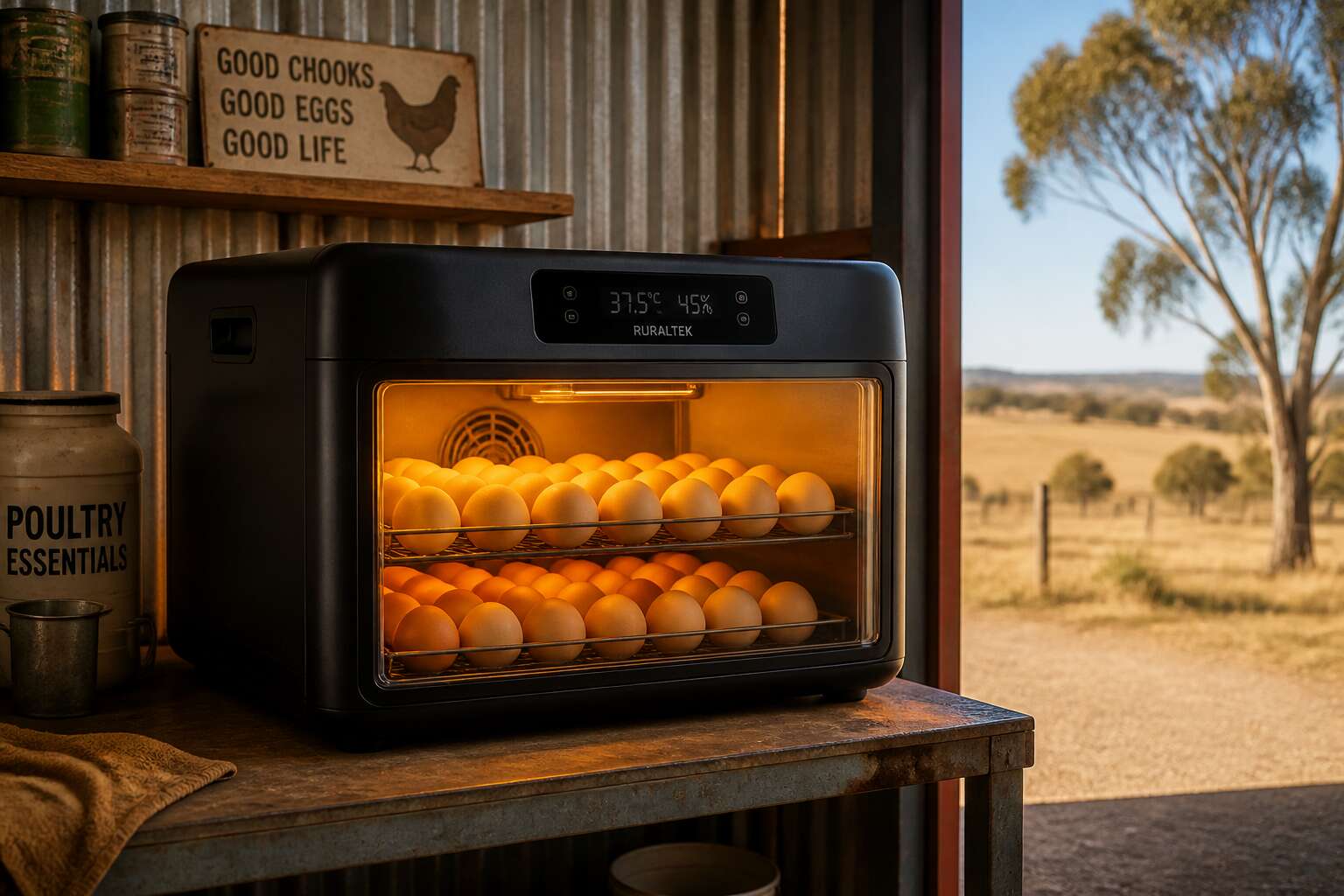
Understanding Incubator Types and Technologies
Forced Air vs Still Air Incubators
The humble incubator hides a temperamental secret. Still air models can differ by several degrees between the top and bottom trays, while forced air versions use a fan to keep warmth even. This distinction shapes every hatch, and ignoring it is a gamble with your clutch.
In Australia, where summer heat already tests your patience, the choice becomes practical. Those searching for egg incubators Australia often assume all units behave alike. They do not. Still air requires careful placement and regular turning. Forced air suits larger batches and delivers consistent results. Consider the practical differences:
- Still air units need a stable room temperature.
- Forced air models handle larger egg capacities with less fuss.
- Still air demands daily turning, while forced air gives you a little grace.
Each type has its advocates, but neither removes the need for vigilance.
Digital vs Manual Temperature Control
Digital temperature control reads internal temperature dozens of times per hour, adjusting the heater in small increments. Manual controls rely on a mechanical wafer that expands and contracts. The response is slower, and temperature can drift.
When you look at egg incubators Australia, local summers resemble South African summers in brutality. A manual unit in a warm room can overshoot the set point. Digital units handle drift better, but they depend on clean sensors and stable power. Manual units ride through power dips that reset a digital controller.
The comparison between egg incubators Australia and local units comes down to a short list:
- Digital: precise and responsive, but sensitive to power quality.
- Manual: tolerant of irregular supply, but needs regular checking.
Sensor placement also differs. Digital probes measure air at one point; a manual wafer senses the top area. Neither reads the egg itself, which is where human judgment enters.
Capacity Options for Different Scales
Every hatch starts with a machine that either works with your schedule or against it. For egg incubators Australia, turning systems and humidity management carry more weight than the temperature debate alone.
Capacity shifts the rules. A 24 egg unit suits a backyard keeper who checks twice daily. A 500 egg cabinet demands routine, ventilation planning, and backup power. The technology must match the scale.
- Small batch units use manual turning and open water channels.
- Mid range models add automatic turners and humidity readouts.
- Commercial cabinets add separate hatcher trays and integrated airflow.
Each tier hides its own costs. Small units lose humidity the moment you open them. Large units punish uneven ambient temperatures across the trays. Match the machine to your environment, because egg incubators Australia buyers share your sun, your dust, and your unpredictable grid.
Australian Voltage and Power Requirements
South Africa’s mains supply delivers 230 volts at 50 hertz, a detail that decides which egg incubators australia can run without complaint. Many imported units assume 110 volt systems, and the mismatch turns a promising hatch into a frustrating one. Check the label before you buy.
Thermistor based controllers respond faster than mechanical bi metal strips. Infrared heat elements warm eggs evenly, while ceramic alternatives hold steady in dusty rooms. Some models offer dual power inputs for solar or battery setups, useful when load shedding interrupts the cycle.
- Voltage ratings printed on the back panel.
- Universal power supplies between 100 and 240 volts.
- Surge protection for rural lines.
Digital sensors and automatic turners draw modest wattage, but startup spikes matter. The best egg incubators australia handle 15 percent voltage fluctuation without tripping.
Key Features to Consider for Local Climate
Temperature Stability in Hot Summers
Australian summers push incubators to their limits. When temperatures exceed 40°C, an incubator placed in a shed or garage faces a serious challenge. Without proper insulation or a cooling mechanism, the internal temperature can fluctuate enough to harm embryo development.
For those seeking egg incubators australia, the critical question is how a unit handles heat. Thick insulation slows the intrusion of outside warmth. A thermoelectric cooling element or a high-quality exhaust fan actively removes excess heat. Digital sensors that trigger audible alarms when temperature drifts are useful, though they do not regulate the interior by themselves.
Models built for Australia’s climate often share these traits:
– Insulation thickness of at least 25 millimetres
– Automatic power venting or active cooling
– Over-temperature alarm with audible alert
– Sensor placement away from direct heat sources
A cool, shaded room reduces the burden on any machine. Quality egg incubators australia maintain a steady 37.8°C even when the surrounding air soars.
Humidity Control for Arid Conditions
In arid regions, ambient humidity often falls below 30 percent. That dry air pulls moisture from eggs too quickly. Without active humidity management, embryo survival drops sharply. Egg incubators australia must therefore handle water retention through deliberate design.
A hygrometer should measure relative humidity inside the chamber, not in the room. A sealed water channel with an external fill port prevents moisture loss when the lid opens. Some machines add an ultrasonic mister for finer control.
When choosing egg incubators australia for dry climates, consider these features:
- A dual probe digital hygrometer
- Adjustable ventilation to restrict airflow
- A low water alarm with audible alert
These elements allow humidity to rise above 60 percent during the hatching phase. Eggs need a consistent evaporation rate, and that requires precise control when the surrounding air holds little moisture.
Insulation Against Night Time Drops
In the Karoo, temperatures can swing 20 degrees Celsius between dusk and dawn. That plunge tests any incubator’s mettle. Insulation is the critical buffer, especially when the temperature drops sharply at night!
For egg incubators australia marketed here, check the core foam density and door gasket integrity. A single draft can strip heat faster than your heater can replace it. Some units use a double-wall polycarbonate build to mitigate this scenario.
Consider these cold-snap features:
- High-density foam walls thicker than 20mm
- Magnetic door seals that resist warping
- 120W heating elements for faster recovery
I’ve seen cheaper models struggle at 10°C. The thermostat cycles, but the air never recovers. Quality insulation buffers that change, keeping embryos from a sudden chill.
Automatic Egg Turning vs Manual Rotation
Automatic turning mimics the hen’s restless instinct, shifting each egg on a steady schedule. Manual rotation demands discipline, a stiff notebook, and a timer that never sleeps. In the Karoo, where loadshedding reshapes daily routines, automation becomes a survival tool. Some units run on 12V battery backups specifically for egg incubators australia enthusiasts living off-grid. But examine the mechanics closely: auto turners rely on motors and gears, and those can jam. Manual systems, by contrast, need only your two hands and an honest memory. I have watched both fail. The difference rests entirely on vigilance.
- Motors with low RPM for gentle, natural movement
- Egg trays with fixed rails versus rolling bars
- Audible alerts that signal when a turn completes
Match the turning method to the hours you spend away from the coop, not to the brochure’s promises.
Monitoring Systems and Alerts
The Karoo’s weather can shift from scorching to freezing in a single afternoon. A climate monitoring system with remote sensors lets you watch the microclimate around your incubator without stepping outside. A simple display shows current conditions, but the alerts are the real treasure.
Consider these features:
– Wireless sensors that reach across your property
– Battery backup for loadshedding hours
– Custom thresholds for temperature and humidity
Some egg incubators australia models now include built-in connectivity, yet local conditions demand your own eyes. The best system sends a message to your phone when something drifts. It must be readable during early morning checks and reliable enough to trust through the night.
Selecting the Right Incubator for Your Flock Size
Small Hobbyist Models for Backyard Poultry
Flock math has a sneaky way of escalating. You start with three hens for the eggs, and by the next season, your brain is already calculating how many chicks would fill that empty coop. This is precisely where small hobbyist models shine. These compact units are designed for the backyard poultry keeper, not for industrial scale production.
A common misstep is buying a machine with more egg capacity than you realistically need. Most small incubators cater to batches of 12 to 24 eggs. If you own six hens, you will rarely collect more than four or five viable eggs per day. Aim for a model with a capacity you can actually fill.
– 12 egg models are perfect for the absolute beginner.
– 24 egg models offer flexibility for rare breeds.
– 36 egg models edge toward semi-serious breeding.
The secret is to remember that a smaller unit loses less heat when you open the lid for candling. That is a practical advantage, not just a compromise. For the casual breeder, the best choice is always the one that feels too small on paper. Your future self will thank you when you are not wrestling with half-filled trays. Choosing wisely among egg incubators australia means matching the machine to the size of your ambition, not the size of your dreams.
Medium Multi-Purpose Units for Serious Breeders
For serious breeders, the leap from backyard hobbyist to semi-professional operator requires more than a larger tray. Medium multi-purpose units fill this role, with capacities ranging from 48 to 120 eggs and the flexibility to handle several species. That versatility defines the category.
The term “multi-purpose” matters here. These machines typically include interchangeable racks for quail, pheasant, or waterfowl eggs. A breeder working with rare lines needs that adaptability. Consider what your workflow demands:
- A 48 egg unit suits focused single-species hatches.
- 72 egg models allow staggered settings for continuous production.
- 120 egg machines approach small commercial output.
Medium-sized incubators retain heat more steadily during candling than their compact counterparts. When evaluating egg incubators australia options, inspect the footprint and confirm whether the unit accepts additional turners. A supplier’s reputation rests on this level of detail.
Large Commercial Hatchery Machines
When you move beyond 120 eggs, you are in commercial territory. Large hatchery machines hold thousands of eggs, often in separate setter and hatcher units. Selecting the right system for your flock size requires an honest assessment of your production targets. A cabinet incubator from trusted egg incubators australia suppliers can handle continuous weekly cycles, but only if you choose a model matched to your actual output.
Consider these factors before committing:
– Number of eggs per hatch cycle
– Available floor space and ceiling height
– Ventilation and cooling capacity for dense loads
– Service access and spare parts availability
Commercial machines demand industrial power, proper ventilation, and robust controls. The decision hinges on volume, not ambition. Match the unit to your real throughput.
Budgeting and Long-Term Value
The real cost of an incubator is not the price tag. It is the cost per viable chick over the machine’s working life. A cheap unit that fails mid-cycle or hatches at 60% will drain more money than a premium model bought once. This is where egg incubators australia suppliers earn their keep, offering machines built for our voltage and climate.
Budgeting for your flock size means looking beyond the initial purchase. Consider these costs:
- Replacement parts and their availability
- Power consumption per cycle
- Calibration tools and servicing
I have seen breeders spend twice on repairs what a solid unit would have cost upfront. A machine matched to your output, not your ambitions, will pay for itself. The long-term value shows up in consistent hatch rates, not in features you will never use. Many buyers overestimate their future needs and pay for capacity they never fill.
Maintenance and Spare Parts Availability
Every breeder overestimates future demand. A 48 egg incubator running half empty develops humidity swings because the water surface is too large. Match the machine to your average weekly setting, not your best season. For 25 laying hens, a 36 egg unit outperforms a 100 egg machine. egg incubators australia offer solid options across that range, but only you know your real numbers.
Spare parts decide longevity. A thermistor or turner motor fails at hour 400. If the supplier cannot ship that part within a week, you lose the cycle. Check what components are standard. Heating elements, fans, and hygrometers should be replaceable from any electrical wholesaler.
- Ask for the parts list before purchase
- Confirm local stock of thermistors and timers
Proprietary circuit boards limit your repair options. Buy from a supplier who supports the unit after the sale.
Best Practices for Hatching Success in Australia
Sourcing Fertile Eggs from Local Suppliers
Hatching success begins before the egg reaches your incubator. A supplier who keeps breeding flocks under low stress conditions will outperform one who ships from across the continent. Distance matters more than most hobbyists admit.
Look for clean shells, blunt ends, and consistent size. Avoid washing them; the cuticle protects the embryo. Store them pointed end down at 15 degrees Celsius for no more than seven days, turning twice daily. I have seen calibrated machines fail because someone skimped on the eggs.
- Ask the supplier about flock age and vaccination history.
- Request eggs from mid sized breeds, which tend to have stronger shells.
- Check for cracks before purchase.
Local sourcing reduces temperature shock and random vibration, two silent killers of early embryos. For those using egg incubators australia, the quality of the input decides the hatch rate more than any dial or sensor.
Setting Up the Incubator Environment
Setting up the incubator environment is a ritual of patience and paranoia. The machine itself is a silent partner, but your room decides its mood. Place your egg incubators australia away from sun-drenched windows and draughty hallways. The thermostat inside is a liar if the ambient air wavers by five degrees overnight.
Stabilise the temperature for a full 24 hours before loading. Let the water channels reach equilibrium. The hygrometer, not your intuition, controls humidity levels. Australian summers make a mockery of set points, so overshoot your humidifier reservoir in the morning and check again during the hottest hours.
- Position the unit on a solid base, never carpet
- Allow air circulation on all sides
- Use a separate thermometer to verify the display
Ventilation matters more than you think. Many egg incubators australia ship with vents closed to maintain heat, but embryos breathe. Open the vents gradually after day three. The difference between a clean hatch and a sticky disaster often lives in that tiny adjustment.
Incubation Parameters for Common Australian Poultry
Australian breeds do not all hatch on the same schedule. Australorps typically emerge at day 21, while Indian Runner ducks wait until day 28. Quail break through at day 17. Your egg incubators australia must handle each species precisely. The baseline temperature sits between 37.2 and 37.8 degrees Celsius for nearly all poultry. Humidity, however, never stays static:
- Australorp: 21 days, 55 percent humidity
- Indian Runner duck: 28 days, 60 percent humidity
- Japanese quail: 17 days, 50 percent humidity
Lockdown demands a different approach. The final three days require 65 percent or higher to soften membranes. Guinea fowl eggs need extra vigilance, as their thick shells release moisture slowly. A single setting cannot serve every species. I adjust, observe, and adjust again, because weight loss, air cell size, and candling shadows reveal each egg’s progress. Read those signals correctly. A steady hand on your egg incubators australia makes all the difference.
Troubleshooting Common Hatching Problems
Even the most reliable egg incubators australia will betray a careless hand. I have watched embryos perish not from machine failure, but from human impatience. The urge to open the lid and peek is a quiet killer. Resist it. Each opening bleeds humidity and shifts temperature, and your eggs feel every loss.
Best practice begins with patience. Calibrate your thermometer against a known source, not trust alone. Clean the unit thoroughly before each batch. Residual grime harbours bacteria that will find the smallest shell fissure.
Common failures follow predictable patterns:
– Sticky shells signal low humidity during hatching.
– Late hatches point to temperature drops.
– Malpositioned chicks rarely survive; they need consistent turning until lockdown.
Watch for these signs and trust your observations over the display. Your egg incubators australia will perform flawlessly when you respect the silence inside.
Biosecurity and Cleaning Protocols
Biosecurity begins before the first egg is placed. In Australia, avian pathogens travel on dust and human hands. Your egg incubators australia require a rigorous cleaning schedule. I disinfect every surface with a poultry-safe sanitiser, then rinse with distilled water. Residual chemicals harm embryos as surely as bacteria.
- Remove all removable parts and scrub with warm soapy water.
- Apply a disinfectant approved for incubation equipment.
- Dry completely to prevent humidity spikes.
- Leave the unit aired for twelve hours before each batch.
Between hatches, quarantine any new eggs for two days. A single contaminated shell can ruin an entire clutch. Monitor foot traffic near the incubator and change gloves between breeds. This discipline feels tedious, but it costs less than lost embryos. Follow the process, and your egg incubators australia will produce healthy chicks.




0 Comments