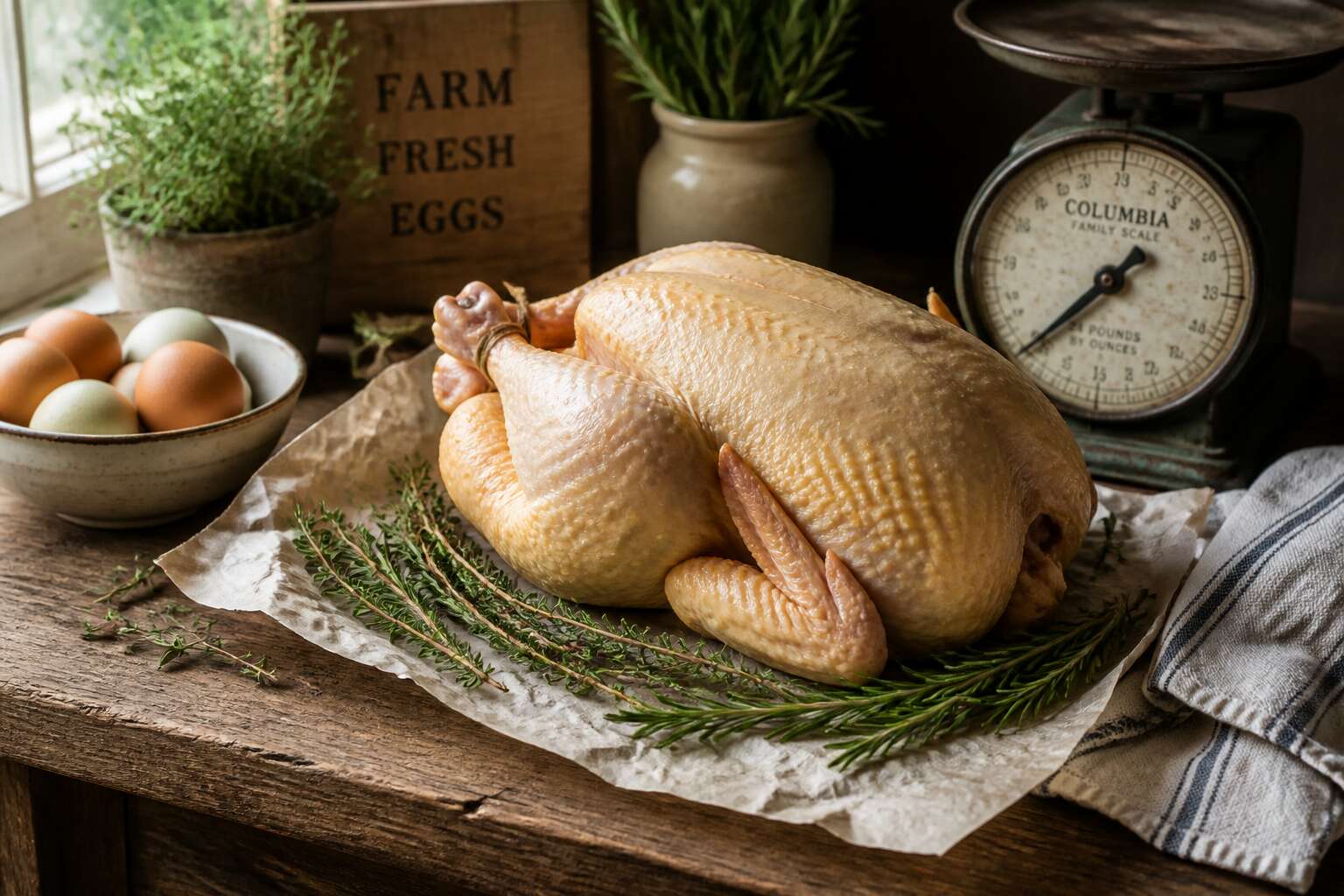
The Importance of Choosing Locally Sourced Poultry
Flavor and Texture Differences
Most supermarket chicken sits in cold storage for days before reaching your pan. That time compromises quality. Muscle fibres break down, moisture escapes, flavour fades. When you search for fresh poultry near me, you are seeking something better. I have tasted that difference myself.
Locally sourced birds travel from farm to table in hours. The texture difference is immediate. Fresh poultry has a firmer bite and holds its shape during cooking. Older, refrigerated birds turn spongy and release excess water in the pan.
Consider what you notice at a local butcher counter!
- Skin is dry, not sticky
- Flesh springs back when pressed
- Aroma is clean, not sour
These markers define fresh poultry near me. They distinguish it from long distance distribution. Flavour follows texture. A bird raised locally delivers a clean, distinct taste that cold storage erases.
Nutritional Advantages of Fresh Meat
Choosing locally sourced poultry carries nutritional weight that supermarket cold chains cannot match. When you search for fresh poultry near me, you are selecting meat with preserved B vitamins and stable protein structures. Time in transit strips value from food.
South African farms that supply local butcheries operate on shorter timelines. The bird moves from pasture to processing to plate in a matter of hours. This speed protects essential amino acids and keeps omega 3 levels higher than imported or warehoused alternatives.
- Vitamin retention from rapid chilling
- Higher mineral density from fresh feed
- Lower sodium from minimal processing
That same direct line between farmer and consumer means fewer interventions. No long freezing cycles, no chemical preservatives. What reaches your table is closer to its natural state.
Supporting Regional Agriculture
Every kilometre a chicken travels is a debt against the land that raised it. When you seek fresh poultry near me, you are not just locating a product; you are tracing a path back to a farmer whose livelihood depends on your attention. Food that travels fewer than 100 kilometres from farm to fork leaves nearly 90% of its value in the local economy.
Supporting regional agriculture is an act of preservation. South African farms survive on direct relationships, not distant contracts. A single purchase from a local butcher stabilises a household, a feed supplier, and a transport route that might otherwise vanish. The search for fresh poultry near me becomes a symbol of resilience in a system built on anonymity.
- Reduces dependency on long distance transport chains
- Keeps profit within the community instead of leaking to conglomerates
- Preserves farming skills and land stewardship for the next generation
These choices echo outward. They sustain the tendrils of our economy that remain rooted in soil, not concrete. When you buy locally, you are funding a network of people who know their birds by name, not by batch number. That is a quiet act of resistance against the sterile efficiency of mass production.
Reducing Your Carbon Footprint
The cold chain is a silent engine of emissions. When you search for fresh poultry near me, you cut that engine off at the source. Local birds travel a few roads, not a network of highways, so their carbon debt dissolves with each shortened kilometre.
Less transport means less fuel, but also less energy for industrial chilling. The meat from a nearby farm did not idle in a distribution centre. It moved fast, preserving both product and atmosphere. Your local purchase removes the hidden costs of a sprawling supply chain.
Here is what a nearby choice eliminates:
- Refrigerated long haul shipping
- Multi day warehousing with energy intensive cooling
- Excess packaging for distant shelves
Every chicken you buy through fresh poultry near me becomes a step toward lighter logistics. The proximity itself is the carbon reduction.
Building Connections with Farmers
Knowing the person behind your food changes everything. When I search for fresh poultry near me, I look for a farmer whose name I know and whose fields I can visit.
That connection is rare. Most meat travels through anonymous supply chains. You never see the hands that raised it. But a local farmer is accessible. You can ask about feed, housing, and slaughter methods. It is refreshing!
I have visited small farms in Gauteng and the Western Cape where farmers welcome questions. They do not hide behind labels. That honesty builds trust.
Here is what a direct relationship provides:
- Farmers who know your preferences by name
- Animal welfare standards you can verify personally
- Clear answers about how your bird was raised
Buying fresh poultry near me means choosing accountability over anonymity. It is a simple exchange with real value.
How to Find Trusted Poultry Sources in Your Area
Using Online Directories and Maps
Most South African households are roughly 15 kilometres from a farm gate that offers fresh poultry near me, yet many still rely on supermarket chains. The gap is not physical; it is information. Online directories and map services close that gap if you know how to read them correctly.
Start with Google Maps and search for poultry farms or registered abattoirs in your area. Then cross reference those results with community platforms like Yelp or local Facebook groups for meat sellers. A trustworthy listing usually includes more than a contact number. Look for these markers:
- Photos of the actual premises and birds
- Operating hours that match farm routines
- Reviews from multiple customers across several months
I have found that filtering by distance often hides smaller producers. Zoom into the map and switch to satellite view. That reveals free range paddocks or shed layouts that a commercial listing might omit. When you search for fresh poultry near me this way, the directory becomes a starting point, not the final answer.
Visiting Farmers Markets
At the Pretoria Boeremark, you will find vendors who answer direct questions about feed and slaughter dates. That transparency is your first clue. Farmers markets compress the distance between buyer and producer, yet not every stall sells the same quality.
Walk the aisles twice. Observe how birds are stored. Ice chests, shaded tables, and clean hands matter more than signage.
What separates a trusted vendor from a casual reseller?
- They name the farm and the breed.
- They explain their chilling process.
- They offer a taste or a smell test.
Ask about the previous batch. Ask about delivery schedules. When you search for fresh poultry near me, a market stall gives you something directories cannot: a handshake. The birds on the table arrived that morning. The vendor remembers the weather that week.
Joining Community Supported Agriculture
The search for fresh poultry near me often ends where convenience begins, at a supermarket cooler. But there is another path. Community Supported Agriculture, or CSA, asks you to invest in a farm’s season before the birds are hatched. You pay upfront, then collect your share weekly or monthly.
This arrangement changes the psychology of buying meat. When you have a financial stake in a farm’s success, you notice when a delivery is late and why. That awareness is something no directory can provide.
A good CSA farmer will usually offer:
- A documented slaughter and chilling schedule
- An open invitation to visit the farm
- A clear policy for birds that fail to thrive
These details reveal a farmer’s relationship with care. When you join a CSA, you enter a covenant with a person who raises living creatures on your behalf.
Asking Local Butchers and Grocers
Your local butcher is a repository of avian intelligence. A good one will tell you which farms let their birds roam and which merely file the paperwork. Asking directly often yields better results than any app. I once learned about a remarkable free-range operation while purchasing a chicken for Sunday lunch. The butcher mentioned the farmer’s name, the slaughter date, even the breed’s temperament.
Grocers can be useful too, particularly those with a dedicated meat counter. They see delivery schedules and handle returns. Here is what to look for when you quiz them about fresh poultry near me:
– Do they know the farm’s name without checking?
– Can they describe the bird’s diet?
– Are they evasive when asked about processing dates?
These conversations separate the curious from those who just stack trays. Trust is built one question at a time. The best butcher will often share a phone number or a visiting hour, making the search for fresh poultry near me feel less like a transaction and more like a proper introduction.
Checking Food Co-ops and Specialty Stores
Food co-ops operate on a different rhythm than supermarkets. Their buyers answer to members, not shareholders. When I ask about fresh poultry near me, the response often includes a farmer’s name and a harvest date written in marker.
Specialty stores curate small batches and track their origin with care. The following questions often separate careful co-ops from careless ones:
- Which farm supplied this bird?
- When was it processed?
- How does the store handle unsold stock?
Co-ops frequently post supplier lists. Specialty stores may offer direct orders from specific farms. The search becomes easier with each conversation.
Leveraging Social Media Groups
On Facebook, neighbourhood poultry groups across South Africa move with surprising speed. A farmer posts a morning harvest in Muldersdrift, and by afternoon the stock is spoken for. This is where the search for fresh poultry near me shifts from a directory question into a live conversation.
Vets, breeders, and home cooks gather in these spaces. They share observations that never reach a Google review. Ask about a seller and you will get an honest reply within minutes.
A quick scan of a group’s activity tells you a lot:
- Who posts regularly and who only appears during shortages
- Whether buyers share photos of their purchases
- How sellers respond to complaints
The comments are the real record. People in these groups do not hesitate to name a supplier who failed them. Those threads stay visible for new members.
Decoding Poultry Labels and Certifications
Organic vs. Free-Range vs. Pasture-Raised
The words on a chicken package can mislead. In South Africa, organic, free-range, and pasture-raised each hold specific meanings, but their enforcement differs. Organic certification demands strict feed and housing rules, verified by independent audits. Free-range only guarantees some outdoor access, with no detail on duration or space. Pasture-raised implies birds roam on grass, yet the term lacks a universal legal definition. When I look for fresh poultry near me, I search for the auditor’s logo rather than the bold type. A simple checklist helps:
- Identify which body issued the certification and how often it inspects.
- Ask the farmer directly about stocking density and rotation.
- Check whether the slaughterhouse follows humane protocols.
These details influence more than ethics; they affect the bird’s stress levels and subsequent taste. Understanding the label turns a routine shop into an informed choice. So the next time you buy poultry, compare the claims carefully.
Understanding ‘No Antibiotics Ever’ Claims
“No antibiotics ever” sounds definitive, but verification matters. In South Africa, this claim appears on many poultry labels without a single national audit standard. When I search for fresh poultry near me, I check whether the producer submits to independent residue testing. The difference between “no antibiotics added” and “raised without antibiotics” can come down to paperwork.
Certification bodies require specific documentation. Some farms use the term for birds given no antibiotics during a final withdrawal period, not their whole lives. That nuance changes trust. Thorough audits examine more than feed records.
- Veterinary treatment records
- Feed sourcing documentation
- Residue testing schedules
These elements separate marketing language from measurable practice. A reliable supplier welcomes scrutiny, and that confidence deserves my loyalty!
Certified Humane and Animal Welfare Seals
When I search for fresh poultry near me, the sheer volume of welfare seals can feel overwhelming. Certified Humane requires annual audits; others demand less. The Animal Welfare Approved label sets a higher bar, but only for pasture based systems.
Consider what the seal actually checks:
- Space allowance per bird
- Access to outdoor range
- Slaughter practices
A seal is a promise that costs money. Sometimes that money buys peace of mind; other times it buys a sticker. The real test is whether the farm opens its doors. I trust producers who let me see the barn, not just the brochure.
The Meaning of ‘Air-Chilled’
Air chilled poultry sounds like a marketing invention, but the process is straightforward. After slaughter, birds hang in a cold chamber while dry air circulates. The temperature drops gradually, and the meat loses moisture naturally. Water chilled birds, by contrast, absorb several percent of their weight in a cold bath. That extra water shows up on the scale and in the pan!
When I search for fresh poultry near me, I look for air chilled labels because they signal texture and flavor. The flesh stays firmer, the skin crisps better, and the taste is more concentrated.
The main differences to remember:
- Air chilling takes time and energy, so it costs more.
- Water chilling is faster and cheaper, but it dilutes the meat.
- Air chilled birds keep their natural juices without added water.
Reading labels becomes easier once you know what each term actually does to the bird. The air chilled designation tells you more about handling than farming practices.
Label Pitfalls and Marketing Terms
When I search for fresh poultry near me, the packaging often conveys little real information. The term “natural” carries almost no legal weight, and “farm fresh” may describe birds that spent months in a freezer. Certifications vary across South Africa, so a local seal can mean something different than an imported one.
Here are three label pitfalls to keep in mind:
- “Free range” requires only minimal outdoor access, not a genuine pasture.
- “No hormones” applies to all poultry, since hormones have long been banned.
- “Organic” depends on the certifying body, and local rules differ from overseas ones.
Marketing terms often exploit our good intentions. The cleverest wording sounds reassuring, but the fine print reveals the reality. I rely on asking questions at the counter rather than trusting a logo.
What to Look For When Inspecting Fresh Poultry
Color and Skin Condition
When you search for fresh poultry near me, the real test begins at the counter. A bird’s complexion tells a story. Look for skin that is creamy white or pale yellow, never grey or blotchy. The flesh beneath should be a soft pink, while any greenish tinge signals trouble. Run your finger across the surface. It should feel dry and slightly tacky, not slippery.
- Check for small pin feathers left behind.
- Note any dark spots or bruises under the skin.
- Confirm the fat is a bright, clean yellow.
A supple skin with a clean, even tone is your best ally. Avoid anything with a sticky film or dull patches. Trust your senses. The right bird will look almost pristine, as if it hasn’t been handled much. A subtle sheen is normal, but a wet, clammy texture invites caution. Your nose backs up what your eyes see, so do not hesitate to ask for a closer look.
Texture and Firmness
When you press the breast of a fresh bird, the flesh should spring back quickly. That resilience tells you the muscle hasn’t started breaking down. I always give the thickest part a gentle poke. If my finger leaves a lasting dent, I move on. Firmness also shows in the joints. Wiggle a drumstick; it should feel tight, not loose! A floppy leg is a warning sign. Cut edges should look clean and slightly moist, never dried out.
To assess texture systematically, I check these things:
- The breast springs back under pressure
- The drumstick stays firmly attached
- The cut surfaces look moist and bright
- The flesh feels dense, not spongy
A bird that feels soft and yielding has likely spent too long under display lights. For anyone hunting fresh poultry near me, paying attention to texture separates a good buy from a sad one.
Odor Assessment
The nose is an underused tool at the meat counter. I always take a moment to inhale near the package or the bird itself. A fresh chicken should smell almost sweet, like nothing at all, really. Any whiff of ammonia or sulfur changes everything. That odor signals bacterial activity you can’t see.
- Sour or yeasty notes
- A sharp, chemical tang
- Any hint of spoilage
When I search for fresh poultry near me, I trust my senses completely. A clean smell confirms the bird was processed properly and kept at the right temperature. Don’t be shy. Ask the butcher if you can have a closer sniff. Most will appreciate the care.
Packaging and Expiration Dates
When I search for fresh poultry near me, I read the packaging with care. The plastic should cling tight with no pooled liquid at the base, and the seal must be intact. A puffed package means air has crept in, a sign that temperature control failed somewhere.
Expiration dates deserve scrutiny, though they are only a guide. The sell-by date tells you when the shop should move the product, not when the bird expires. Trust your eyes and nose over the printed stamp.
- Check for tears or punctures in the film
- Look for ice crystals, which signal freeze-thaw cycles
- Confirm the date is well ahead of today
These small checks reveal the journey the bird took before reaching your hands.
Asking the Right Questions at the Counter
When I search for fresh poultry near me, inspection goes beyond the wrapper. I press the breast with a fingertip. It should spring back without hesitation. A sluggish dent suggests age. Then I ask the butcher where the bird was raised. Direct questions about feed and handling often reveal more than any label.
I also watch for how the meat behaves under the light. Shiny surfaces can mask poor texture. The fat should be creamy yellow, not grey. If the counter staff hesitate when I ask when the flock arrived, I walk away!
- Confirming the bird’s provenance
- Asking about chilling methods
- Trusting senses over printed claims
Safe Storage and Preparation Tips for Fresh Poultry
Refrigeration Guidelines
Keeping chicken safe starts the moment you leave the shop. In South Africa, ambient summer heat accelerates bacterial growth, so a cooler bag is non-negotiable. I always keep one in the boot. Once home, refrigerate fresh poultry near me immediately, ideally at 4°C or below. This slows spoilage without freezing the meat. Use a separate tray to catch drips, and never let raw juices touch other groceries. For storage, keep poultry in its original wrap but add a loose outer bag. If you plan to cook within two days, that’s fine. Otherwise, freezing preserves quality. Defrost in the fridge, never on the counter.
Your hands and surfaces need hot soapy water after contact. Consider these refrigeration guidelines:
- Set fridge below 5°C.
- Store on the bottom shelf to prevent drips.
- Use a thermometer to verify.
Preparation is simple. Marinate in the fridge, not at room temperature. Cook thoroughly until juices run clear. This routine reduces risk, letting you enjoy the flavour without worry.
Freezing and Thawing Best Practices
“Cold is the only honest preservative,” my local butcher likes to say. When I bring fresh poultry near me home, I act fast. Repackage the bird in a vacuum bag, pat it dry, and lay it flat in the freezer. This prevents ice damage that ruins texture.
Thawing best practices are simple. Use the fridge for 24 hours per two kilograms. For quicker results, submerge sealed packs in cold water and change the water every thirty minutes. Never thaw on the counter.
- Keep the original packing intact until thawing.
- Cook thawed poultry within 24 hours.
- Refreeze only if the meat stayed below 4°C.
Preparation follows the same logic. Marinate in a sealed bag, not a metal bowl. Let the bird rest at room temperature briefly, then cook to 74°C in the centre. The reward is a satisfying meal, free of doubt.
Avoiding Cross-Contamination
The raw bird sits on the cutting board, carrying invisible passengers. A single drop of its juices can seed illness across your kitchen. When I buy fresh poultry near me, I handle the package with deliberate caution.
One rule governs all: separate the raw from everything else. Use one board for the bird, another for vegetables. Wash hands, knives, and surfaces with hot soapy water after every contact. Keep the meat in the fridge’s coldest corner, placed on a tray to catch leaks.
- Store on the bottom shelf to avoid drips down onto other foods.
- Use a dedicated cutting board for poultry only.
- Change cloths immediately after wiping up any spillage.
This vigilance pays off. Safe handling transforms fresh poultry near me into a straightforward, reliable component of your meal.
Marinating for Flavor and Tenderness
Marinating does more than coat the surface. It begins a chemical reaction between acid and protein. The transformation is quiet, patient, and deeply rewarding.
When I buy fresh poultry near me, I consider the marinade carefully. It carries flavor into the flesh while softening connective tissue. But this process demands attention. If I let raw juices linger in the same bowl that holds my finished sauce, I create a problem I cannot cook away.
Here is the discipline I follow:
- Reserve a portion of marinade before adding the raw meat.
- Marinate in the refrigerator, never on the counter.
- Discard any marinade that has contacted raw poultry unless boiled first.
The acid in citrus, vinegar, or buttermilk works slowly. Overnight is often enough for tenderness. Too long, and the texture turns mushy. The goal is balance, not surrender.
Cooking to the Right Temperature
When I buy fresh poultry near me, I plan the meal around the bird’s final temperature. Cooked leftovers demand the same respect as the raw form. Refrigerate within two hours, but never pile steaming pieces into a sealed container. Spread them on a plate, let the heat escape, then cover and store.
For the cooking itself, a probe thermometer is essential. Insert it into the thickest part of the thigh, avoiding bone. Whole chicken needs 82°C in the thigh and 74°C in the breast. Individual cuts need 74°C throughout. After cooking, rest the bird for five minutes. This allows the heat to settle and the fibres to relax.
Making the Most of Leftovers
That cooked chicken from fresh poultry near me can feed you again if you store it correctly. The moment carving ends, time works against you. Leftovers left on the counter are a risk. Move quickly, but let the meat breathe before sealing it. A covered bowl in the fridge keeps moisture in without trapping steam.
Within three days, use what you have. Shred cold breast meat for a lunch bowl. Dice thigh into a curry. If you cooked a whole bird, boil the carcass for stock.
- Store carved meat in shallow containers to speed cooling.
- Keep skin separate from meat to preserve texture.
- Use bones for stock within 48 hours.
Preparation starts earlier. When I bring fresh poultry near me home, I unwrap it over the sink and pat it dry. Trim excess fat before cooking to avoid greasy leftovers. This simple step makes the meat easier to repurpose later.



0 Comments