Bird digestive anatomy and overview
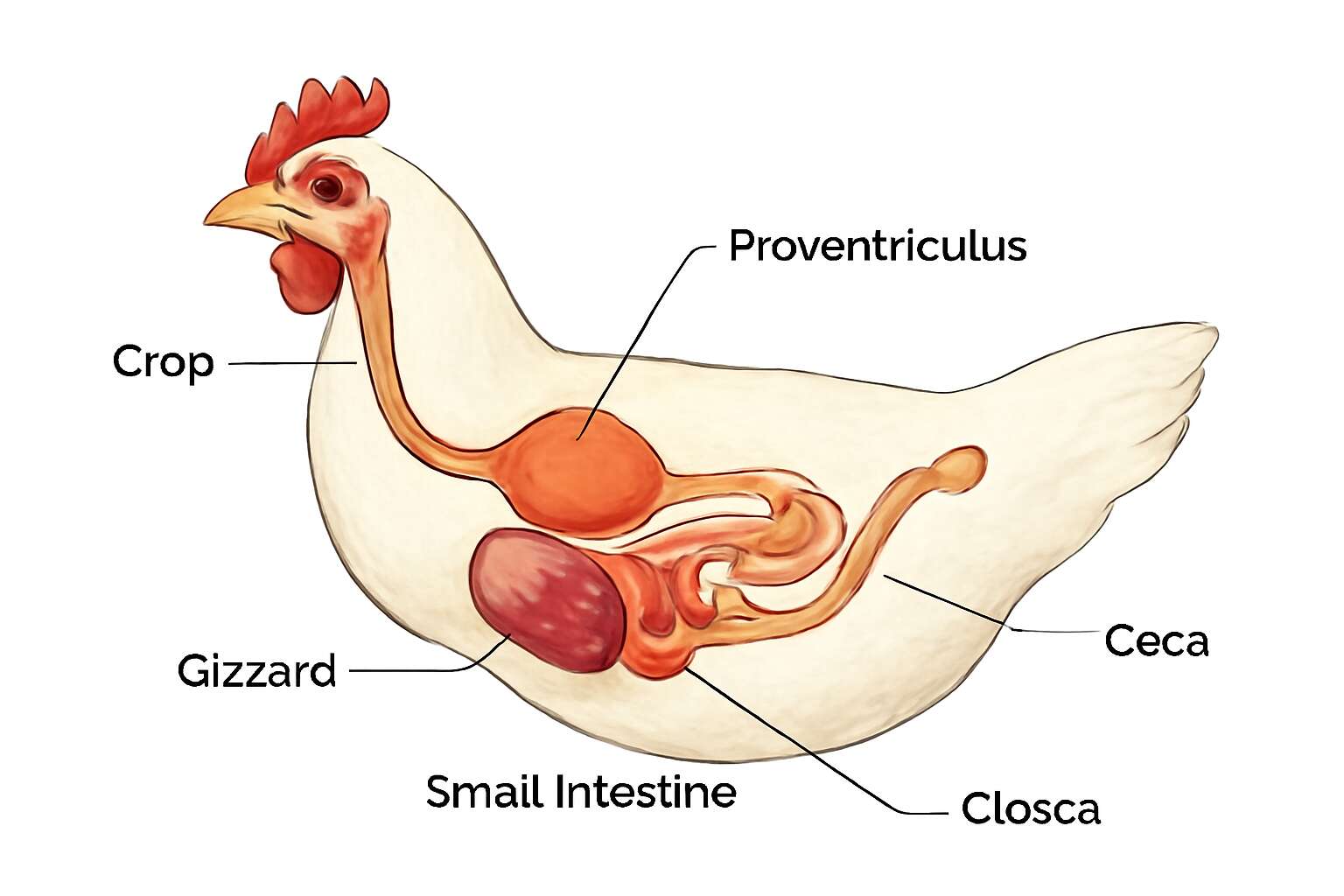
Overview of the avian digestive tract
Birds are dreamlike engineers—no teeth, yet a robust digestive ballet that turns grain into energy with astonishing thrift. The system traces a path from the esophagus to the cloaca, featuring specialized chambers that tame tough matter into nutrients. I marvel at this silent orchestra!
- Crop — storage and moisture adjustment before digestion
- Proventriculus — glandular stomach that adds enzymes
- Gizzard — muscular grinding chamber that crushes feed
- Small intestine — nutrients absorbed into the bloodstream
- Ceca — microbial fermentation and water reabsorption
- Cloaca — common exit for waste and eggs
From the crop to the cloaca, the sequence works in harmony: crop stores and softens feed; proventriculus secretes acids and enzymes; gizzard grinds; small intestine absorbs; ceca ferment; cloaca finalizes waste. This elegant poultry digestive system powers healthy flocks across South Africa and beyond.
Key organs and their digestive roles
“The gut is the engine of the flock,” whispers circulate in nutrition circles, and the poultry digestive system proves the claim daily. Beyond the beak, a quiet theatre unfolds where organs translate grain into energy with uncanny thrift.
Hidden within the abdomen, the liver performs bile alchemy, emulsifying fats to aid absorption. The pancreas pours enzymes into the gut, orchestrating carbohydrate, protein, and fat digestion. The gall bladder stores bile, releasing it as meals arrive.
- Liver: bile production supports fat digestion
- Pancreas: enzymes flow into the gut to digest starch, protein, and fat
- Gall bladder: stores bile and regulates its release
- Ceca: microbial fermentation and water reabsorption extend nutrient extraction
From South Africa’s farms to satellite hatcheries, this architecture powers resilient flocks within the poultry digestive system.
How anatomy shapes digestion in poultry
“The gut is the engine of the flock,” some nutritionist once whispered, and the truth hums louder than a broiler fan. The bird’s digestive theater isn’t a single pipe run; it’s a compact orchestra where every segment shapes digestion with surgical thrift.
Starting at the beak, a crop plays gatekeeper, followed by the proventriculus and gizzard that turn grain into grinding, chemical magic. The intestines then cradle the job of absorption, while a cloaca wraps the performance with waste management. This anatomy isn’t flair; it’s function—designed to squeeze value from feed and keep layers of energy in reserve.
- Crop stores and pre-moistens feed, smoothing intake peaks.
- Proventriculus and ventriculus team up for chemical and mechanical breakdown.
- Intestinal villi maximize absorption, turning pulp into usable energy.
For South Africa’s farms and satellite hatcheries, understanding the poultry digestive system powers resilience—labs and pens alike depend on it.
Common myths about poultry digestion
In South Africa’s poultry farms, the poultry digestive system is the quiet engine behind every growth curve. A recent audit linked feed structure to up to 12% better feed conversion, simply by aligning diet with how birds actually process meals. The story is a coordinated orchestra, not a solitary tube.
- All feed isn’t digested equally—ingredient quality and transit time matter.
- The crop isn’t mere storage—a moisture-matured gateway for efficient digestion.
Debunking myths reveals a simple truth: form and function meet at the table, shaping outcomes across farms and hatcheries in South Africa.
Gastrointestinal tract sections in poultry
Oral cavity and esophagus
The mouth is the fastest starter in nature’s kitchen—and in poultry, the leap from beak to belly happens in a blink. With no teeth, the beak, tongue, and ridged palate do a brisk pre-chew, screen grit, and coax saliva into action. The result is a swallowable bolus that sets the tempo for digestion in the poultry digestive system on South Africa’s farms.
Within the oral cavity, a few tiny heroes do the heavy lifting:
- Beak and tongue shape feed for swallowing
- Palate and mucosa filter grit and guide the bolus
From there, the muscular esophagus carries the bolus onward, using peristalsis to push it toward the crop or proventriculus. In many poultry, a crop—a pouch off the esophagus—stores and softens feed, tempering flow into the stomach.
Crop and its role in storage
The crop, a soft, sun-warmed pouch off the esophagus, is a quiet reservoir in the poultry digestive system. In South Africa’s bustling farms, it gathers the day’s meal and tames the pace before the stomach steps in, turning a rush of feed into a steady rhythm.
Here feed rests, is moistened, and begins its patient transformation before the proventriculus and gizzard. Within the poultry digestive system, the crop buffers intake and releases a measured flow to the proventriculus, smoothing gusts of appetite into a steady, manageable stream for the day’s work.
Key traits include:
- Storage and buffering of intake, aligning feeding with production cycles.
- Moistening and softening of feed to ease passage.
- Regulating release to the proventriculus for a steady tempo.
Proventriculus and gizzard in digestion
Within the poultry digestive system, the proventriculus is the true gastric stage where swallowed feed first meets acid and enzymes. It notes the tempo, softening proteins and initiating chemical digestion. A quiet conductor, it readies the meal for the muscular act that follows in the gizzard.
Then the gizzard—the muscular workhorse—takes the baton. It grinds feed with grit, turning lumps into particle-size cargo the intestines can actually handle. Its koilin lining stands up to abuse, and its contractions regulate the pace of passage.
- Mechanical grinding with ingested grit
- Koilin-lined, durable walls
- Coordinated contractions control flow to the intestines
Together, these two sections shape efficiency on South Africa’s farms, turning a bustling intake into usable energy with admirable poise.
Digestive processes and enzyme activity in poultry
Enzymatic breakdown in the proventriculus and duodenum
Within the poultry digestive system, a quiet alchemy begins in the proventriculus, where acid softens protein and wakes pepsinogen into pepsin. I watch as chyme begins its slow, shimmering journey, enzyme activity shaping nutrients before they meet the next stage.
From there, the duodenum takes the stage, a citrus-bright ribbon where pancreatic enzymes and bile dissect fats, carbohydrates, and proteins.
- Proventriculus: acid secretion and pepsinogen activation ignite enzymatic breakdown.
- Duodenum: pancreatic enzymes (amylase, proteases, lipase) and bile emulsify fats and finish digestion.
- Brush-border digestion: microvilli enzymes complete absorption-ready nutrients.
The small intestine then carries forward this choreography, absorbing what remains and turning it into usable energy. Within the poultry digestive system, the orchestration of enzymes and surface carriers underpins growth, health, and the quiet resilience of a thriving flock.
Microbial fermentation in the ceca and hindgut
In the hushed chambers of the ceca, microbial alchemy quietly harvests energy from fiber. The poultry digestive system hums here, where hindgut fermentation converts bulky plant fibers into usable fuel. “The ceca are the quiet engines of the gut,” a poultry nutritionist once said, and the observation still rings true as microbes adapt to diet and timing.
- Fermentation of complex carbohydrates
- Production of short-chain fatty acids like acetate, propionate, and butyrate
- Support for mucosal health and microbial balance
On South African farms, this subtler choreography helps explain why feed choices matter for growth and gut tone—the same system turning meals into energy, health, and resilience.
Nutrient absorption in the intestine
In the poultry digestive system, the small intestine acts as a high-efficiency processing plant, where enzymes and transporters choreograph the turning of feed into usable nutrients. The gut is no silent partner—it’s the stage where growth is scripted! As a nutritionist once noted, the gut is where the real performance happens.
Pancreatic enzymes enter the duodenum: amylase breaking starch, protease breaking proteins, lipase fats; brush-border enzymes finish sugar digestion.
- Pancreatic enzymes: amylase, protease, lipase
- Brush-border enzymes: finalizes sugar digestion
- Transporters: SGLT1 and specific amino acid carriers
Villi and microvilli surface area boosts absorption; glucose via SGLT1; amino acids through specific transporters; fatty acids absorbed as monoglycerides and reassembled into triglycerides for chylomicrons.
On South African farms, feed form and enzyme supplements influence how efficiently this system works.
Roles of bile and pancreatic enzymes
The gut orchestra hums like rain on a tin roof. On South African farms, I’ve seen a tiny 1% shift in nutrient capture translate into real savings. In the grand poultry digestive system, bile salts from the liver seduce fats into emulsified droplets, while pancreatic amylase, protease and lipase pour into the duodenum to begin their meticulous choreography.
Key players in this luminous performance:
- Bile salts emulsify fats, increasing surface area for lipase action.
- Pancreatic enzymes amylase, protease and lipase digest starches, proteins and fats in the small intestine.
- The enzymes collaborate with the gut lining to complete digestion as nutrients journey along the tract.
As feed form and enzyme supplements shape what flocks consume on South African farms, this lively chemistry continues to power growth in the poultry digestive system with quiet, precise tempo.
Impact of feed form on digestion efficiency
In the poultry digestive system, feed form matters beyond appetite. Mechanical grinding in the gizzard meets a cascade of enzymes in the small intestine as emulsified fats and starches meet lipase, amylase, and proteases. The form of the diet shifts rate of passage and surface area for digestion: fine particles boost enzyme contact but can hasten transit, while pellets or crumbles promote intake consistency and gut friendliness.
On South African farms, these dynamics show up in feed form.
- Particle size affects gizzard grinding and subsequent enzyme exposure.
- Feed consistency influences transit time and nutrient contact with the intestinal lining.
- Pelleting or crumbling can reduce selective feeding, stabilizing nutrient intake.
The collaboration between feed form and enzymatic action continues to power growth along the gut, with digestion unfolding in a quiet, precise tempo.
Nutrition strategies to optimize digestion in poultry
Protein and energy balance for gut health
Feed costs account for up to 70% of poultry production—so every gram your birds digest matters for the bottom line of the poultry digestive system. A robust gut is the quiet engine of growth and resilience, turning raw meals into measurable gains.
Nutrition strategies center on protein and energy balance to support gut health across life stages. In South Africa’s diverse farming systems, formulating diets with the right digestible amino acids and energy density reduces waste—and gives the gut something to sing about!
- Digestible amino acid balance aligned to life stage and production goals
- Energy density optimized with quality fats and carbs to support gut motility
- Selective fiber and enzyme considerations to modulate fermentation and digesta flow
Balanced nutrition is a quiet cornerstone of flock performance—no magic pills, just well-tuned diets that keep birds productive in varied conditions.
Fiber levels, particle size, and gut function
Across South Africa’s diverse farms, every gram of feed fights for a place in growth—and the numbers back it up: up to 70% of production cost rides on feed efficiency. Fiber levels steer fermentation and digesta residence time, while particle size shapes gizzard grinding and gut motility. Fine fibers shorten transit; coarser textures slow it enough to improve nutrient contact and absorption.
Strategic balance means tailoring fiber sources to life stage, pairing them with smart energy-dense grains. Focus on feed form, particle size distribution, and non-starch polysaccharides to modulate microbial activity without stressing the gut. When the gut hums, the poultry digestive system responds with steadier growth and resilience.
Hydration and water management during feeding
On South African farms, every sip matters. The poultry digestive system, a living map of appetite and resilience, reveals that hydration is not mere thirst relief but a driver of digestion itself. In this industry, even small hydration shifts ripple through growth and feed efficiency.
During feeding, water management shapes digesta consistency, enzyme action, and motility. Access to clean water, steady temperature, and fresh turnover keep the gut piping with harmony, helping the animal extract energy from tough grains and maintain appetite without stress.
To weave hydration into the narrative elegantly, consider:
- Hydration as a window into digesta viscosity and flow
- Balance between water and feed moisture for intestinal contact time
- Monitoring water quality as a proxy for gut health
The result is a living lyric of resilience.
Feed additives and supplemental enzymes
On South African farms, the poultry digestive system is the quiet engine behind every kilogram of growth. A well-tuned gut writes the flock’s success story, where nutrition meets resilience and appetite translates into efficiency. “A healthy gut writes the success story of every bird,” a seasoned poultry nutritionist might say, and that insight drives nutrition strategies to optimize digestion through feed additives and supplemental enzymes.
Key tools include:
- Specialist enzyme blends (phytase, xylanase, amylase, protease) to unlock bound nutrients and improve energy extraction
- Probiotics and prebiotics to balance gut microflora and support intestinal resilience
- Organic acids or essential oils to stabilize digesta and modulate fermentation
These additives and enzymes interact with the poultry digestive system to boost nutrient release and overall gut performance. Beyond additives, diet form—particle size, moisture, and pellet quality—shapes how effectively enzymes work in the gut, creating a subtle choreography between feed matrix and microbial allies.
Poultry digestive health and practical management
Common digestive disorders and preventive measures
Across South Africa’s varied farms, the poultry digestive system is the quiet engine behind growth. Recent field data place up to 30% of performance variance on gut health, a reminder that what reaches the bloodstream begins in the gut. Solid digestion supports immunity and growth.
Common disorders—sour crop, crop impaction, and enteritis—often trace to abrupt feed changes, tainted water, or sanitation lapses. Preventive measures hinge on stability, hygiene, and a balanced diet. In practice, steady routines help the gut flora flourish and resilience rise.
- Emphasizing water quality and feed stability to support gut balance
- Sanitation and biosecurity as guardians of the gut flora
- Feed structure—particle size and fiber balance—designed for digestive function
- Ongoing observation of digestive cues to guide management decisions
With mindful management, the poultry digestive system becomes a reliable ally—supporting efficient nutrient use, healthy flock performance, and reduced disease pressure. In a landscape of seasonal stressors, gut health remains both a barometer and a lever for enduring productivity.
Preventive nutrition and housing practices
Across South Africa’s varied farms, the poultry digestive system is the engine behind growth. Field data show up to 30% of performance variance tied to gut health, a reminder that what reaches the bloodstream begins in the gut. Steady routines keep nutrient channels open and resilience high.
Preventive nutrition and housing practices hinge on balance and calm. They honor the land and the farmer’s patience, focusing on how feed quality, water, and shelter influence gut balance without courting chaos.
- Consistent feed quality and energy-dense nutrition
- Clean, accessible water and hygienic intake
- Sanitary housing that reduces stress and maintains airflow
With patient observation, management becomes a daily listening practice, turning small cues into confident decisions for the flock’s well-being.
Monitoring indicators of gut health and recovery strategies
Across South Africa’s diverse farms, the poultry digestive system keeps growth in tempo. Field observations tie up to 30% of performance variance to gut health, a reminder that what reaches the bloodstream begins in the gut. Steady routines—calm, clean, consistent—keep nutrient channels open and resilience high.
Monitoring indicators of gut health are the compass for timely care. Look for steady feed intake and weight, normal droppings, and a bright, active flock with good hydration.
- Consistent feed intake and steady weight gain
- Normal droppings: well-formed, consistent color and volume
- Active behavior, clear eyes, and strong hydration
Recovery strategies, from the barn to the breeze, aim for balance rather than quick fixes. In the poultry digestive system, calm housing, clean water, and gentle feed transitions support microbial harmony and nutrient absorption.



0 Comments