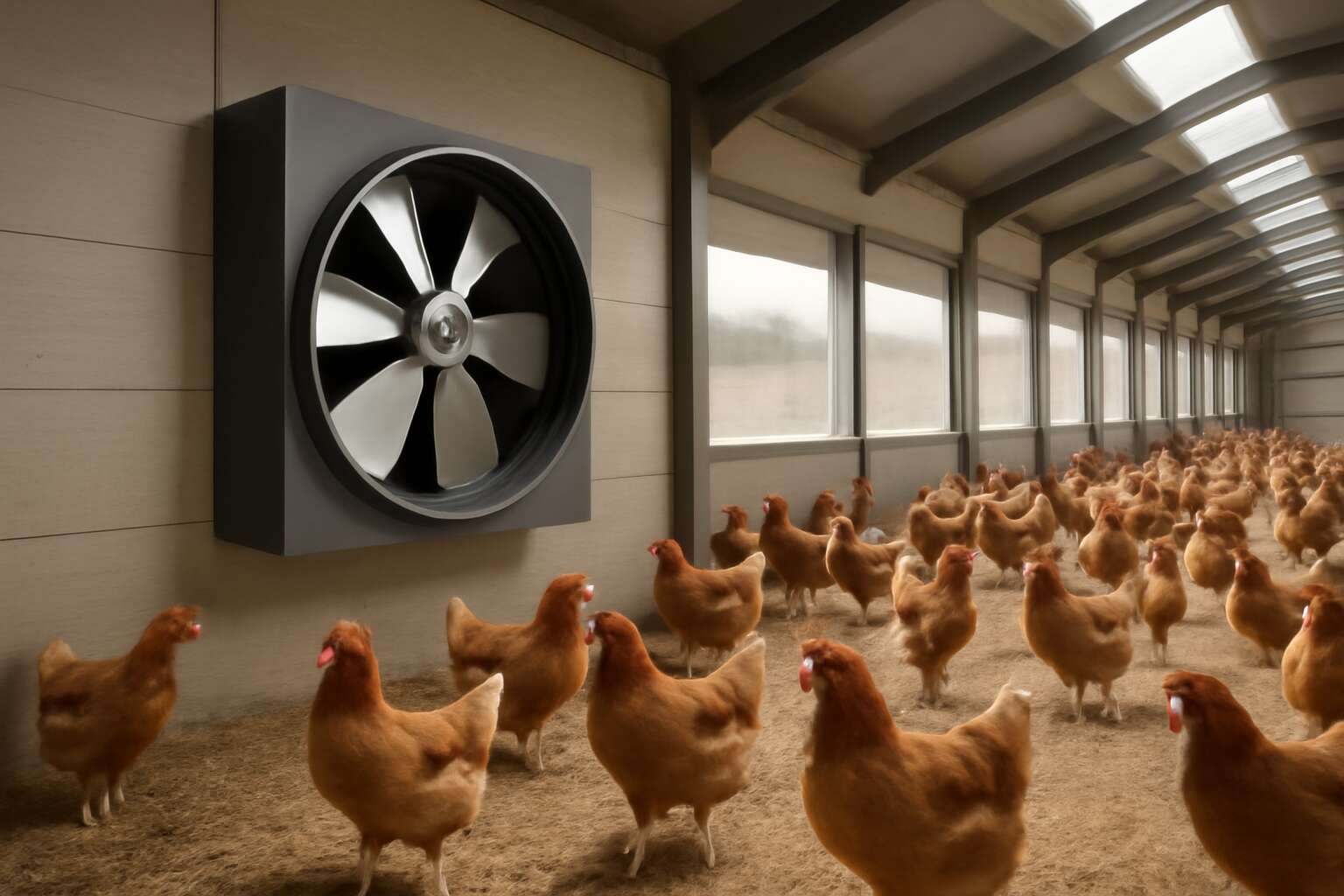
Understanding Poultry Ventilation Fans
Definition and Function – What is a poultry ventilation fan and how does it work?
Imagine a bustling poultry farm where every hen and chick thrives in perfect harmony — that’s the magic of a well-designed poultry ventilation fan. These devices are the unsung heroes of poultry farming, ensuring fresh air circulates continuously, keeping birds comfortable and healthy. But what exactly is a poultry ventilation fan, and how does it work its wonders?
A poultry ventilation fan is a specialized piece of equipment engineered to regulate airflow within the poultry house. It pulls in fresh air from outside and exhausts stale, humid air, creating an environment that discourages the buildup of harmful gases like ammonia. This constant exchange of air is vital, especially in South Africa’s varying climate, where maintaining optimal conditions can be a delicate balancing act.
The operation of a poultry ventilation fan is straightforward yet highly effective. It typically involves a motor-driven blade assembly that spins rapidly to generate airflow. The fan’s speed can often be adjusted to match the needs of the flock and weather conditions. For example, during hot summer days, higher airflow helps cool the birds, while in cooler months, it maintains sufficient ventilation without overcooling. It’s a marvel of engineering that combines simplicity and efficiency!
To better understand the importance of these systems, consider the key functions of a poultry ventilation fan:
- Enhancing air quality by removing excess moisture and gases
- Regulating temperature to prevent heat stress or chilling
- Supporting overall bird health and productivity
Importance in Poultry Farming – Reasons why proper ventilation is crucial for poultry health and productivity
In the vibrant world of poultry farming, the health of your flock hinges on more than just feed and water — it’s about creating an environment where birds can flourish. Proper ventilation is the heartbeat of a successful poultry operation, especially in South Africa’s diverse climate zones. A well-maintained poultry ventilation fan acts as an invisible guardian, tirelessly working behind the scenes to ensure fresh air circulates freely, preventing the buildup of harmful gases and excess moisture.
Research shows that inadequate ventilation can lead to increased respiratory issues, stress, and even reduced egg production. That’s why understanding the importance of a poultry ventilation fan is crucial. These devices regulate temperature, remove dangerous gases like ammonia, and maintain an optimal environment that supports the birds’ natural vitality. When airflow is optimized, poultry farms experience healthier flocks, higher productivity, and more efficient operations.
Imagine a system that adapts seamlessly to changing weather conditions — a poultry ventilation fan is precisely that marvel of engineering. It’s no wonder that modern poultry farms in South Africa rely on these essential systems to keep their birds happy and thriving, no matter what the weather throws their way.
Types of Poultry Ventilation Fans – Different types including exhaust fans, circulation fans, and combination systems
Understanding the intricacies of poultry ventilation fans reveals a landscape of technological artistry designed to safeguard avian vitality. These devices are not mere fans; they are sophisticated systems meticulously engineered to harmonize airflow with the fluctuating demands of poultry houses. Whether in the crisp air of South African winters or the sweltering summer heat, the right poultry ventilation fan adapts seamlessly, maintaining an environment where health and productivity are not compromised.
There are several types of poultry ventilation fans, each tailored to specific needs within the farm environment. Exhaust fans, for instance, act as the primary purveyors of stale, gas-laden air, drawing it out of the poultry house to create a natural draught. Circulation fans, on the other hand, work to evenly distribute the fresh air, preventing hotspots and ensuring every corner receives optimal airflow. For farms seeking versatility, combination systems integrate exhaust and circulation functionalities, providing a comprehensive solution that maximizes efficiency and fosters a thriving flock.
In the complex ecosystem of poultry farming, selecting the appropriate poultry ventilation fan is akin to conducting a symphony—every component must work in harmony to sustain the delicate balance of temperature, humidity, and gas removal. The nuanced differences among these systems underscore the importance of understanding their unique roles. When properly chosen and maintained, a poultry ventilation fan becomes an invisible guardian—an essential element that elevates poultry health, enhances productivity, and ultimately, sustains the farm’s vitality.
Key Features of Effective Poultry Ventilation Fans
Airflow Capacity and CFM – How to determine the right airflow for your poultry house
When selecting a poultry ventilation fan, understanding airflow capacity and CFM (cubic feet per minute) is essential. These metrics determine how effectively the fan can exchange stale air for fresh, oxygen-rich breezes within your poultry house. An undersized fan leaves your birds vulnerable to heat stress and poor health, while an oversized fan can waste energy and disturb the delicate balance of your environment.
To find the perfect airflow capacity, consider the size of your poultry house, the number of birds, and the local climate. A general rule of thumb is to provide at least 4-6 air changes per hour, but this varies depending on the specific needs of your flock. By calculating the total volume of your poultry house and multiplying it by the desired air change rate, you’ll arrive at the ideal CFM for your poultry ventilation fan.
- Measure the length, width, and height of your poultry house.
- Calculate the total volume in cubic feet.
- Determine the recommended air changes per hour based on your climate and poultry type.
- Multiply the house volume by the air change rate, then divide by 60 to find the necessary CFM.
Choosing a poultry ventilation fan with the right airflow capacity ensures your flock enjoys a healthy, comfortable environment—an investment that pays dividends in productivity and well-being. The secret lies in matching your fan’s airflow to your poultry house’s unique needs, creating a harmonious airflow that keeps every feathered inhabitant happy and thriving!
Energy Efficiency – Energy-saving features to reduce operational costs
In the realm of poultry farming, where every breath counts, energy efficiency is the silent guardian of sustainable success. An effective poultry ventilation fan not only ensures optimal airflow but also conserves precious electricity, transforming routine operation into a harmonious dance of cost-saving and environmental stewardship. Modern poultry ventilation fans often come equipped with advanced features such as variable speed controls, insulated housings, and energy-efficient motors, all designed to reduce operational costs without compromising airflow quality.
Imagine a poultry ventilation fan that intelligently adapts to the fluctuating needs of your flock, minimizing power consumption during quieter periods and ramping up when air exchange is critical. Such innovation embodies the essence of efficiency—turning a simple necessity into a strategic asset. When selecting a poultry ventilation fan, prioritize models with energy-saving features, as these can significantly diminish your farm’s carbon footprint while bolstering your bottom line.
- Variable speed controls to match airflow precisely to your poultry house’s needs.
- High-efficiency motors that deliver powerful performance with minimal energy waste.
- Insulated housings to maintain airflow integrity and reduce noise pollution.
By focusing on energy efficiency, poultry ventilation fans become more than just ventilation tools—they evolve into key components for a resilient, eco-conscious farm. Harnessing these features ensures your flock breathes cleaner air, and your operational costs stay well within manageable bounds—making every watt work tirelessly for your poultry enterprise!
Durability and Material Quality – Materials that ensure longevity and resistance to corrosion
When it comes to selecting a poultry ventilation fan that can withstand the rigors of the South African climate, durability and material quality are non-negotiable. A well-made poultry ventilation fan isn’t just about moving air; it’s about enduring the relentless sun, humidity, and occasional dust storms without faltering. High-quality materials ensure the fan remains resilient, providing consistent performance season after season.
Sturdy, corrosion-resistant components—like galvanized steel or premium-grade plastics—are essential for extending the lifespan of your poultry ventilation fan. After all, a fan that rusts away faster than your last batch of home-brewed sorghum is no friend to your farm’s productivity. Properly constructed fans also tend to operate more quietly and efficiently, minimizing stress on your flock and boosting overall farm health.
Some of the key features to look for include:
- Corrosion-resistant housings that can handle South Africa’s salty coastal air or inland dust;
- Heavy-duty blades crafted from durable materials to ensure longevity;
- Robust motors designed to withstand continuous operation without overheating.
Investing in a poultry ventilation fan built from high-grade materials means fewer repairs, less downtime, and more reliable airflow—keeping your poultry happy and your farm running smoothly. Because in the world of poultry farming, only the tough survive, and so should your ventilation system!
Noise Levels – Importance of quiet operation for poultry comfort
In the vibrant tapestry of poultry farming, the gentle hum of a well-designed poultry ventilation fan can be as soothing as a lullaby sung by the wind. Yet, beneath its seemingly quiet exterior lies a crucial role—creating a sanctuary of tranquility where your flock can thrive. Noise levels, often overlooked, hold paramount importance in ensuring poultry comfort and health. Too much sound can cause stress, diminish growth rates, and even lead to health issues, turning a peaceful farm into a cacophonous chaos.
Effective poultry ventilation fans are engineered with sound-dampening features that keep noise at a minimum, allowing your birds to rest undisturbed. High-quality motors paired with insulated housings significantly reduce operational noise, transforming the fan from a mere machine into a silent guardian of your poultry’s wellbeing. In many cases, a quiet poultry ventilation fan will operate smoothly and efficiently, providing consistent airflow without disturbing the natural rhythm of your flock.
Some standout features to look for include:
- Vibration-resistant mounting to prevent noise transmission;
- Sound-absorbing materials within the housing;
- Advanced motor technology designed for whisper-quiet operation.
Choosing a poultry ventilation fan with low noise levels isn’t just about comfort; it’s about fostering a healthy environment where poultry can flourish naturally. When the hum of the fan becomes a lullaby rather than a disturbance, your farm’s productivity and the wellbeing of your flock will resonate in harmony. After all, a peaceful farm is a prosperous farm—where the quiet strength of your poultry ventilation system ensures that only the best thrives under your care!
Factors to Consider When Choosing a Poultry Ventilation Fan
Size and Capacity – Matching fan size to the size of the poultry house
When it comes to selecting the right poultry ventilation fan, size truly does matter—more than a chicken on a junebug! An undersized fan will leave your flock gasping for fresh air, while an oversized one might have your energy bills doing the limbo. To match the fan size to your poultry house, consider its volume and layout. Bigger houses require higher capacity fans that can move a substantial volume of air without turning your poultry farm into a wind tunnel.
A helpful trick is to evaluate the airflow capacity in CFM (cubic feet per minute). For example, a small shed might need a poultry ventilation fan with a capacity of 2,000 CFM, whereas a sprawling barn demands something closer to 10,000 CFM or more. Remember, a properly sized fan ensures optimal air exchange, keeps humidity in check, and promotes healthy, happy chickens. Precision here isn’t just smart; it’s essential for maintaining a balanced environment that boosts productivity and prevents costly mistakes.
Ventilation Requirements – Understanding ventilation needs based on poultry type and house design
In the shadowed corners of the poultry house, unseen forces dictate the health of your flock—airflow, humidity, and the whisper of fresh breezes. When selecting a poultry ventilation fan, understanding the unique ventilation requirements of your poultry house becomes an art as much as a science. The type of poultry—whether broilers, layers, or breeders—alongside the house’s design and size, shapes the very essence of the ideal fan. A narrow, elongated shed might need a different approach than a sprawling barn, where air must flow freely to prevent stagnation.
Remember, a well-chosen poultry ventilation fan does more than circulate air; it becomes a silent sentinel guarding your investment from the insidious buildup of moisture and harmful gases. Consider the layout and volume of your space, for in these details lies the secret to maintaining an environment that fosters vitality and productivity. Sometimes, an ordered list helps clarify the essentials:
- Type of poultry housed—each demands specific airflow patterns.
- Size and shape of the poultry house—dictate the capacity of the poultry ventilation fan needed.
- Ambient climate conditions—hotter regions may require more robust ventilation solutions.
Ultimately, the delicate balance of airflow—crafted by the right poultry ventilation fan—is what allows your flock to thrive beneath the darkened vaults of your poultry house. Without it, the air becomes a silent toxin, and the vitality of your poultry wanes like shadows retreating at dawn.
Climate Conditions – Selecting fans suitable for hot, humid, or cold environments
In the realm of poultry farming, climate is the invisible architect shaping the destiny of your flock. The right poultry ventilation fan is not just a mechanical device; it is a guardian that adapts to the capricious moods of South Africa’s diverse climate. Hot, humid days demand a different approach than cold, frosty nights. Understanding these nuances transforms a simple choice into a strategic decision that ensures your poultry’s vitality.
For regions where the mercury climbs relentlessly, a robust poultry ventilation fan with high airflow capacity becomes essential. It acts like a cool breeze on a scorching day, whisking away excess heat and moisture that threaten to suffocate your birds. Conversely, in colder climates, selecting a fan with appropriate insulation and adjustable speed can prevent drafts from chilling the flock, maintaining a cozy environment. The secret lies in matching your fan’s specifications to the climate conditions—think of it as tuning an instrument to produce the perfect harmony of airflow and temperature.
Consider these elements when choosing your poultry ventilation fan:
- The typical temperature and humidity levels of your region.
- Whether your poultry house is exposed to direct sunlight or shaded areas.
- The seasonal variation—does your farm experience extreme weather fluctuations?
By weaving these factors into your decision, you ensure that your poultry ventilation fan becomes an active participant in fostering an environment where health and productivity flourish—regardless of the climate’s whims. This approach not only sustains the well-being of your flock but also elevates your farm’s resilience against the unpredictable moods of nature.
Integration with Ventilation System – Compatibility with other ventilation and climate control systems
When integrating a poultry ventilation fan into your farm’s climate control system, compatibility becomes paramount. A well-chosen fan should seamlessly mesh with existing ventilation infrastructure, whether it’s exhaust systems, circulation fans, or automated climate controls. This harmony ensures optimal airflow without creating conflicting air currents that could stress your flock. In fact, an incompatible setup might lead to uneven temperature distribution, which compromises bird health and productivity.
To achieve this, consider the following:
- Assess the airflow capacity of your poultry ventilation fan relative to your house size and design.
- Ensure that the fan’s control mechanisms can synchronize with other climate systems for dynamic adjustments.
- Opt for models with adjustable speeds to adapt to seasonal shifts and changing weather patterns—especially critical given South Africa’s unpredictable climate.
Matching your poultry ventilation fan’s specifications with your existing system not only enhances efficiency but also fortifies your farm against the volatility of climate conditions—making resilience a core feature of your poultry house environment.
Installation and Maintenance of Poultry Ventilation Fans
Installation Best Practices – Guidelines for proper placement and setup
Proper installation of a poultry ventilation fan is essential for optimal airflow and bird health. Position the fan strategically—preferably near the ceiling and away from direct sunlight—to ensure even air distribution throughout the poultry house. Mounting should be secure, with brackets or frames that withstand harsh conditions and prevent vibrations that could cause noise or damage.
For best results, follow these installation guidelines:
- Assess the house’s dimensions to determine the appropriate size and placement of the poultry ventilation fan.
- Ensure adequate clearance around the fan for maintenance access and airflow efficiency.
- Seal any gaps around the mounting area to prevent air leaks, which can compromise ventilation effectiveness.
Regular maintenance keeps the poultry ventilation fan functioning at peak performance. Clean blades and filters periodically to prevent dust buildup, and inspect electrical connections for safety. Lubricate moving parts as recommended by the manufacturer. Proper setup and upkeep extend the lifespan of the fan and safeguard poultry health in every season.
Routine Maintenance – Cleaning, inspection, and troubleshooting tips
In the bustling world of poultry farming, a well-maintained poultry ventilation fan can be the difference between thriving flocks and a house plagued by damp, stale air. Regular upkeep is essential to ensure these vital systems continue to circulate fresh air, safeguard bird health, and optimize productivity. A key aspect of this care involves routine cleaning, inspection, and troubleshooting—each a crucial step in maintaining peak performance. Dust accumulation on blades and filters hampers airflow and increases energy consumption, so periodically wiping down these components is paramount. Inspect electrical connections for signs of wear or corrosion to prevent unexpected failures, and lubricate moving parts as per the manufacturer’s instructions to reduce noise and mechanical stress.
To streamline maintenance, consider adopting a systematic approach—perhaps following an ordered checklist. For example:
- Clean blades and filters thoroughly to remove dust buildup.
- Inspect electrical wiring for loose or frayed connections.
- Lubricate bearings and moving parts to ensure smooth operation.
- Check the mounting brackets for stability, tightening any loose fittings.
By adhering to these simple yet effective practices, poultry farmers can extend the lifespan of their poultry ventilation fan, ensuring it continues to promote healthy, comfortable environments for their flocks year-round. Troubleshooting common issues—such as unusual noises, inconsistent airflow, or overheating—can often be resolved through diligent inspection and maintenance, preventing costly repairs and downtime. Remember, the resilience of your poultry ventilation system hinges on consistent care, transforming a routine task into a vital safeguard for your poultry’s well-being and your farm’s success.
Troubleshooting Common Issues – Identifying and solving typical fan problems
When a poultry ventilation fan starts to misbehave, it’s as if your entire flock senses the chaos and begins to act up. Troubleshooting common issues isn’t just about fixing a noisy fan—it’s about safeguarding your entire operation from costly downtime and unhappy birds. One of the first clues to a malfunctioning poultry ventilation fan is unusual noises—grinding, squealing, or rattling sounds that make you wonder if you’ve installed a mini rock concert in your poultry house.
Inconsistent airflow can also signal a problem, often caused by dust buildup on blades or filters, or electrical issues lurking in the wiring. Regular inspection of electrical connections is crucial—frayed wires or loose fittings can spell disaster if left unattended. Sometimes, the culprit is simply a need for lubrication; bearings and moving parts that aren’t properly greased tend to overheat and cause the fan to shut down unexpectedly.
For systematic troubleshooting, consider following this
- check for debris and dust accumulation
- inspect electrical wiring for wear or corrosion
- ensure moving parts are lubricated
- verify that the mounting brackets are secure
—these steps can often resolve the most common poultry ventilation fan issues. When problems persist, don’t hesitate to seek expert assistance or replace faulty components. Remember, a well-functioning poultry ventilation fan isn’t just about comfort; it’s about maintaining optimal airflow, preventing dampness, and promoting healthy poultry growth—so keep that fan in top shape, and your flock will thank you for it!
Innovations and Advances in Poultry Ventilation Technology
Smart Ventilation Systems – Automation and IoT integration for optimal performance
In a world where poultry health hinges on the delicate balance of environment and instinct, innovations in poultry ventilation fan technology are transforming the industry. The latest smart ventilation systems harness the power of automation and IoT integration, offering unprecedented control over airflow and climate conditions. These advanced systems can adjust fan speeds based on real-time data, ensuring optimal ventilation without wasting energy or compromising comfort.
Imagine a poultry ventilation fan that communicates seamlessly with sensors placed throughout the poultry house, monitoring temperature, humidity, and ammonia levels. This interconnected web allows for precise regulation—reducing manual intervention and elevating poultry welfare to new heights. Such automation not only enhances productivity but also aligns with sustainable practices by minimizing operational costs.
By integrating IoT technology, poultry farmers can access live data remotely, enabling swift responses to environmental shifts and preventing potential health issues. As these innovations become more accessible, the future of poultry ventilation technology promises a harmonious blend of efficiency, animal well-being, and environmental stewardship—pivotal factors in sustainable poultry farming today.
Energy-efficient Designs – Latest innovations to reduce power consumption
In the quest for sustainable poultry farming, innovation in poultry ventilation fan technology is leading the charge. Recent advances focus on designing energy-efficient systems that dramatically lower power consumption while maintaining optimal airflow. These next-generation poultry ventilation fans utilize smart motor controls and variable speed drives, allowing precise adjustments that match the dynamic needs of the poultry house. Such innovations not only cut operational costs but also support environmentally responsible farming practices.
Some of the latest energy-efficient designs incorporate features like LED-based sensors and intelligent controllers that optimize fan operation based on real-time environmental data. Incorporating these features ensures that poultry farmers can achieve the perfect climate without unnecessary energy wastage. For example, fans equipped with variable frequency drives (VFDs) can adapt their speed according to temperature and humidity fluctuations, reducing electricity bills and extending equipment lifespan.
By adopting these cutting-edge poultry ventilation fan innovations, farmers in South Africa can ensure a healthier environment for their poultry while simultaneously reducing their carbon footprint. It’s a technological revolution that promises to reshape poultry farming—delivering efficiency, durability, and environmental stewardship all in one package.
Noise Reduction Technologies – New materials and designs for quieter operation
Amidst the bustling corridors of modern poultry farming, a quiet revolution is underway—one that promises to transform the very soundscape of poultry houses. Innovations in noise reduction technologies are now crafting poultry ventilation fans that operate with a whisper rather than a roar, ensuring the comfort of both birds and farmers alike. These advanced systems employ new materials and refined designs that absorb or deflect sound waves, turning what was once a cacophony into a gentle hum. The result is a calmer environment that minimizes stress on poultry, boosting overall health and productivity.
One of the most remarkable breakthroughs involves the use of sound-dampening composites and acoustic insulation within the fan housing. These materials, combined with aerodynamic blade designs, significantly diminish noise levels without sacrificing airflow capacity. For poultry farmers in South Africa, this means installing a poultry ventilation fan that not only meets the demands of large-scale operations but also preserves a peaceful atmosphere inside the poultry house. With these innovations, the distinction between efficiency and tranquility becomes beautifully blurred.
Incorporating these noise reduction features into poultry ventilation fans exemplifies a harmonious blend of technology and care—an essential step toward more humane and sustainable poultry farming. As the industry continues to evolve, the promise of quieter, more efficient ventilation systems stands as a testament to ingenuity and compassion, ensuring that every cluck is met with a calm, healthy environment. Truly, these advancements are setting a new standard—one where innovation whispers softly through the corridors of poultry farms across South Africa.
Cost Considerations and ROI of Poultry Ventilation Fans
Initial Investment – Pricing ranges for different types and features
Investing in a poultry ventilation fan is no trivial matter; it’s a strategic decision that can significantly influence your farm’s bottom line. The initial costs vary widely depending on the size, type, and features of the fan. Basic exhaust fans for small poultry houses might start at around R2,000, while more sophisticated systems with energy-efficient motors and smart controls can climb well beyond R20,000.
Understanding the ROI of a poultry ventilation fan reveals that the true value lies in its ability to enhance bird health, reduce mortality, and improve productivity. An efficient fan system ensures optimal airflow, which translates to better feed conversion and egg production. When selecting a poultry ventilation fan, consider the long-term savings on electricity bills—especially if you opt for models with energy-efficient designs. After all, a well-chosen fan isn’t just an expense; it’s an investment in the longevity and profitability of your poultry operation.
Operational Costs – Energy consumption and maintenance expenses
Operational costs can quietly erode your poultry farm’s profitability if not carefully managed. The energy consumption of a poultry ventilation fan is often a significant expense, especially for larger systems designed to accommodate substantial poultry houses. Modern models boast energy-efficient motors and smart control features that dramatically reduce power bills without sacrificing performance.
Maintenance expenses are equally crucial to consider. Regular cleaning, inspection, and prompt troubleshooting prevent costly breakdowns and extend the lifespan of your poultry ventilation fan. Neglecting these routines can lead to increased wear and tear, resulting in higher replacement costs down the line. When selecting a poultry ventilation fan, prioritize durability and material quality—stainless steel or galvanized frames resist corrosion and stand up to South Africa’s diverse climate conditions.
Understanding the ROI of a poultry ventilation fan reveals its true worth: improved bird health, lower mortality rates, and enhanced productivity. For instance, a well-ventilated poultry house maintains optimal airflow, which supports better feed conversion rates and egg production. To maximize efficiency, consider models that feature energy-saving innovations and noise reduction technologies, ensuring your investment pays dividends in both operational savings and poultry welfare.
- Initial purchase price
- Ongoing electricity costs
- Routine maintenance and repairs
In the long run, a high-quality poultry ventilation fan isn’t just an expense—it’s an essential component that can elevate your farm’s operational efficiency and profitability, especially when it’s tailored to meet your specific climate and ventilation needs in South Africa.
Return on Investment – How proper ventilation improves productivity and reduces health risks
A well-chosen poultry ventilation fan can be a game-changer for your farm’s profitability. While the initial purchase price might seem steep, the return on investment (ROI) often exceeds expectations. Proper ventilation significantly reduces health risks, lowers mortality rates, and enhances overall productivity. Healthy birds are more efficient, converting feed better and producing higher-quality eggs.
Investing in a high-quality poultry ventilation fan also cuts down on ongoing electricity costs, especially if the model features energy-efficient motors and smart control systems. Routine maintenance, although an additional expense, is vital for long-term performance. Regular inspections and cleaning prevent costly breakdowns and ensure the fan operates at peak efficiency.
- Better airflow improves bird health
- Reduced disease spread and mortality
- Enhanced feed conversion and productivity
In essence, a poultry ventilation fan isn’t just an expense; it’s a strategic asset that, when properly integrated, elevates your farm’s operational standards and profitability over time.
Best Practices for Maintaining Poultry Health with Ventilation
Optimizing Air Quality – Ensuring fresh air circulation and controlling humidity
Maintaining optimal poultry health hinges on more than just feed and water; it’s about creating an environment that promotes vitality and resilience. A key player in this delicate balance is the poultry ventilation fan, which tirelessly works behind the scenes to optimize air quality. Fresh air circulation is essential to prevent the buildup of harmful gases like ammonia, while controlling humidity curtails mold growth and respiratory issues. When airflow is properly balanced, poultry can thrive in a climate that feels natural and invigorating.
In fact, a well-designed poultry ventilation fan not only ensures consistent air movement but also reduces stress on the birds, resulting in better growth rates and stronger immune systems. Properly matching the fan’s capacity to the size of the poultry house guarantees a steady exchange of air, even during extreme South African summers or damp winter days. By integrating advanced features like energy-efficient designs and noise reduction technologies, farmers can maintain a healthy flock while minimizing operational costs. Ultimately, investing in high-quality poultry ventilation fans transforms a basic necessity into a pillar of sustainable poultry farming.
Reducing Ammonia and Gas Levels – Role of ventilation in mitigating hazardous gases
In the delicate ecosystem of poultry farming, the silent guardian often goes unnoticed—yet its impact is profound. A well-maintained poultry ventilation fan acts as the lungs of the poultry house, tirelessly working to reduce ammonia and gas levels that threaten bird health. High concentrations of hazardous gases, such as ammonia, can impair respiratory function and stunt growth, turning a thriving farm into a battleground of unseen toxins.
Optimal airflow is the cornerstone of reducing these dangers. Properly positioned ventilation fans ensure a continuous exchange of fresh air, diluting harmful gases before they reach critical levels. Incorporating advanced features like adjustable speed settings and intelligent control systems allows farmers to tailor airflow precisely to the needs of their flock, even during South Africa’s sweltering summers or damp winters. This precision not only safeguards poultry health but also enhances overall farm productivity.
- Regular inspection of the poultry ventilation fan ensures it operates efficiently, preventing gas buildup.
- Monitoring gas levels with reliable sensors helps fine-tune ventilation, maintaining a safe environment.
- Using high-quality, corrosion-resistant materials in fan construction prolongs operational lifespan and maintains performance in humid conditions.
By prioritizing these best practices in ventilation maintenance, poultry farmers can transform their houses into sanctuaries of vitality—where birds thrive free from the shadow of hazardous gases, and the promise of a sustainable, prosperous farm gleams brightly on the horizon.
Monitoring and Adjusting Ventilation – Using sensors and controls for optimal environment
In the symphony of poultry farming, maintaining an environment where birds can flourish is both an art and a science. When the air is as pure as a mountain breeze, chickens thrive, and productivity soars. Central to this delicate balance is the poultry ventilation fan, an unsung hero that tirelessly orchestrates optimal airflow, ensuring the air remains fresh, clean, and free of hazardous gases.
Harnessing the power of advanced sensors and intelligent controls transforms a simple ventilation system into a dynamic guardian of poultry health. These smart devices continuously monitor gas levels, humidity, and temperature, making real-time adjustments that keep the environment within ideal parameters. By integrating sensor technology, farmers can fine-tune airflow with precision, ensuring that ammonia and other harmful gases are kept at bay, even during South Africa’s sweltering summers or chilly winters.
Optimal ventilation isn’t a static achievement; it requires vigilant oversight. Regular inspection of the poultry ventilation fan, combined with sensor data, creates a harmonious environment where birds are shielded from the unseen dangers lurking in stale air. For instance, employing a numbered approach can be beneficial:
- Install reliable sensors that detect gas concentrations and environmental conditions.
- Utilize control systems that respond automatically to sensor inputs, adjusting fan speed accordingly.
- Schedule routine checks to verify sensor accuracy and fan performance, preventing unforeseen breakdowns.
This technological synergy not only conserves energy but also prolongs the lifespan of the poultry ventilation fan, making it a wise investment for sustainable farming. As the environment becomes increasingly unpredictable, embracing these best practices in ventilation monitoring and control will ensure that poultry houses remain sanctuaries of vitality, where health and productivity flourish in unison. The magic lies in the seamless dance of sensors, controls, and well-maintained fans—an enchanting formula for success in South Africa’s vibrant poultry landscape.
Where to Buy Reliable Poultry Ventilation Fans
Top Brands and Manufacturers – Leading providers in the industry
When it comes to sourcing a reliable poultry ventilation fan, the choice of top brands and manufacturers makes all the difference. South African poultry farmers often face unique climate challenges, making it essential to invest in high-quality equipment that can withstand local conditions. Leading providers in the industry prioritize durability, energy efficiency, and advanced airflow technology to ensure optimal ventilation.
Some of the most reputable brands offer poultry ventilation fans that combine innovative design with affordability. These manufacturers often provide comprehensive support, from installation to maintenance, ensuring your poultry house remains well-ventilated year-round. You can find trusted options through authorized distributors or direct from top international brands that have established a presence in South Africa’s agricultural sector.
To streamline your search, consider focusing on those with proven track records in poultry ventilation fan manufacturing, as well as positive feedback from local farmers. Whether you need exhaust fans, circulation fans, or combination systems, choosing a reputable supplier guarantees that your investment will deliver long-term benefits for poultry health and productivity.
Factors to Consider When Purchasing – Warranty, support, and after-sales service
Investing in a reliable poultry ventilation fan is critical for maintaining optimal air quality in your poultry house. But where can South African farmers find trustworthy suppliers? It’s essential to choose vendors that offer genuine products backed by comprehensive after-sales service. Proper support from the manufacturer ensures that you can address issues quickly, minimizing downtime and maintaining consistent airflow.
When selecting a poultry ventilation fan, consider the warranty period. A longer warranty indicates confidence in the product’s durability. Additionally, support services such as installation guidance and routine maintenance are invaluable. Reputable suppliers often have local distributors who understand the unique climate challenges faced in South Africa.
Remember to evaluate the after-sales service, including troubleshooting assistance and spare parts availability. This approach guarantees your investment stands the test of time, helping you sustain healthy poultry environments and maximize productivity. After all, a high-quality poultry ventilation fan is an investment in the health and efficiency of your farm’s operation.
Local vs. Online Shopping – Pros and cons of various purchasing options
Choosing where to buy your poultry ventilation fan can significantly impact the longevity and performance of your investment. South African farmers often face a crossroads between local suppliers and online stores. Local vendors offer the advantage of face-to-face interaction, immediate assistance, and the chance to see the product firsthand. You can often arrange for on-site demonstrations and get tailored advice suited to South Africa’s unique climate conditions. However, the selection might be limited compared to the vast array available online.
On the other hand, online shopping provides access to a broader range of poultry ventilation fans, often at competitive prices. Reputable online platforms often feature detailed product specifications, customer reviews, and manufacturer ratings, simplifying your decision-making process. Yet, the downside is the potential delay in delivery and the challenge of verifying the authenticity of the product without physically inspecting it first. For those prioritizing quick support and local expertise, sourcing from South African suppliers remains a reliable choice, while online options serve well for those seeking variety and cost savings.


0 Comments