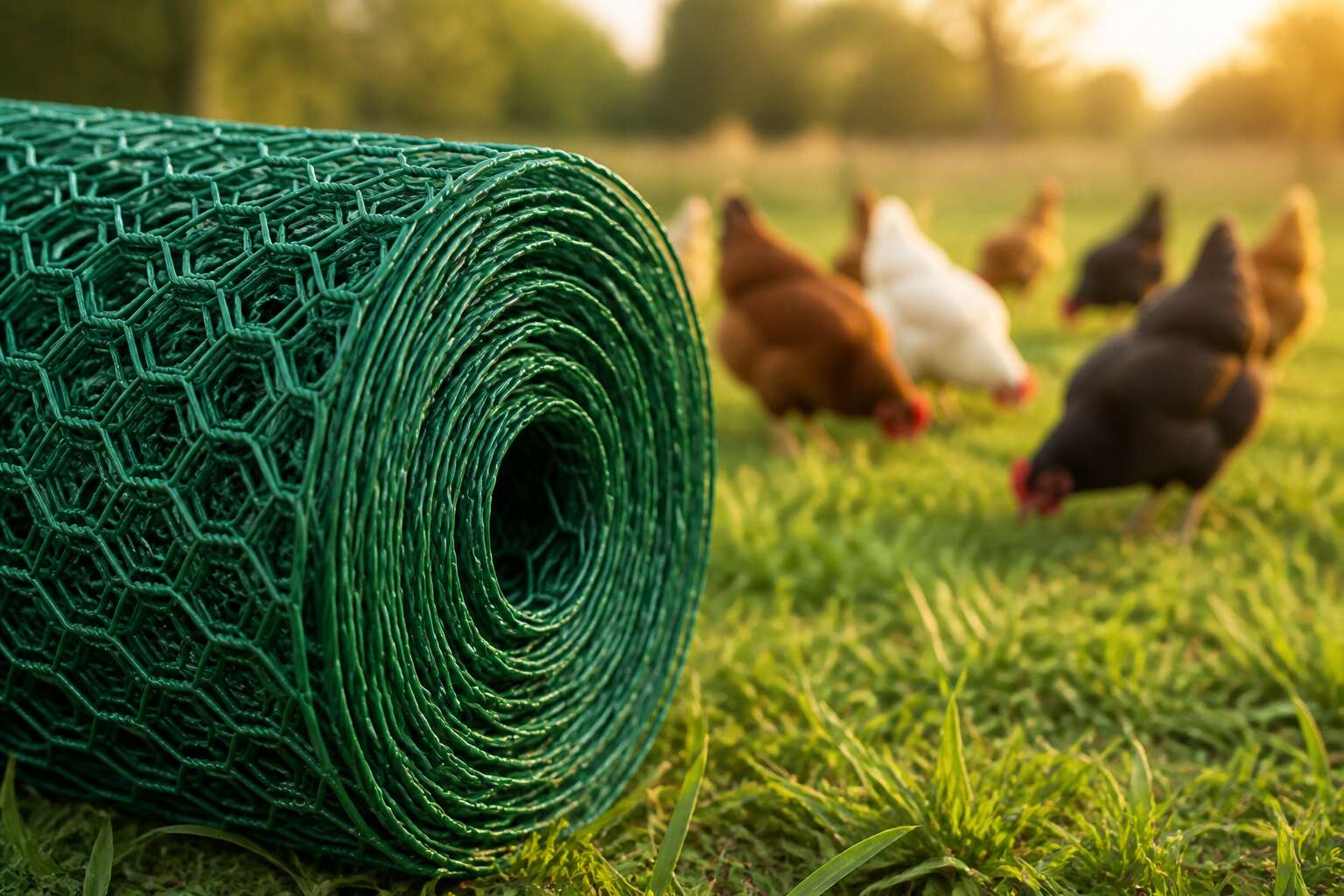
Understanding Your Flock’s Enclosure Needs
In the Karoo and the western Free State, free range flocks use less than half of their paddock over a full season, according to local agricultural surveys. The unused ground is not dead pasture. It is simply the section of the enclosure where the flock feels exposed to a strike.
Your flock’s enclosure needs shift with the angle of the sun, the route to the water source, and the scent of predators from a particular border. The right kind of poultry netting that ignores these movement lines becomes a false boundary. When a hen moves calmly along a clear path and then dashes across an open corner, you have your design.
Look at these patterns:
- Hens cluster near the wind shelter when a side is open.
- Night roosts settle at a safe distance from the coop.
- Feeding trails and dust bath lines reveal the daily course of the flock.
The fix is not a drawn map. The poultry netting must follow the track the flock has already chosen. When it does, the entire paddock begins to act like a single territory, not a space with one safe corner.
Comparing Fencing Materials
A single night of neglect can cost you an entire flock. I have compared every option on my smallholding, and the differences are stark. Consider the common materials!
- Welded mesh: strong but brittle under repeated impact.
- Barbed wire: problematic for birds and handlers.
Poultry netting bends without breaking, which matters in high winds. I have seen it shrug off a karakul ram’s charge. For me, that resilience settles the debate.
Setup Strategies for Effective Containment
Setting up poultry netting properly is half the battle. I have seen too many backyard coops where the fence looks solid but fails within a week. The secret lies in how you anchor the base and manage tension along the perimeter.
Start by clearing the ground of sharp stones and debris. Then, use sturdy stakes every two metres to keep the poultry netting upright. For predators that dig, bury the bottom edge at least 100 millimetres deep.
- Check the tension weekly, especially after heavy rain.
- Leave slack near corners to prevent tearing.
- Use a gate that closes securely, not just a flap.
Your poultry netting should feel taut but not strained. That balance keeps birds in and predators out.
Safety and Upkeep Best Practices
A single loose strand can undo an entire night’s work. Poultry netting needs your eyes and hands. I check mine every Sunday, running fingers along the mesh for any give. Storms and jackals are the usual culprits.
Upkeep is straightforward but non negotiable. Keep the base clear of weeds, which twist and tear the fibres. Tension the line so it is taut, not sagging. A sagging net invites digging predators and clumsy birds.
- Inspect all anchor posts for wobble.
- Replace corroded clips without delay.
- Trim overhanging branches that can drop weight.
That routine has saved my flock more than once! Trust the net, but verify its strength.



0 Comments